The Ultimate Pitrupaksha Dos and Donts Checklist: Navigate the 15 Days Respectfully
The sacred period of Pitrupaksha offers a unique opportunity to connect with and honor our ancestors, but are you navigating these sixteen days with the reverence and understanding they demand? This detailed guide illuminates the essential Pitrupaksha Dos and Donts, ensuring your observances are both heartfelt and scripturally aligned. From the paramount duty of performing Shradh on specific Tithis, especially the all-important Mahalaya Amavasya, to understanding the significance of Kutapa Muhurta and using prescribed items like Pindas and Kusha grass, what are the core practices that bring solace to your Pitṛs? Beyond the rituals, what about the crucial acts of charity (Dāna), feeding Brahmins, and maintaining personal purity (Śauca and Niyama)? Conversely, are you aware of the strict prohibitions, such as avoiding non-vegetarian food, intoxicating substances, new ventures, or even seemingly minor acts like using tooth-cleaning twigs, that could diminish the sanctity of your efforts? Learn how to properly honor cows and offer Kāka Bali to crows. This isn't just a checklist; it's a pathway to ensuring your sincerity (Shraddha) and devotion (bhāva) reach your ancestors, bringing peace to them and blessings to your family. Are you ready to embrace your duties with complete clarity and devotion?
Namaste,
First, understand the sacredness of this time. Our scriptures, like the Skanda Purana and Varaha Purana, tell us that the period when the Sun enters the zodiac sign of Kanya (Virgo) is uniquely consecrated for honouring our ancestors, our Pitṛs. The dark fortnight (Krishna Paksha) of the lunar month of Bhadrapada (overlapping roughly with September/October) is this special window – Pitrupaksha, the fortnight of the forefathers.
Why this time? It is believed that during these fifteen days, the veil between our world and the realm of the ancestors thins. Our Pitṛs draw closer, eagerly awaiting our offerings of love, remembrance, and sustenance provided through the sacred rites of Shradh and Tarpan. Performing these duties during Pitrupaksha brings immense satisfaction (tṛpti) to them, aids their journey, and bestows blessings upon the descendants. Even those burdened by past errors find solace and upliftment through rites performed with faith during this period.
So, how do we navigate these auspicious days with the reverence they deserve? Let us outline the essential practices – the ‘Dos’ – and the things to refrain from – the ‘Don’ts’.
Pitrupaksha Guidelines: What We SHOULD Do (The Dos)

These practices form the heart of observing Pitrupaksha with devotion and according to scriptural guidance.
1. Perform Shradh (The Core Duty)
This is the paramount duty. Shradh is the ritual offering of food (especially Pindas), water, and respect to the ancestors.
- Where: Ideally performed in a Tīrtha (holy place like Gaya, Kashi, Prayag, Rameshwaram), by a sacred river, or at least in a clean, consecrated space at home.
- When: Performed on the specific lunar day (Tithi) corresponding to the ancestor’s death anniversary falling within Pitrupaksha. If the Tithi is unknown, Mahalaya Amavasya is the universal day.
- With Whom: Preferably conducted with the guidance of knowledgeable and virtuous Brahmins, whose presence and chanting sanctify the rite.
2. Observe Specific Tithis (Lunar Days)
While Mahalaya Amavasya is for all, performing Shradh on the specific Tithi corresponding to an ancestor’s passing during Pitrupaksha holds unique significance. The Puranas even associate performing Shradh on certain Tithis within this period with specific blessings bestowed by satisfied ancestors (Note: Perform Shradh primarily based on the death Tithi, not solely for seeking these specific boons, which are secondary fruits):
- Dvitiya (2nd day): Blessings for virtuous progeny/family.
- Tṛtiya (3rd day): Blessings for strength, dynamism, good progeny.
- Chaturthi (4th day): Victory over obstacles, acquisition of resources.
- Panchami (5th day): Prosperity and wealth.
- Saptami (7th day): Leadership qualities.
- Ashtami (8th day): Intelligence and clarity.
- Navami (9th day): Harmonious relationships, virtuous spouse.
- Dashami (10th day): Fulfillment of righteous desires.
- Ekadashi (11th day): Acquisition of Vedic/spiritual knowledge.
- Dvadashi (12th day): Victory, success.
- Trayodashi (13th day): Highly potent day for increase in progeny, intellect, prosperity, longevity, and overall supremacy. Special worship of Lord Shiva is also recommended.
- Chaturdashi (14th day): Specifically significant for those who died young, met a violent end, or died by weapons.
3. Honour Mahalaya Amavasya (The Grand Finale)
The New Moon day concluding Pitrupaksha is supremely important. It’s the day for Sarva Pitṛ (all ancestors), especially if individual Tithis are unknown or missed. Shradh performed on this day yields immense, potentially infinite, benefit.
4. Perform Rites at the Right Time (Kutapa Muhurta)
The scriptures recommend starting the Shradh ritual during the eighth Muhurta (division of the day) known as Kutapa. This period falls around midday (roughly 11:36 AM to 12:24 PM, though precise timings vary). Starting the rites then is considered highly auspicious and maximizes the benefit.
5. Use Prescribed Ritual Items
- Pindas: Offer balls made of cooked rice, barley flour, often mixed with ghee, honey, milk, and black sesame seeds. These are the primary food offerings.
- Tarpan: Offer water libations mixed with black sesame seeds (til), often using sacred Kusha grass (Darbha). White sesame is also considered pure for Shradh. Kusha grass itself is vital for purification and as a conduit.
- Other Offerings: Flowers (especially white), incense, lamps, and food preparations liked by the ancestors (offered respectfully) are part of the ritual.
6. Take Holy Baths (Snāna)
Bathing in sacred rivers (Ganga, Yamuna, etc.) or Tirthas before performing Shradh purifies the body and mind, making one fit for the sacred rite. Water offered during Tarpan should ideally be pure.
7. Feed Worthy Brahmins (Brahmana Bhojana)
Inviting virtuous, learned Brahmins, treating them as representatives of the Pitṛs, honouring them, and feeding them sumptuously is a crucial part of the Shradh ceremony. Their satisfaction is believed to mirror the satisfaction of the ancestors.
8. Give Gifts/Charity (Dāna)
Offering gifts (Dāna) according to one’s capacity to the invited Brahmins (clothes, grains, utensils, money/dakshina) is highly meritorious and pleases the Pitṛs. Charity given to the poor and needy in the name of ancestors during this period is also extremely beneficial.
9. Maintain Purity and Self-Restraint (Śauca & Niyama)
This is vital for creating the right atmosphere for the sacred rites:
- Physical Purity: Maintain cleanliness of body and surroundings.
- Mental Purity: Avoid anger, impatience, negative thoughts. Cultivate reverence and devotion.
- Verbal Purity: Speak truthfully and respectfully. Avoid harsh words or gossip.
- Restraint: Observe Brahmacharya (celibacy), control the senses, eat simple, sattvic food (vegetarian, avoid onion, garlic, etc.). Avoid indulging in excessive pleasures.
10. Honour All Sacred Beings and Symbols
Show utmost respect towards Brahmins, sacred fires (Agni), cows (Gau Mata), the Sun (Surya), Devas, the Vedas, Gurus, those observing sacred vows (vratīs), virtuous women, righteous kings (leaders), and great souls. Disrespect towards any of these can negate the merit of the rites.
The Role of Animals: Cows and Crows

As part of understanding the Pitrupaksha dos and don’ts, let’s revisit the roles of the cow and the crow:
The Revered Cow (Gau Mata)
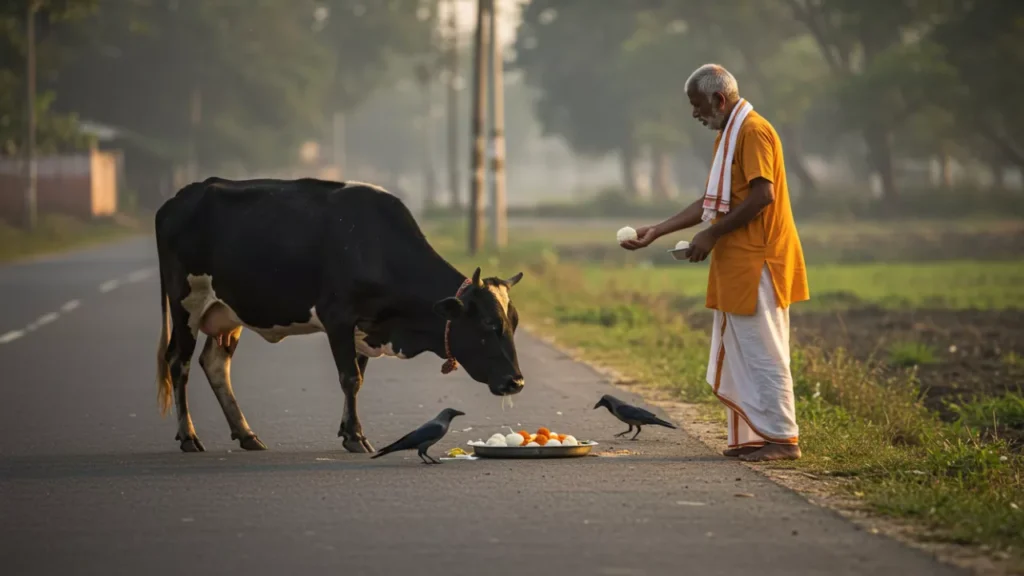
- Do: Honour cows. Feed them if possible. Use ghee made from cow’s milk in offerings. Gifting a cow (Go-dāna) or performing Vṛṣotsarga (bull release) in the name of ancestors during this period is one of the highest forms of meritorious charity (Dāna), believed to bring immense relief and liberation to the Pitṛs. Circumambulate them respectfully.
- Why: Cows embody purity, divinity, and sustenance. Acts involving them generate significant positive merit beneficial to ancestors. Their presence is auspicious (linked to Kutapa Muhurta).
The Receiving Crow (Kaka)
- Do: Offer a portion of the Shradh food (Kāka Bali), usually Pindas, to crows after the main rites are concluded. This is often done outside the house.
- Why: Crows are traditionally seen as connected to the realm of Yama (God of Death) and the afterlife. They may act as messengers or receivers representing spirits, especially those who might be in lower or unsettled states. Offering food to them is an act of compassion and ensures the offerings reach across different possibilities within the ancestral realms, completing the cycle of giving.
Pitrupaksha Restrictions: What We Should NOT Do (The Don’ts)
Equally important is understanding what to avoid during these sacred fifteen days to maintain purity and ensure the efficacy of the rites.
1. Neglect Shradh Rites
Absolutely avoid skipping the Shradh for departed parents (especially the father) on their death Tithi during Pitrupaksha, or neglecting the Mahalaya Amavasya Shradh if Tithis are unknown. The Puranas warn of severe consequences like ancestral dissatisfaction, potential fall of ancestors from higher realms, obstacles in progeny, and general misfortune for the descendant.
2. Consume Non-Vegetarian Food
Strict vegetarianism (sattvic food) is advised. Avoid meat, fish, eggs, onion, garlic, masoor dal, mustard oil, and stale food. These are considered tamasic or rajasic and interfere with the purity required.
3. Consume Alcohol or Intoxicants
Abstain completely from alcohol and any form of intoxication. These cloud the mind and are antithetical to the required state of purity and reverence.
4. Start New Ventures or Auspicious Activities
Pitrupaksha is a time for remembrance, reflection, and honouring the past, not for initiating new beginnings. Avoid starting new businesses, projects, entering a new house (griha pravesh), or celebrating engagements or marriages during this fortnight.
5. Purchase New Clothes or Indulge in Luxuries
This period calls for austerity and simplicity. Avoid buying new clothes, vehicles, or other luxury items. Focus should be on spiritual duties, not material indulgence.
6. Haircuts, Shaving, or Cutting Nails
Traditionally, males performing the Shradh rites (especially the Karta – the main performer) avoid shaving or getting haircuts during the entire Pitrupaksha period until the rites are completed. Cutting nails is also often avoided. This is a mark of austerity and mourning/remembrance. (Note: Rules might vary slightly based on family tradition).
7. Disrespect Any Being
Reiterating from the ‘Dos’ – avoid any disrespect towards Brahmins, elders, cows, other animals, or any living being. Maintain humility and respect for all creation. Avoid quarrels and harsh speech.
8. Perform Rites Improperly (If Aware)
While faith is paramount, try to follow the prescribed procedures as accurately as possible or seek guidance. Avoid carelessness or haste in performing the rituals. For those belonging to the Sudra varna, scriptures advise honouring ancestors primarily through devotion, salutation, and charity, cautioning against attempting complex Vedic rites or mantras not prescribed for them, as improper performance could inadvertently bring negative results.
9. Use Tooth-pick Twigs (Dantakāṣṭha)
The scriptures specifically mention avoiding the use of traditional tooth-cleaning twigs on Shradh days, warning it can negatively affect the lineage. Modern equivalents like brushing teeth are generally acceptable, but the specific avoidance of the twig method on the day of the rite is noted.
Conclusion: Embracing Duty with Devotion
This checklist of Pitrupaksha Dos and Donts is not meant to instill fear, but to foster understanding and guide respectful observance. Pitrupaksha is a profound opportunity gifted to us – a time to consciously connect with our roots, express our gratitude, fulfill our sacred duty (Dharma), and actively participate in the well-being and spiritual journey of our ancestors.
Remember, especially in this Kali Yuga, sincerity (Shradh) and heartfelt devotion (bhāva) are the most potent ingredients. Approach these fifteen days with a pure heart, a respectful attitude, and a willingness to perform your duties to the best of your ability. Whether through elaborate Shradh, simple Tarpan, heartfelt prayers, or acts of charity in their name, your sincere efforts will undoubtedly reach your Pitṛs, bringing them peace and showering your family with their invaluable blessings.
May your Pitrupaksha observance be filled with meaning, connection, and grace.
|| हरि ॐ तत् सत् ||
Considering a rite for your own family?
Tell us what your family needs and a coordinator will contact you personally. No online payment is requested.
Send an enquiry