Forbidden Foods for Pitrupaksha: A Puranic Guide to What You Must Avoid
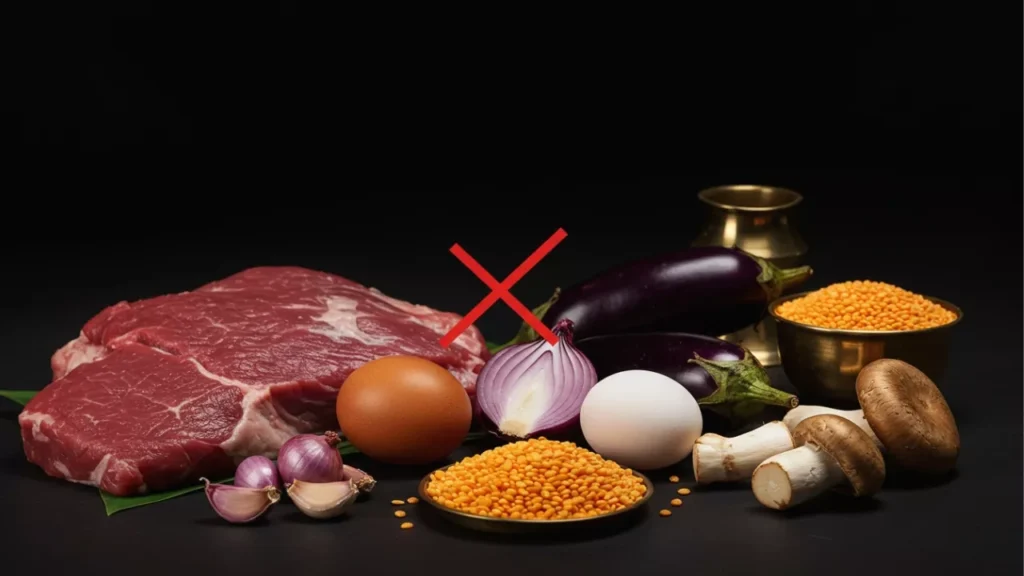
During the sacred fortnight of Pitrupaksha, the food we offer to our ancestors (Pitṛs) must be of utmost purity to ensure their satisfaction and invite their blessings. But what are the specific Forbidden foods for Pitrupaksha that our Puranic scriptures guide us to avoid? This essential guide delves into the detailed list of items that are considered unsuitable for Shradh offerings and personal consumption during this solemn period. Uncover why all forms of meat, fish, and eggs are strictly off-limits, and why the pungent duo of onion and garlic, along with other Tamasic vegetables like brinjal and radish, must be excluded from your kitchen. Learn about specific lentils, such as Masoor Dal, and certain grains that are proscribed. What do the scriptures say about milk from particular animals or buttermilk churned on specific days? Beyond ingredients, understand the critical importance of avoiding stale, contaminated, or twice-cooked food, and why intoxicants like alcohol are absolutely forbidden. This isn't just about following rules; it's about understanding the spiritual science behind these prohibitions and ensuring your offerings carry the purest vibrations to nourish your ancestors. Are you ready to prepare meals that truly honor your lineage with impeccable purity? This guide will illuminate the path.
Namaste,
The foundation of any sacred offering, especially during Pitrupaksha, is shuddhi – purity. This purity extends from our thoughts and actions to the very ingredients we use. The Puranas provide extensive lists, sometimes with slight variations, but the underlying principle is always the same: avoid foods that are Tamasic (impure, stale, leading to inertia), Rajasic (overly stimulating, passionate), or ritually proscribed. Let us categorize these forbidden foods Pitrupaksha cautions against.
The Cardinal Rule: No Meat, Fish, or Eggs
This is perhaps the most widely known and strictly adhered to rule during Pitrupaksha for most Hindu traditions.
- Why: These are generally considered Tamasic and involve violence (himsa), which is antithetical to the sacred and compassionate nature of Shradh. The Puranas are replete with instructions to avoid meat, especially for Brahmins and during sacred rites. While some Puranic passages mention specific types of meat being permissible for Shradh in ancient times (often for specific ancestral needs or by specific social orders), the overwhelming emphasis for general observance, especially in Kali Yuga, is on a purely vegetarian offering.
- What to Avoid: All forms of meat (mutton, chicken, pork, beef – beef, of course, being an absolute prohibition for Hindus), fish, and eggs. The scriptures you quoted mention avoiding the flesh of boar, tortoise, and cows. Rohita fish, swan, and the Cakra bird are specifically named as forbidden for Shradh. [Agni Purana, Garuda Purana] Flesh of carnivorous animals and certain birds like parrots and gallinules are also on the list.
The Pungent Duo & Other Tamasic Vegetables: Strictly Off-Limits

Certain vegetables, despite being plant-based, are considered non-Sattvic and are therefore among the forbidden foods Pitrupaksha strongly advises against.
- Onion (प्याज़ – These are universally avoided in Shradh cooking and most forms of Hindu sacred cuisine.
- Why: They are considered Rajasic and Tamasic, believed to agitate the mind and senses, making them unsuitable for offerings that require a calm, pure, and Sattvic environment. The texts explicitly list garlic and onion among forbidden items. [Agni Purana]
- Masoor Dal (मसूर दाल – Red Lentil):
- Why: Widely considered Tamasic and is consistently avoided in offerings to deities and ancestors. Your sources mention Masurika (lentil) specifically. [Agni Purana]
- Mushrooms (मशरूम – Kukurmutta):
- Why: They grow in darkness and are considered Tamasic. Not part of traditional Sattvic or Shradh cuisine.
- Brinjal/Eggplant (बैंगन – Baingan):
- Why: Often listed as unsuitable for offerings in various Puranic texts, including the Agni Purana.
- Radish (मूली – Mooli):
- Why: Generally considered Rajasic and not preferred for Shradh.
- Drumsticks (सहजन – Sahjan)
- Asafoetida (हींग – Hing):
- Why: While used in everyday cooking to aid digestion, its strong, pungent nature often places it on the avoid list for very pure offerings, especially by some Vaishnava traditions. However, if used, it must be pure and in very small quantities. Some Puranic lists group it with onion and garlic. [Agni Purana]
- Other Specified Vegetables: The texts you provided list several others like Alabu (bottle gourd – though some traditions allow it if Sattvic), Kusmanda (pumpkin/ash gourd – again, practices vary but some Puranic injunctions exist against specific types or on specific days), Vartaka (another type of brinjal or related vegetable), Sigruka (moringa/drumstick), and certain types of gourds or fruits like Tala, Varuna, Jambira (lemon/citron – often acidic foods are moderated), and red Bilva. [Agni Purana, Garuda Purana]
Panditji’s Wisdom: The principle is to offer vegetables that are mild, sweet, easily digestible, and Sattvic. If there is any doubt about a particular vegetable, it is safer to avoid it during Pitrupaksha and stick to those universally accepted like yams, raw bananas, and mild gourds prepared simply.
Grains and Pulses: Choose with Care
While grains are a staple, some are proscribed.
- Kodrava (कोदो बाजरा): A type of millet, often listed as unsuitable. [Agni Purana]
- Bengal Gram (चना दाल – Chana Dal) and Chickpeas (Kabuli Chana): Often avoided due to their heaviness and potential to cause flatulence, which is not ideal for a sacred meal focused on lightness and purity.
- Black Grams (उड़द – Urad): While urad dal (skinned) is crucial for pindas, whole black grams are prohibited on the fourteenth day (Chaturdashi). [Agni Purana] This highlights the specificity involved.
- Grain with Husk: Offerings of grains still in their husk are considered futile. [Garuda Purana]
Dairy Products: Purity is Key, Some Forms Avoided
While cow’s milk and ghee are highly revered, certain other dairy forms or contexts are not.
- Milk from Certain Animals/Conditions: Milk from camels, single-hoofed animals (like mares), sheep, or a cow that has recently calved (within ten days, called Gopiyata) or one without a calf is prohibited. [Agni Purana, Garuda Purana]
- Buttermilk from Specific Churning: Buttermilk churned on a New Moon day or a Pitrsraddha day is considered “on par with liquor,” and ghee from such churning is likened to “cow’s meat” – meaning, extremely impure for sacred purposes. [Agni Purana] This emphasizes the ritual purity of timing and process.
- Curd at Night: Generally, consuming curd at night is advised against in Ayurveda and some scriptural injunctions. [Agni Purana]
Stale, Contaminated, and Twice-Cooked Food: An Absolute No
This is a fundamental principle for all sacred offerings.
- Paryushita Bhojan (Stale Food): Food cooked the previous day or left over is strictly forbidden. Offerings must be freshly prepared.
- Twice-Cooked Food (Dwi-pakva): Food that has been cooked, stored, and then reheated is unsuitable.
- Contaminated Food: Food touched by dogs, insects, or hair; food sneezed upon; food seen by a woman in her menses, a person of “vile caste” (as per ancient societal norms focused on ritual purity standards), or a “fallen person”; food from a household experiencing recent birth/death pollution (sutak); or food touched by a corpse is considered highly impure and must be avoided. [Agni Purana, Garuda Purana]
- Food Prepared by Certain Individuals: The texts mention avoiding food cooked by a Sudra woman, a “wicked woman,” or from sources like blacksmiths, hunters, etc., reflecting ancient societal norms about ritual purity associated with professions and conduct. The underlying principle for us today is that the cook must be pure in body, mind, and conduct, and understand the sanctity of the task.
Intoxicants and Stimulants
- Alcohol (शराब – Sharab / मदिरा – Madira): Absolutely forbidden. Even touching wine is proscribed. [Agni Purana]
- Tobacco and other intoxicants: Fall under the same prohibition.
- Excessive Spices: While mild Sattvic spices are used, overly pungent or heating spices like excessive red chili are Rajasic and should be avoided. The aim is gentle, pleasing flavor, not stimulation. Saline and pungent foods are specifically mentioned for avoidance during impurity. [Agni Purana]
Other Specific Prohibitions During Pitrupaksha & Shradh
- Bell-Metal Vessels: Scriptures advise scrupulously avoiding bell-metal vessels for eating or drinking during Shradh and certain sacred days like Ekadashi. Churning in such vessels on a Pitrsraddha day makes the buttermilk akin to liquor. [Agni Purana]
- Food on Palm: A householder should not take food served directly on the palm.
- Eating with Head Covered or Shoes On: Considered demonic.
- Honey (Madhu): While honey is used in pinda daan, some Puranic lists (like one in Agni Purana for Vratas) mention honey among general things to avoid, likely referring to its consumption as regular food during strict observances, or perhaps certain types of honey. For pinda, it’s a specific ritual ingredient.
- Oil Cake (Pinyaka): Mentioned as forbidden. [Agni Purana]
- Dhatriphala (आंवला – Amla) on Specific Days: Avoidance of Amla is mentioned on specific weekdays, lunar days (like Sundays, seventh day, New Moon), and Sankranti. [Agni Purana] During Karttika month, its avoidance has very specific day-wise rules.

Why Such Strictness? The Spiritual Science of Offerings
These detailed prohibitions regarding forbidden foods Pitrupaksha emphasizes are not arbitrary. They are rooted in a deep understanding of how different substances affect our consciousness and the subtle energies of the offerings.
- Ensuring Purity for Ancestral Reception: The Pitrs exist in a subtle realm. Pure, Sattvic offerings carry vibrations that they can readily receive and that nourish them. Impure or Tamasic foods create blockages or offer unsuitable energy.
- Protecting the Performer: Consuming forbidden foods, especially during sacred rites, can negatively impact the performer’s own spiritual state and the merit of the ritual.
- Maintaining Ritual Integrity: Adherence to these rules ensures the sanctity of the Shradh rite itself, preventing it from becoming futile or attracting undesirable influences. The Puranas warn that improperly performed Shradh or those with impure offerings may satisfy negative entities (Rakshasas, Pretas) instead of the intended ancestors. [Agni Purana, Garuda Purana]
What If a Mistake Occurs? The Path of Prayashchitta
Our Dharma is compassionate. The scriptures you studied also speak of Prayashchitta or atonement for unintentional transgressions. If an error in diet occurs unknowingly, sincere repentance, fasting, chanting specific mantras, seeking guidance from learned priests, and performing prescribed expiatory rites (like consuming Panchagavya) can help purify the individual. For instance, unknowingly eating food defiled by a Sudra’s residual food requires fasting and drinking Panchagavya. [Agni Purana] Willingly eating forbidden items necessitates more significant penances like Krcchra or Chandrayana.
Conclusion: Honoring Ancestors with Mindful Sustenance

Understanding and adhering to the list of Forbidden Foods for Pitrupaksha<span style=”font-weight: 400;”> advises against is a vital aspect of honoring our ancestors with true devotion and respect. It is an act of love, discipline, and deep spiritual significance. By choosing our ingredients wisely and preparing them with a pure heart and in a pure manner, we ensure that our offerings are a source of peace and upliftment for our Pitrs, and a source of abundant blessings for ourselves and our families.
May your Pitrupaksha observances be filled with Shradh, purity, and the profound satisfaction of having served your ancestors in the most Dharma-aligned way.
|| हरि ॐ तत् सत् ||
Considering a rite for your own family?
Tell us what your family needs and a coordinator will contact you personally. No online payment is requested.
Send an enquiry