Leaving No Soul Behind: Offering Tarpan for Unknown Ancestors or Childless
Does your ancestral remembrance practice truly embrace all who came before you? While we often focus on known parents and grandparents, what about those whose names are lost to time, or those who left no descendants to perform their rites? Performing Tarpan for unknown ancestors and the childless isn't just compassionate; it's a vital aspect of fulfilling your Dharma completely, as guided by ancient Puranic wisdom. But how can an offering reach someone whose name or lineage (Gotra) you don't even know? Can your Tarpan truly bring peace (tṛpti) to forgotten souls or those who died without heirs? Explore the profound teachings of the Garuda and Skanda Puranas, which offer explicit validation and methods for these inclusive offerings. Discover the powerful mantras designed specifically for those without known identifiers and understand why acknowledging this vast, unseen foundation of your lineage is crucial for holistic spiritual well-being. This guide delves into the heart of Dharma's compassionate embrace, explaining why including every ancestor matters and how to practically implement it. Learn how to broaden your intention (Sankalpa), utilize specific, potent mantras, and harness the power of heartfelt feeling (Bhāva) when details are scarce. Are you ready to ensure no soul in your lineage is left behind? Read the full article to master the steps for performing Tarpan comprehensively, strengthening your roots, and inviting blessings from a truly contented ancestry.
Namaste,
Our tradition, in its boundless compassion, leaves no soul behind. Texts like the Garuda Purana, Skanda Purana, and Varaha Purana offer clear pathways to include all our ancestors in our prayers and offerings.
Leaving No Soul Behind: Offering Tarpan for Unknown Ancestors or Childless Ancestors with Puranic Guidance
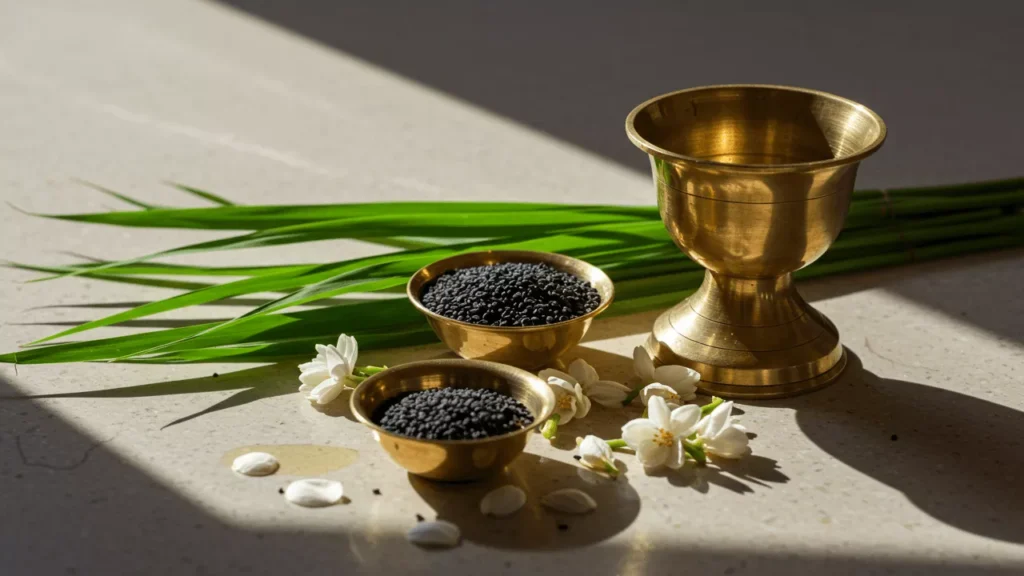
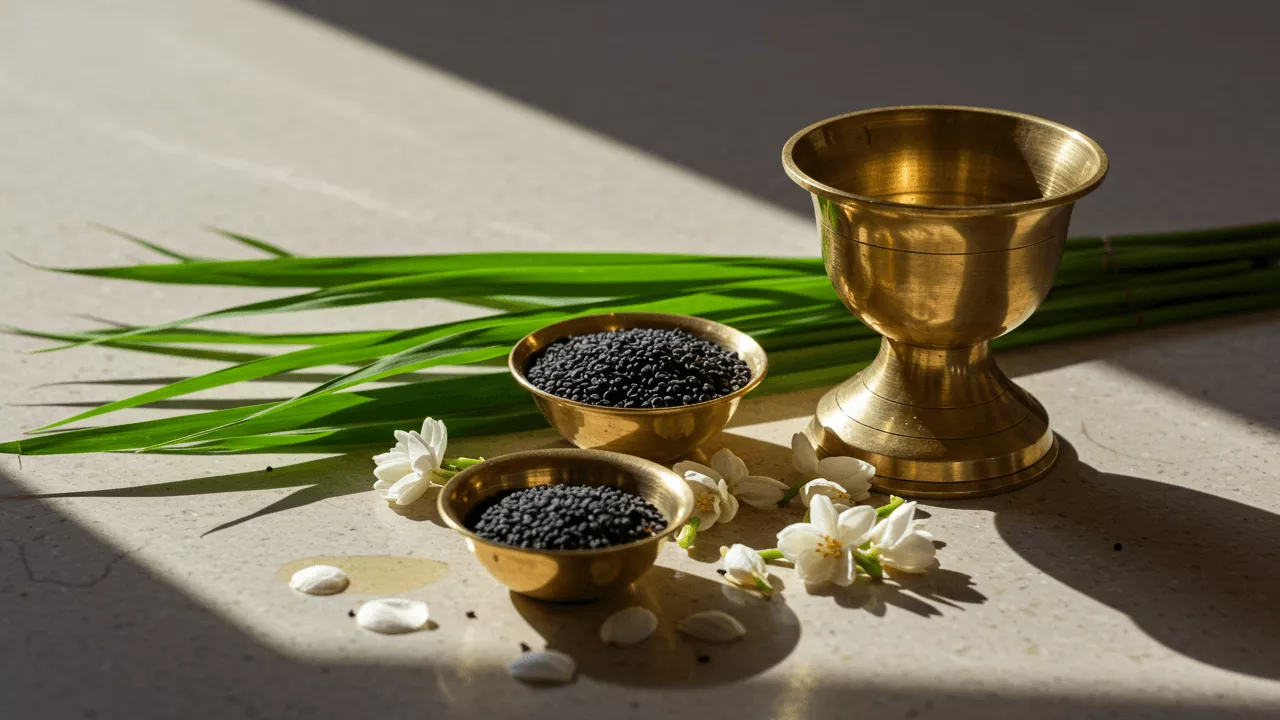
The sacred act of Tarpan, as the Varaha Purana reminds us, is fundamentally about offering tṛpti – satisfaction, peace, contentment – to our departed Pitṛs. This offering of water, usually mixed with black sesame seeds (kala til), forms a vital bridge between our world and the subtle realm of Pitṛ Loka. While we naturally focus on our immediate parents, grandparents, and great-grandparents, the embrace of Tarpan can, and indeed should, extend further.
The Compassionate Embrace of Dharma: Why Include the Unknown and Childless?
Why is it important to extend our remembrance beyond the known names and lineages?
- The Unbroken Chain: We are part of an immense, ancient chain of life. Countless ancestors, whose names and stories are lost to us, contributed to our existence. Their joys, sorrows, merits (puṇya), and demerits (pāpa) subtly influence the collective energy of the lineage. Offering Tarpan for unknown ancestors acknowledges this vast, unseen foundation of our lives.
- Alleviating Potential Suffering: Souls who are forgotten, or who have no descendants performing rites for them, might linger in a state of need or unrest in the subtle realms. Our offerings can provide them immense relief and aid their onward journey. This is an act of profound karuṇā (compassion).
- Honoring All Contributions: Even ancestors who were childless contributed to the family’s fabric during their lifetimes. Their existence mattered, and remembering them affirms their place within the lineage, regardless of progeny.
- Holistic Well-being: Just as a physician treats the whole body, addressing the needs of the entire ancestral lineage – known and unknown, with or without children – contributes to the overall spiritual health and harmony of the family, potentially mitigating obscure forms of Pitṛ Doṣa (ancestral afflictions).
- Fulfilling Our Duty Completely: Our dharma towards our ancestors is fulfilled most completely when our compassion extends to all who form our roots.
Puranic Sanction: Scriptural Support for Inclusive Tarpan
Our sacred texts explicitly address the need to remember those beyond the immediate, known lineage.
Garuda Purana: Direct Guidance for the Forgotten and Childless
The Garuda Purana (Part 2) offers remarkably direct and compassionate guidance:
- For Forgotten Ancestors: It instructs the performer to offer Pindas (sacred food balls, implying Tarpan is also appropriate) specifically to uplift “those kinsmen whose names and Gotra are forgotten” (nāma-gotra-vihīnānāṁ). It clearly states this offering is for those forgotten “whether in your Gotra or others” belonging to the family line. This is perhaps the most direct scriptural validation for performing Tarpan for unknown ancestors. It assures us that the lack of specific names is not a barrier.
- For Those Dying Young/Childless: The same section compassionately includes offerings for those “who died in infancy or were stillborn”. This implicitly covers many who would have been childless, showing that remembrance extends even to those who did not have the chance to procreate or whose lineage did not continue through direct offspring.
- Uplifting All Family Members: Garuda Purana (Part 1 & 2) also speaks of general Pinda offerings meant to uplift “all those who died in one’s father’s family and mother’s family” who may not have attained liberation (sadgati). This broad scope naturally includes unknown members and those without descendants.
Skanda Purana: Redemption Without Name/Gotra & Relief for the Heirless
The Skanda Purana, another pillar of Puranic wisdom, reinforces these principles:
- Redemption Without Identification: It explicitly advises that Shraddha (and by extension, Tarpan) should be performed for the “redemption of those in the absence of Nama (Name) and Gotra (Family)”. This confirms that rites can and should be performed even when specific identifiers are lost.
- Satisfaction for the Heirless: Crucially, the Skanda Purana provides assurance for childless ancestors. It mentions that libations offered at specific sacred times or places (like the period of Madhusravas mentioned in some contexts) “satisfy those who die without male issues or an heir for offering libations.” This directly addresses the concern for ancestors who had no one designated by traditional norms to perform their rites, confirming that our offerings can reach them.
- Power of Faith: This Purana repeatedly emphasizes that it is the faith (Shradh) with which the rite is performed that truly pleases the ancestors, transcending limitations of detailed knowledge.
These Puranic passages demonstrate a clear mandate and method for including ancestors who might otherwise be overlooked.
Practical Steps: How to Perform Tarpan for Unknown and Childless Ancestors
So, how do you translate this compassionate intent into your actual Tarpan practice? Here’s a simple approach grounded in Puranic wisdom:
1. Broaden Your Sankalpa (The Sacred Resolve)
At the very beginning of your Tarpan ritual, when you make your mental resolve (Sankalpa), consciously broaden its scope. After stating your intention for your known ancestors (father, grandfather, etc., and maternal line), add a specific intention for the others. You could mentally affirm something like:
“I perform this Tarpan also for the satisfaction and peace of all my unknown ancestors belonging to my paternal lineage (Pitṛ-kula) and my maternal lineage (Mātṛ-kula), whose names and Gotras may be forgotten. I offer this Tarpan also for the peace and upliftment of all ancestors in my lineages who departed without progeny. May this offering reach all of them through divine grace.”
2. Utilize Inclusive Mantras and Offerings
While performing the water offerings (jala-añjali), incorporate general invocations alongside those for specific ancestors:
- General Paternal/Maternal Lineage: After offering to known individuals, make three offerings each for the collective lines, saying:
- “Om Sarvebhyo Pitṛ-Kula Pitṛbhyo Namaḥ Swadhā” (ॐ सर्वेभ्यो पितृ-कुल पितृभ्यो नमः स्वधा – Salutations & offering to all ancestors of the paternal lineage).
- “Om Sarvebhyo Mātṛ-Kula Pitṛbhyo Namaḥ Swadhā” (ॐ सर्वेभ्यो मातृ-कुल पितृभ्यो नमः स्वधा – Salutations & offering to all ancestors of the maternal lineage).
- Specific Mantra for Unknown/Forgotten: A widely used and powerful mantra for this purpose, often cited in contexts like Gaya Shraddha but applicable generally with sincere intent, is:
Yeṣāṃ na mātā na pitā na bandhur nānya-gotriṇaḥ |
Te sarve tṛptim āyāntu mayotsṛṣṭaiḥ kuśodakaiḥ ||
(येषां न माता न पिता न बन्धुर् नान्यगोत्रिणः ।
ते सर्वे तृप्तिम् आयान्तु मयोत्सृष्टैः कुशोदकैः ॥)
Pronunciation: Yay-shaam na maa-taa na pi-taa na ban-dhur naan-ya-go-tree-nah | Tay sar-vay trip-tim aa-yaan-tu ma-yot-srishtai-hee ku-sho-da-kai-hee ||
Meaning: “Those who have no mother, no father, no relatives, nor belong to other known Gotras – May all of them attain satisfaction by the Kusha-grass water offered by me.
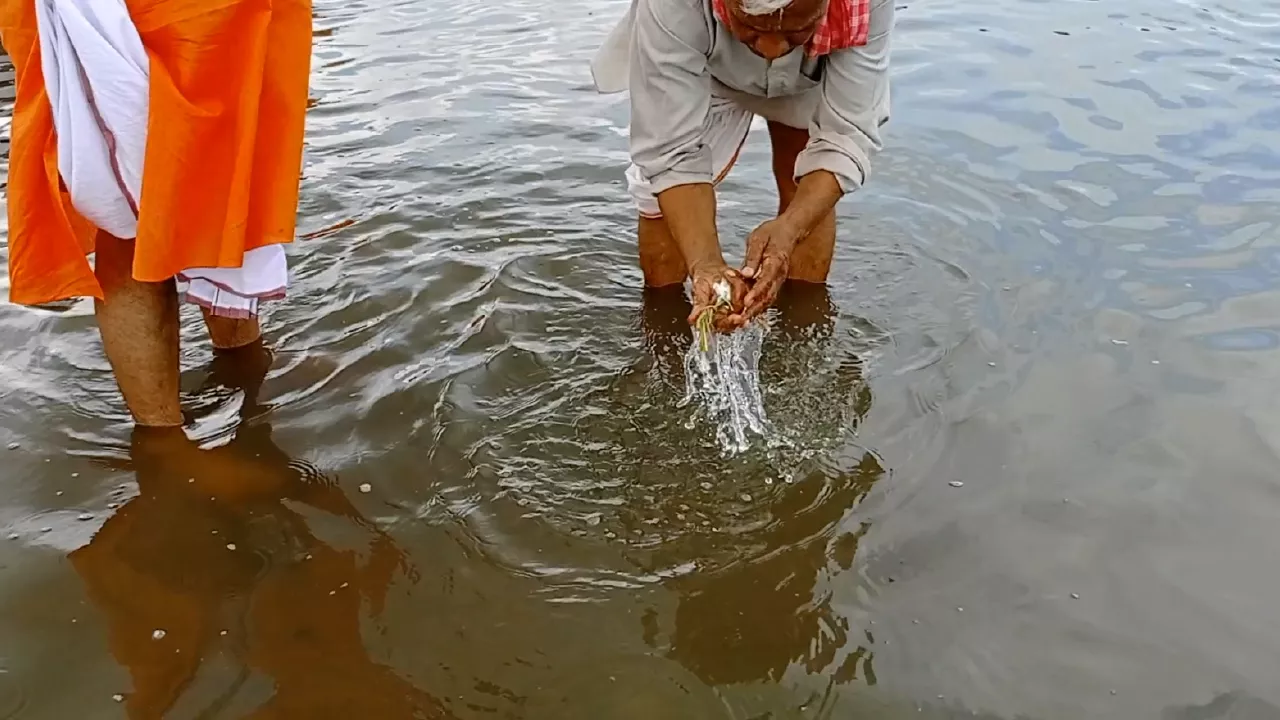
Offer three anjalis of water (ideally with Kusha grass blades and black sesame seeds) while reciting or mentally focusing on this mantra and its meaning. - Specific Intention for Childless: While making general offerings or using the above mantra, hold a specific compassionate thought for those ancestors who passed away without children, wishing them peace and fulfillment through your offering.
3. Maintain Standard Tarpan Procedure
The core method of offering remains the same:
- Direction: Face South.
- Materials: Use pure water mixed with black sesame seeds (kala til). Include Kusha grass if possible.
- Hand Posture: Offer water via the Pitṛ Tīrtha (between right thumb and forefinger).
- Sacred Thread: Ensure Yajnopavita is in Prācīnāvīta mode (over right shoulder).
- Number: Offer three anjalis for each category or specific mantra used.
4. Focus Intensely on Bhāva (Heartfelt Feeling)
When names and details are unknown, the power of your bhāva – your sincere feeling, compassion, faith, and devotion – becomes even more critical. As the Skanda Purana highlights, Shradh(faith) is paramount.
- Visualize: Imagine a vast, benevolent energy reaching out from you towards all corners of your ancestral lineage, carrying peace and sustenance.
- Feel Compassion: Genuinely feel compassion for any soul who might be suffering due to lack of remembrance or progeny. Let your offering be an act of pure, selfless love.
- Trust Divine Grace: Have faith that the divine mechanism, overseen by deities like Lord Yama and the Pitṛ Devatas, ensures that sincere offerings reach their intended recipients, even if we lack specific details.
5. Consider Additional Meritorious Acts (Dana)
Supplementing Tarpan with acts of charity (Dāna) done in the name of all ancestors is highly meritorious. Donating food (anna dāna), clothing (vastra dāna), or money to the needy or to deserving Brahmins, while holding the intention that the merit should benefit your entire lineage (including unknown and childless members), is a powerful way to support their well-being.
Dispelling Doubts: Will My Offering Reach Them?
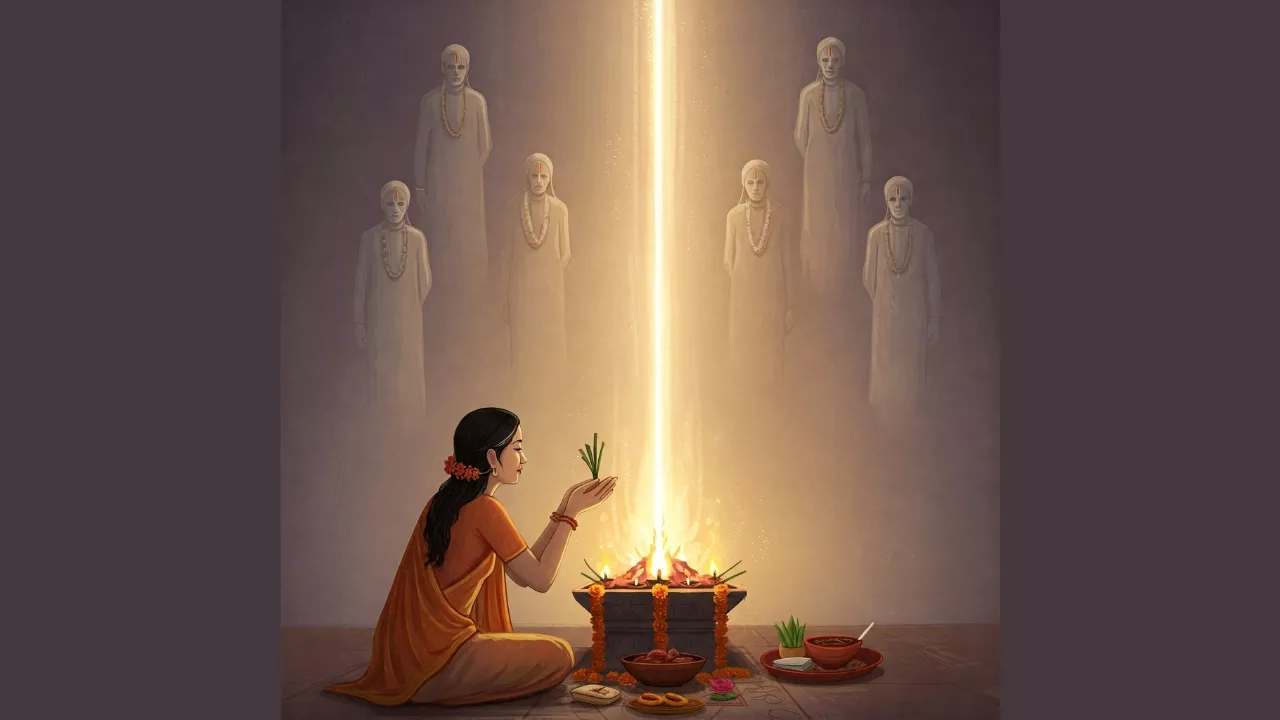
A natural doubt might arise: “If I don’t know their name or Gotra, how can the offering possibly reach the correct ancestor?” Our scriptures operate on principles beyond mere physical addressing.
- Intention is Key: Your focused Sankalpa acts like a spiritual address. When you intend the offering for “all unknown ancestors of my father’s line,” that intention guides the energy.
- Blood Connection: The very biological and energetic connection you share with your lineage acts as a conduit.
- Divine Mechanism: The Pitṛ Devatas and Lord Yama are believed to oversee the distribution of offerings according to karmic entitlements and the performer’s sincerity. Trust in this divine system.
Conclusion: Dharma’s Embrace Includes Every Soul
Your desire to perform Tarpan for unknown ancestors<span style=”font-weight: 400;”> and for those who were childless is a beautiful expression of the compassionate heart of Sanatana Dharma. Our Puranic heritage, through texts like the Garuda Purana and Skanda Purana, explicitly validates and guides this inclusive approach.
Do not let the lack of names or details deter you. Broaden your Sankalpa, use encompassing mantras like the Yeṣāṃ na mātā… verse or general invocations for paternal and maternal lines, perform the offering with meticulous care regarding posture and materials, and most importantly, infuse the act with profound faith (Shradh) and compassion (karuṇā).
By extending your reverence to every root of your existence, known or unknown, you not only bring potential peace and upliftment to countless souls but also purify and strengthen your entire lineage. You fulfill your Pitṛ Dharma in its truest, most complete sense, ensuring that no ancestor is left behind in the sacred circle of remembrance. May this understanding deepen your practice and bring abundant blessings from a fully contented ancestry.
|| कल्याणमस्तु ||
Considering a rite for your own family?
Tell us what your family needs and a coordinator will contact you personally. No online payment is requested.
Send an enquiry