Understanding Krishna Paksha Tithis: Their Role in Pitru Paksha
Unlock the secrets of ancestral reverence by understanding Krishna Paksha Tithis and their pivotal role in Pitrupaksha. A Tithi is not just a day; it's a precise lunar day, marking a 12-degree increase in the angular distance between the Sun and Moon. This celestial dance dictates the Tithi's variable length (19-26 hours), making it distinct from our 24-hour solar day. The lunar month has 30 Tithis, split into two fortnights (Pakshas): the bright, waxing Shukla Paksha, and the dark, waning Krishna Paksha. Pitrupaksha falls entirely within the Krishna Paksha of the Bhadrapada/Ashwin month, a period deeply connected to ancestors. The core principle for Shraddha during Pitrupaksha is to perform it on the same Krishna Paksha Tithi (or the corresponding Tithi number if the death occurred in Shukla Paksha) on which the ancestor passed away. This isn't arbitrary; it's about cosmic resonance. This specific Tithi holds the energetic signature of the soul's departure, making it the most potent time for offerings to reach them effectively. It's a focused act of remembrance, ensuring that individual ancestors receive the primary benefit of that day's rites, aligning with scriptural wisdom and ancient tradition. Thus, understanding and observing the correct Krishna Paksha Tithis is key to a meaningful and efficacious Pitrupaksha. Now that you have a clearer understanding of how Krishna Paksha Tithis are determined and why they are crucial for Shraddha, how does this influence your approach to identifying and observing these specific lunar days for your ancestors?

Namaste,
What are Krishna Paksha Tithis and how they are decided?
A tithi is far more than just a ‘day’ as understood in the Western sense. It is a measure of the Moon’s journey relative to the Sun, a celestial marker carrying specific energy and significance. Think of the Gregorian calendar day, measured from midnight to midnight, as a steady, man-made rhythm based solely on the Earth’s spin. The Tithi, however, is a living, breathing unit of time dictated by the cosmos itself, specifically the ever-changing relationship between Chandra (Moon) and Surya (Sun).
Decoding the Tithi: A Measure of Lunar Elongation
At its core, a Tithi represents a specific phase of the Moon, defined by the time it takes for the angular distance (longitude) between the Sun and the Moon to increase by exactly 12 degrees.
- The Starting Point: Imagine the New Moon, or Amavasya. Here, the Sun and Moon are aligned in the sky (0 degrees separation). This marks the end of one lunar month and the potential start of the next Tithi cycle.
- The Journey: As the Moon begins its orbit, moving away from the Sun, the angle between them increases.
- When the Moon has moved 12 degrees away from the Sun, the first Tithi, Pratipada, ends, and the second, Dwitiya, begins.
- When the Moon has moved another 12 degrees (total 24 degrees from the Sun), Dwitiya ends, and Tritiya begins.
- This continues, with each 12-degree increment marking the completion of one Tithi and the start of the next.
- The Cycle: There are 30 such Tithis in a complete lunar cycle (approximately 29.5 days):
- 15 Tithis during the waxing phase (from New Moon to Full Moon – Shukla Paksha).
- 15 Tithis during the waning phase (from Full Moon back to New Moon – Krishna Paksha).
Why Tithis Aren’t 24 Hours Long: The Moon’s Elliptical Dance
This is a crucial point that often causes confusion. Unlike the consistent 24-hour solar day, a Tithi’s duration is variable.
- Variable Speed: The Moon orbits the Earth in an ellipse, not a perfect circle. This means its speed changes – it moves faster when closer to Earth (perigee) and slower when farther away (apogee).
- Impact on Duration: Because the Tithi is defined by covering a fixed angular distance (12 degrees), the time it takes to cover that distance varies based on the Moon’s speed.
- Range of Length: Consequently, a Tithi can last anywhere from approximately 19 hours to nearly 26 hours.
- Starting and Ending Times: A Tithi does not begin or end conveniently at sunrise or midnight. It can start or conclude at any hour of the solar day or night. This is why sometimes a specific Tithi might span across two Gregorian calendar dates, or occasionally, two Tithis might occur within a single solar day (this is rarer and known as Kshaya Tithi, a decayed Tithi). Conversely, a Tithi might stretch over nearly two days (Vriddhi Tithi, an increased Tithi).
This dynamic nature is precisely why relying solely on a Gregorian calendar isn’t sufficient for our traditional rituals. We must follow the Panchang, which calculates these precise celestial movements.
Tithis and the Pakshas: Mapping the Lunar Fortnights

The 30 Tithis are grouped into two fortnights, or Pakshas, which are fundamental to understanding Pitrupaksha:
- Shukla Paksha (शुक्ल पक्ष – The Bright Fortnight):
- Starts the day after Amavasya (New Moon).
- Characterized by the waxing moon (growing illumination).
- Runs from Pratipada (1st Tithi) to Purnima (15th Tithi – Full Moon).
- Generally associated with auspicious activities, growth, and the Devas (Gods).
- Krishna Paksha (कृष्ण पक्ष – The Dark Fortnight):
- Starts the day after Purnima (Full Moon).
- Characterized by the waning moon (decreasing illumination).
- Runs from Pratipada (1st Tithi) back to Amavasya (15th Tithi – New Moon).
- This fortnight is profoundly connected to our ancestors (Pitrus). Pitrupaksha falls entirely within the Krishna Paksha (of the Bhadrapada/Ashwin month). It’s a time for introspection, release, and honouring those who came before.
The names of the Tithis are the same in both Pakshas (Pratipada, Dwitiya, Tritiya… up to Chaturdashi), but the 15th Tithi has a distinct name and significance: Purnima in Shukla Paksha and Amavasya in Krishna Paksha.
The Core Principle: Why the Ancestor’s Death Tithi Dictates the Shraddha Day
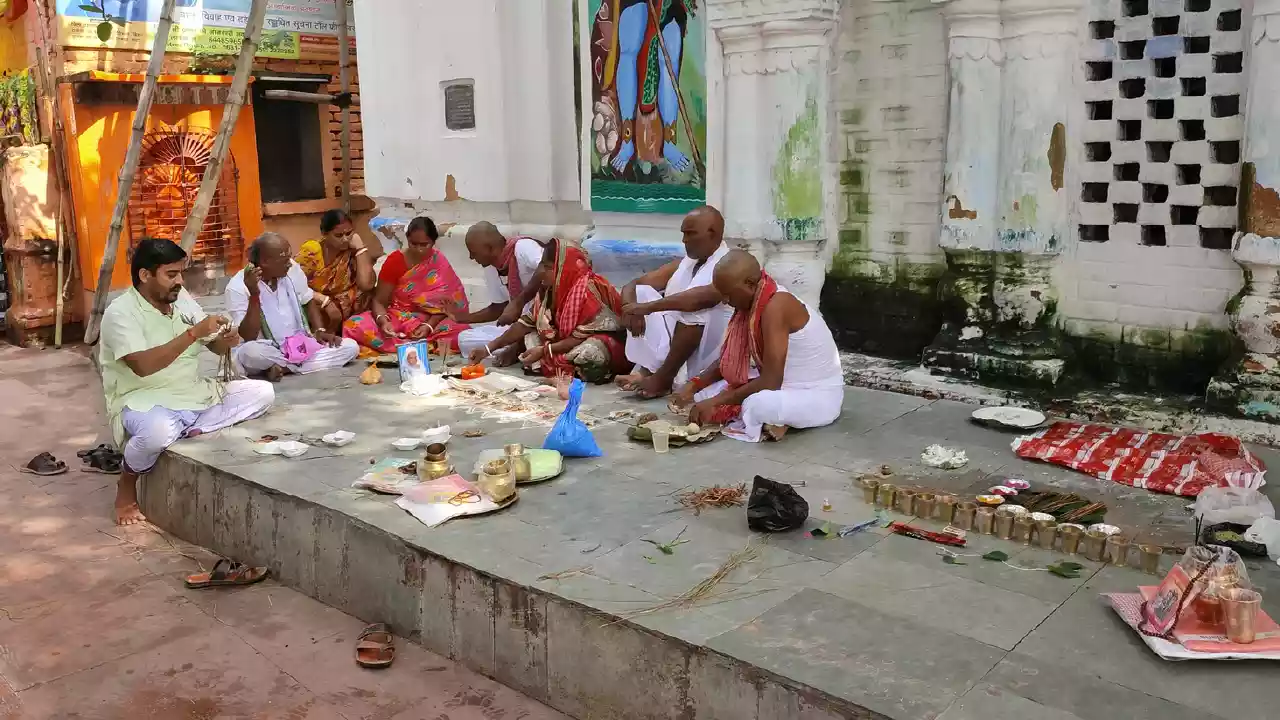
Now we arrive at the heart of your question. Why is the specific Tithi on which an ancestor departed this mortal realm so critical for determining their annual Shraddha day during Pitrupaksha?
The fundamental rule of Shraddha is: The annual Shraddha ceremony for an ancestor should be performed during Pitrupaksha on the same Tithi (lunar day) as the Tithi on which they passed away.
- Example: If your grandfather left his body on the Panchami Tithi (5th lunar day) of the Krishna Paksha (waning fortnight) in the month of Pausha, you would perform his annual Shraddha during Pitrupaksha on the Panchami Tithi of the Ashwin Krishna Paksha. It doesn’t matter if his death occurred during Shukla Paksha or Krishna Paksha originally; the Tithi number (Panchami in this case) is what you match during the Pitrupaksha period.
But why this specific alignment? Our scriptures and the wisdom of the sages point to several profound reasons:
Cosmic Resonance and Energetic Signature
- Unique Vibrational Moment: The moment of death is a significant transition. The specific alignment of the Sun and Moon at that instant, marked by the Tithi, creates a unique cosmic energetic signature associated with the departing soul’s journey.
- Revisiting the Energy: Performing Shraddha on the same Tithi each year during Pitrupaksha is believed to tap into a similar lunar energy pattern. It creates a resonance, a vibrational channel, making the connection to the departed soul stronger and the transmission of offerings (subtle energy of food, water, prayers, mantras) more effective.
- Window of Receptivity: It’s believed that the ancestors are particularly receptive to offerings made on the anniversary Tithi of their departure, especially during the special window of Pitrupaksha when they are said to be closest to the earthly realm.
Focused Remembrance and Specificity
- Honouring the Individual: Matching the Tithi is a deeply personal and specific act of remembrance. It acknowledges the unique identity and departure moment of that particular ancestor within the vast lineage. It’s like celebrating a person’s birthday on their actual birth date – it holds more meaning than a generic celebration.
- Avoiding Diffusion: While Sarvapitri Amavasya allows for general offerings to all ancestors, observing the specific Tithi focuses the intention and ritual energy towards the designated individual, ensuring they receive the primary benefit of that day’s rites.
Scriptural Sanction and Ancient Tradition (Parampara)
- Guidance from Shastras: Our sacred texts, particularly the Puranas (like the Garuda Purana, which extensively details funeral rites and ancestor worship) and Dharma Shastras, prescribe this method. Following the Tithi is adhering to the ordained procedures passed down through millennia.
- Continuity of Practice: This practice connects us to countless generations who have honoured their ancestors in precisely the same way, strengthening the chain of tradition (Parampara) and ensuring the efficacy of the rituals as validated by time and experience.
Psychological and Spiritual Impact
- Structured Devotion: Having a specific Tithi provides a clear focus for devotion and preparation. It transforms a general sense of duty into a specific, recurring act of love and respect.
- Deepening the Bond: Annually performing the Shraddha on the correct Tithi reinforces the bond between the descendant and the ancestor, fostering a sense of continuity and acknowledging the debt we owe to those who paved the way for our existence.
Practical Application: Finding and Observing the Tithi
Knowing the importance is one thing; applying it is another.
- Identifying the Death Tithi: The first step is to ascertain the exact Tithi on which the ancestor passed away. This information might be recorded in family records, horoscopes (Janam Patri), or known through oral tradition. Consulting older family members is often the best way. If the exact Tithi is lost, then Mahalaya Amavasya becomes the default day.
- Using the Panchang: Once you know the death Tithi (e.g., Ashtami, Dashami), you need a reliable Panchang for the current year (like 2025) to find out which Gregorian date corresponds to that Tithi during the Ashwin Krishna Paksha (Pitrupaksha period).
- The Aparahna Kala Rule: While the Tithi might span across parts of two Gregorian days, the Shastras recommend performing the main Shraddha rites (like Pind Daan and Brahmin Bhoj) during the Aparahna Kala (afternoon period) of the day when the Tithi is prevalent. This is typically the time frame from the 8th Muhurta (Kutup Muhurta, around 11:36 AM – 12:24 PM, varies) up to the 10th Muhurta (Rohina Muhurta) or slightly later, essentially the middle part of the afternoon. If the Tithi prevails during the Aparahna Kala of a specific solar day, that day is chosen for the Shraddha. A Pandit can help determine this precisely.
Special Tithis Reinforce the Concept

The existence of specific Shraddha days within Pitrupaksha further highlights the importance of the Tithi:
- Avidhava Navami: Shraddha performed specifically on the Navami Tithi for women who died before their husbands.
- Ghata Chaturdashi: Shraddha performed specifically on the Chaturdashi Tithi for those who suffered unnatural deaths.
- Yati Dwadashi: Shraddha performed specifically on the Dwadashi Tithi for renunciates.
These specific assignments underscore that each Tithi carries a certain quality or significance recognized by tradition, making the alignment with the death Tithi even more meaningful.
Tithi: The Unwavering Anchor in Time
So, The Tithi is not merely a date. It is a precise measure of the Moon’s phase, a cosmic marker imbued with energy and significance. By aligning our Shraddha rituals with the ancestor’s death Tithi during Pitrupaksha, we are not just following a rule; we are:
- Honouring cosmic rhythms.
- Creating energetic resonance with the departed soul.
- Performing a focused act of remembrance and gratitude.
- Adhering to sacred tradition.
- Maximizing the efficacy of our offerings.
It is this profound connection between the lunar cycle, the moment of departure, and the act of remembrance that makes the Tithi the indispensable key to unlocking the correct and most potent day for performing Shraddha. It is a testament to the intricate wisdom woven into the fabric of Sanatana Dharma, connecting our earthly duties with the vast workings of the cosmos.
Never underestimate the importance of the Tithi. It guides us in honouring our past and securing blessings for our future.
|| हरि ओम ||
Considering a rite for your own family?
Tell us what your family needs and a coordinator will contact you personally. No online payment is requested.
Send an enquiry