Who receives Pindas: A Clear Explanation of Pind Daan Recipients
When you offer Pindas during Shradh, have you ever wondered exactly who receives Pindas? While the immediate father, grandfather, and great-grandfather are the primary recipients according to texts like the Varaha Purana, the circle of beneficiaries is surprisingly vast and layered. Did you know that maternal ancestors are equally honoured with specific offerings? And what role do the divine Visvedevas play before the ancestors even receive their share? This exploration delves into the Puranic wisdom revealing the full spectrum of recipients. Learn how Pinda Daan extends compassion beyond the direct lineage to include all known and unknown kinsmen, even those who died without proper rites. Crucially, discover how these offerings serve as vital support for souls potentially lingering in the Preta state, aiding their challenging transition. Could offerings even reach deities like Shiva or Vishnu in exceptionally sacred places like Gaya? Uncover the fascinating significance behind how the physical Pindas are dispersed – given to cows or crows – and how specific rites like Sapindikarana shift the focus over time. Finally, explore the intriguing concept of channeling the Pinda's merit for specific boons like progeny or wisdom. Read on to understand the complete, multi-layered answer.
Namaste
The act of Pinda Daan, often a central part of the Shradh ceremony, is a spiritual bridge connecting the living with the departed. The Puranas provide clear guidance on the primary recipients, while also extending the circle of compassion much wider.
The Core Recipients: The Three Immediate Paternal Ancestors– Who receives Pindas
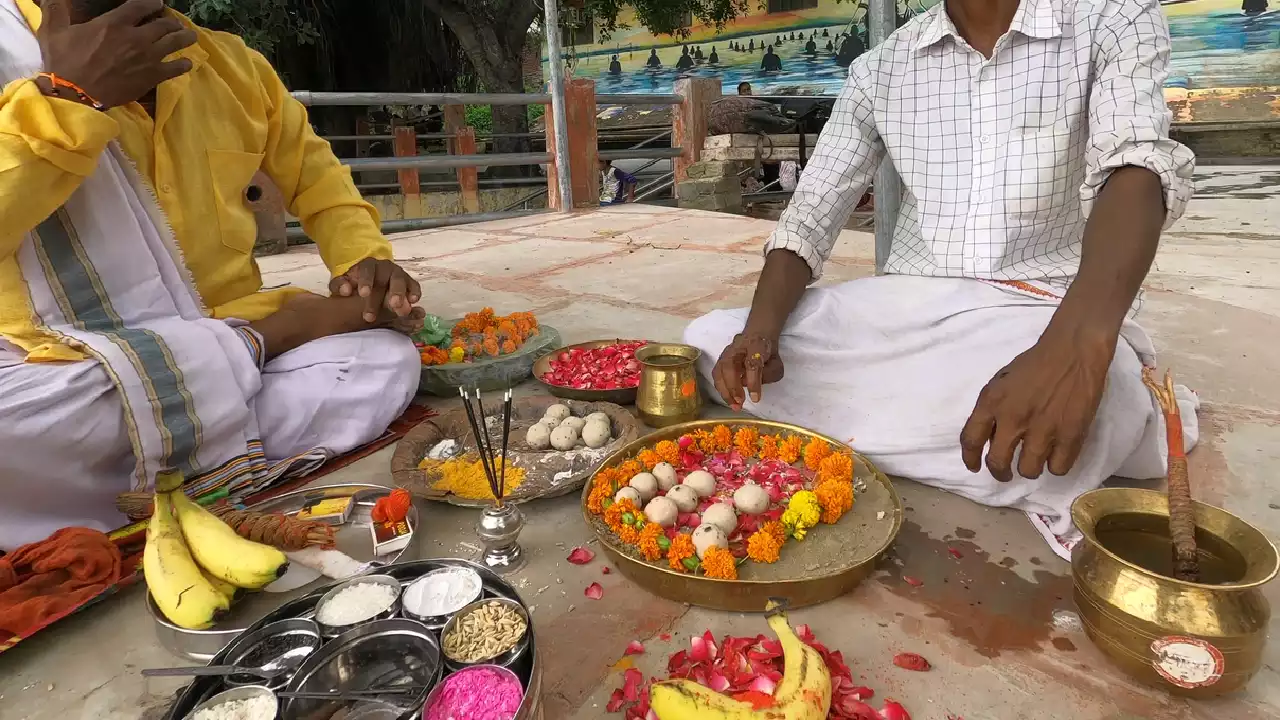
The most direct and consistently mentioned recipients of the Pinda offerings are the three immediate paternal ancestors.
- The Varaha Purana is quite explicit, stating that during Shradh, the offering is made primarily for the departed father, the grandfather, and the great-grandfather [Varaha Purana snippet: 2]. It details that the first Pinda is specifically consecrated for the father, the second for the grandfather, and the third for the great-grandfather [Varaha Purana snippet: 2].
- This focus on the three preceding paternal generations (father, grandfather, great-grandfather – Pitṛ, Pitāmaha, Prapitāmaha) is strongly echoed in the Brahma Purana Part 3, which affirms that this trio are the “rightful recipients of the rice-ball” (Piṇḍabhājaḥ) [Brahma Purana Part 3 snippet: 1].
These three generations represent our most immediate link to the ancestral line, the ones to whom our debt (Pitṛ Rin) is most direct.
Extending the Reach: Maternal Ancestors (Mātāmaha Adi)
Our connection, however, does not flow solely through the paternal line. Our sacred traditions acknowledge the equal importance of our maternal lineage.
- The Varaha Purana instructs that after honouring the paternal line, offerings of Pindas should also be duly made for the maternal manes – specifically the maternal grandfather, maternal great-grandfather, and the generation before him (Mātāmaha, Mātuh Pitāmaha, Mātuh Prapitāmaha) [Varaha Purana snippet: 3]. The ritual structure mirrors that for the paternal line, often including honouring Brahmanas who represent them.
- Similarly, the Garuda Purana Pt_ 2 speaks of seeking permission during the rites to perform Shradh specifically for the maternal grandfather, maternal great-grandfather, and maternal great-great-grandfather [Garuda Purana Pt_ 2 snippet: 2].
This inclusion ensures that the nourishment and blessings encompass both sides of one’s heritage.
Preliminary Offerings: Honouring the Devas (Visvedevas)
Before the offerings reach the Pitṛs, protocol often dictates honouring the divine beings known as the Visvedevas.
- The Brahma Purana Part 3 specifies that in certain types of Shradh (like the Pārvaṇa Shradh), offerings should commence with the Devas [Brahma Purana Part 3 snippet: 1]. It even mentions a structure of offering two Pindas pertaining to Devas and three (or one each) for the Pitṛs [Brahma Purana Part 3 snippet: 1]. While the core focus remains the ancestors, acknowledging the Devas first sets a sacred precedent.
- The Agni Purana concurs, instructing that offerings should first be made to the Visvedevas with specific mantras before proceeding to the offerings for the forefathers [Agni Purana snippet: 5]. These Devas are seen as universal divine principles who witness and sanctify the ancestral rites.
The Wider Circle: All Ancestors and Kinsmen
The compassion of Pinda Daan extends far beyond the immediate three generations on both sides. Our scriptures encourage remembering all connected souls.
- The Agni Purana advises that those desiring the upliftment (samuddharet) of their entire family should offer rice balls to all forefathers [Agni Purana snippet: 6]. This explicitly includes those who may have died without a spouse or children (anapatya), those for whom proper rites were perhaps not performed, and even known and unknown relatives (jñātājñātāḥ kulodbhavāḥ) [Agni Purana snippet: 6].
- The Garuda Purana Pt_ 1 echoes this expansive view, speaking of offering Pindas to all ancestors and kinsmen born in the family (kule mama) [Garuda Purana Pt_ 1 snippet: 13].
This signifies that the ritual aims for the well-being of the entire extended lineage, leaving no one forgotten.
Souls in Transition: Assisting the Pretas
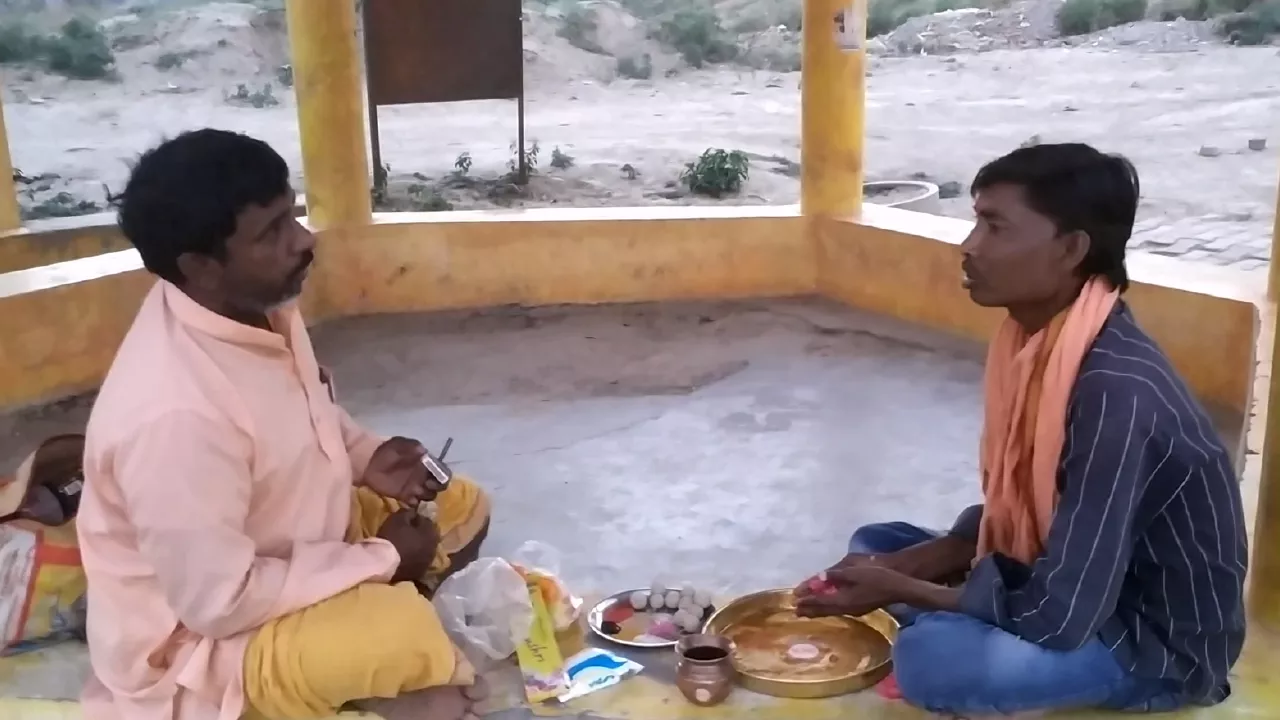
A crucial aspect of Pinda Daan is its power to help souls who may be lingering in an intermediate state after death, often referred to as Preta (a disembodied spirit not yet settled in the ancestral realm).
- The Agni Purana clarifies that Pindas are offered for the sake of forefathers who remain in the form of a preta (pretatvam gataḥ) [Agni Purana snippet: 8]. The explicit hope is that the offering will please (tṛpyantu) and release them from that state.
- Offering Pindas at specific potent locations like Pretasila in Gaya is considered particularly effective for this purpose, believed to liberate one’s family (kulāni svāni) from such conditions [Agni Purana snippet: 7].
- The Skanda Purana Part 15 reinforces this, stating that offering rice balls and libations at a particular Tirtha rids one of ghosthood (paiśācyāt pramucyate) [Skanda Purana Part 15 snippet: 1], implying the liberation of such spirits.
Thus, Pinda Daan serves as a vital support system for souls needing assistance in their post-mortem journey.
Divine Recipients: Offerings to Deities in Sacred Contexts
Interestingly, while primarily focused on ancestors, in certain highly sacred contexts, the offering of Pindas can extend even to deities.
- The Agni Purana, when discussing rites at Gaya, mentions that rice balls should also be offered to Lord Mahesa (Shiva) at specific holy spots within Gaya [Agni Purana snippet: 7].
- Similarly, the Garuda Purana Pt_ 1, describing practices in Gaya, speaks of placing the Pinda in the very hand of Lord Janardana (Vishnu) with a prayer for liberation, indicating a direct offering to the Supreme Being in that consecrated space [Garuda Purana Pt_ 1 snippet: 12].
This suggests that in places of immense sanctity, the offering transcends the ancestral realm and becomes an act of devotion to the Divine as well, seeking universal blessings.
Beyond the Veil: Secondary Recipients and Symbolic Disposal
What happens to the physical Pindas after the ritual? The way they are dispersed also carries meaning about who receives Pindas in a broader sense.
- The Varaha Purana mentions that after the main offering to the manes, the rice balls should be given to crows [Varaha Purana snippet: 4]. Crows are often seen in tradition as messengers or beings connected to the ancestral realm or Lord Yama.
- The Garuda Purana Pt_ 2 states that the Pindas are given to cows, etc. [Garuda Purana Pt_ 2 snippet: 3]. The cow is sacred, and feeding her is always meritorious, symbolizing nourishment returning to sacred life.
- The Garuda Purana Pt_ 2 also details specific Pindas offered within the household context after death rites: one at the doorway for the departed soul conceived as a traveler (pleasing household deities), one in the courtyard for celestial beings (Khecara), and one at the resting place for the spirit (Bhūta) associated with the spot, aiming to harmonize these energies with the departed [Garuda Purana Pt_ 2 snippet: 1].
These practices show the ripple effect of the offering, extending its merit into the natural world and subtle environment.
Shifting Focus: The Effect of Sapindikarana
There’s a specific rite called Sapindikarana, usually performed about a year after death, which ritually merges the recently departed soul with the three preceding generations. This has an effect on who receives Pindas directly.
- The Brahma Purana Part 3 explains that after this rite, the great-grandfather of the father (i.e., the fourth generation back) “forfeits the direct right of receiving Pinda” (piṇḍabhāktvāt vihīyate) and henceforth receives only the residue or leavings (lepabhāk) [Brahma Purana Part 3 snippet: 2]. The focus shifts to the three generations closest to the performer.
- The same text suggests that even distant relatives (bāndhavāḥ) or those in difficult states (durgatau) become fed with the leavings (lepena) after the primary Pitṛs have been satisfied [Brahma Purana Part 3 snippet: 3].
Symbolic Offerings: Directing Merit for Specific Boons
Finally, the Puranas describe fascinating ways the Pindas, once offered to the ancestors, can be symbolically utilized to seek specific blessings, indicating a further transference of their merit.
- The Brahma Purana Part 3 mentions that if the performer desires progeny (prajārthī), the wife may consume the middle Pinda with appropriate mantras [Brahma Purana Part 3 snippet: 4].
- For brilliance or radiance (tejas), the Pinda can be offered to cows [Brahma Purana Part 3 snippet: 4].
- For wisdom (jñāna) and fame (yaśas), it can be cast into waters (apsu prakṣipet) [Brahma Purana Part 3 snippet: 4].
- For longevity (āyus), it can be given to Brahmins [Brahma Purana Part 3 snippet: 4].
- The Skanda Purana Part 17 provides similar instructions: consigning the Pinda to fire (agnau juhuyāt) for enjoyment/prosperity, giving the middle one to the wife (patnyai) for progeny, the third to cows (gobhyaḥ) for radiance, and casting it into waters (jale kṣipet) for knowledge and fame [Skanda Purana Part 17 snippet: 1].
These practices suggest that the potent energy imbued in the Pinda through the ritual can be consciously directed towards manifesting specific positive outcomes in the lives of the descendants, under the grace of the satisfied ancestors.
Conclusion: A Multi-Layered Reception
So, when you ask who receives Pindas, the answer is beautifully layered:
- Primarily: Your departed father, grandfather, and great-grandfather, along with your maternal grandfather, maternal great-grandfather, and the generation prior.
- Preliminarily: The Devas (Visvedevas) who witness and sanctify the rite.
- Broadly: All known and unknown ancestors and kinsmen, especially those who died without proper rites or descendants.
- Specifically: Souls lingering in the Preta state, whom the offering helps liberate.
- Contextually (at Tirthas): Deities like Lord Shiva or Lord Vishnu.
- Secondarily/Symbolically: Creatures like crows or cows, household deities, elemental spirits, and potentially the wife, fire, water, or Brahmins when seeking specific boons.
This intricate web shows that Pinda Daan is not a narrow act but a profound ritual that nourishes our direct lineage, extends compassion to the wider family tree and suffering souls, acknowledges the divine, and even allows for the blessings generated to be channelled for the well-being of the living. It truly is a cornerstone practice that honours the entire spectrum of existence connected through lineage and spirit.
May this understanding bring greater depth and devotion to your observance of this vital tradition. May your offerings always reach their intended recipients, bringing peace to them and blessings to you.
|| हरि ॐ तत् सत्।|
Considering a rite for your own family?
Tell us what your family needs and a coordinator will contact you personally. No online payment is requested.
Send an enquiry