How to Make Pindas: Step-by-Step Guide for Shradh Offerings
Seeking guidance on how to make Pindas for the sacred Shradh ceremony? This revered practice connects us deeply with our ancestors, and preparing the offering is a spiritual act in itself. But where do you begin? This step-by-step guide, drawing wisdom from the Puranas, demystifies the process, starting with the crucial first step: preparing your heart and space with purity and devotion. What are the essential, sacred ingredients you'll need? Learn about the significance of the foundation – cooked rice (Caru) – and the vital enhancements like ghee, indispensable black sesame seeds (Til), honey, and milk. Discover the simple, mindful technique for combining these elements and forming the actual Pindas. How large should they be, according to sages like Vyasa? And why is placing them on sacred Kuśa grass, facing the correct direction, so important? While the physical preparation is key, understanding the offering ritual and the immense benefits—ancestral satisfaction (tṛpti) and blessings—adds profound meaning. Ready to learn the sacred steps to honour your Pitṛs? Read the full guide to understand each detail.
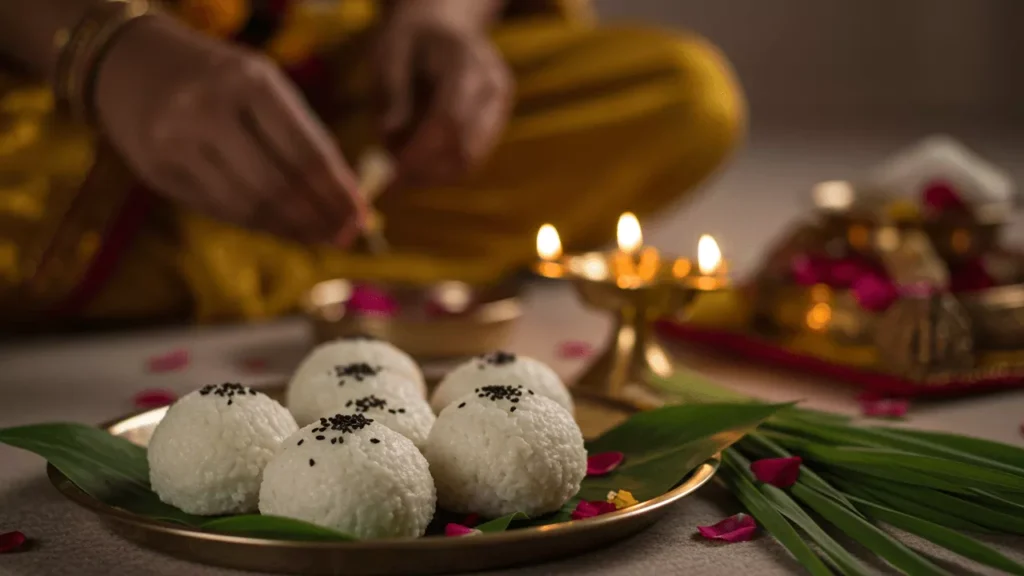
Namaste,
The preparation of Pindas for the sacred Shradh rites. You seek to know how to make Pindas, and this desire itself is blessed, for it shows your reverence for those who walked this earth before you, your beloved Pitṛs.
The process is simpler than you might imagine, yet profound in its impact. The wisdom flows from our ancient scriptures, the Puranas, which guide us like gentle lamps. As the Skanda Purana reminds us time and again, the offering of these food balls (Pindas) with true faith (śraddhā) brings immense merit and pleases our ancestors immensely.
How to Make Pindas: Step-by-Step Guide for Shradh Offerings
Consider this not merely a recipe, but a sacred act infused with love and remembrance. The energy you put into this preparation – your purity of thought, your focused devotion – becomes part of the offering itself.
Preparing Your Heart and Space: The First Crucial Step
Before you even touch the ingredients, take a moment. Bathe, wear clean clothes, and find a quiet, clean corner in your kitchen or home. Clear your mind of worldly distractions. Bring your ancestors gently into your thoughts, remembering them with love and gratitude. This inner preparation, this state of śuddhi (purity) and bhakti (devotion), is the invisible yet most potent ingredient.
Step 1: Gathering the Sacred Ingredients – Gifts from Nature’s Bounty
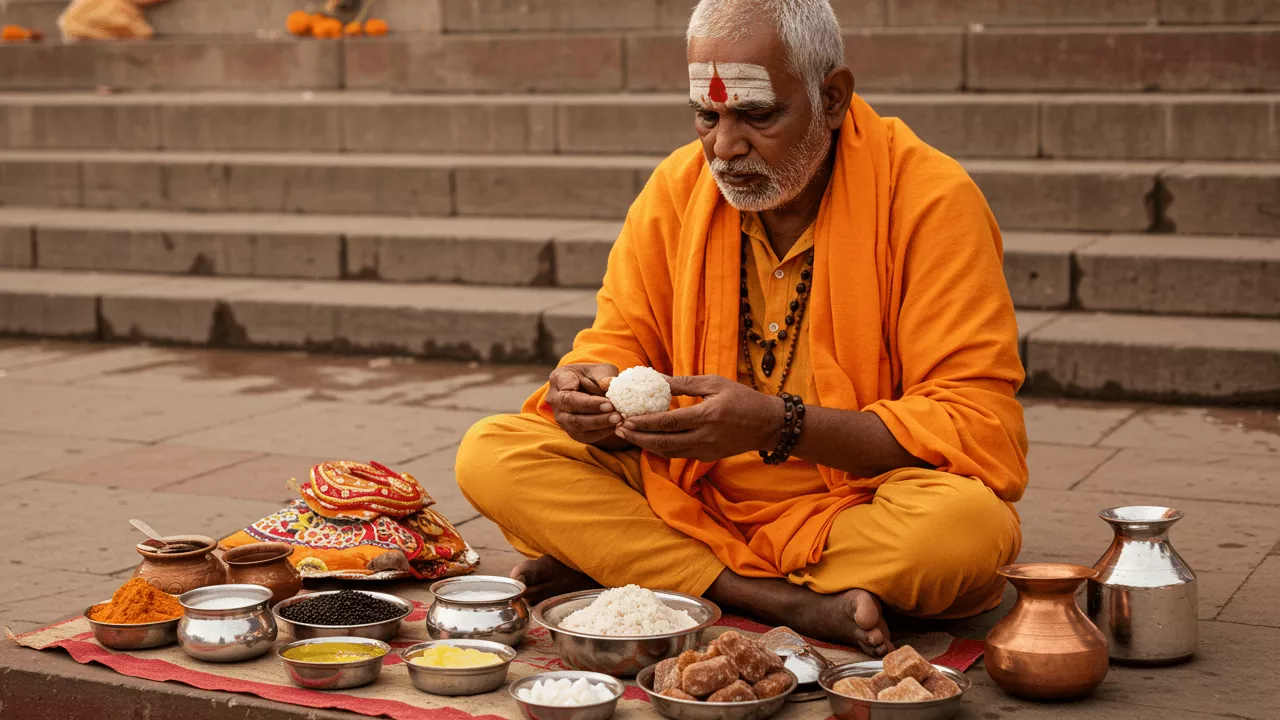
The Puranas guide us towards simple, pure substances, readily available yet carrying deep significance. These are the key Pind Daan ingredients you will need:
The Foundation: Cooked Rice (Anna or Caru)
This is the heart of the Pinda. Use pure, uncooked rice (white rice is common). The Skanda Purana specifically refers to offering “Pindas of well-cooked Caru to Pitṛs”, indicating that properly cooked rice, prepared with sanctity, forms the base [Skanda Purana]. It represents sustenance and the very stuff of life.
Enhancements (Often Included): Adding Layers of Meaning
While cooked rice alone can suffice if necessary, incorporating these adds further potency and significance, as hinted at or stated in various Puranas:
- Ghee (Clarified Butter / Ghṛita): A symbol of purity, light, and nourishment. The Agni Purana speaks of oblations with ghee [Agni Purana], and the Skanda Purana suggests Shradh food should include it [Skanda Purana]. Just a small amount mixed in shows reverence.
- Black Sesame Seeds (Kṛṣṇa Tila): Absolutely vital for ancestral rites. The Padma Purana powerfully declares them as “the protection in the offerings” [Padma Purana], and the Skanda Purana frequently mentions their use [Skanda Purana]. Their connection to the Pitṛs is profound; they purify and facilitate connection. You’ll need a small quantity of black (not white) sesame seeds.
- Honey (Madhu): Represents sweetness, the essence of life, and immortality. The Skanda Purana explicitly recommends honey in Shradh rites for ancestral satisfaction [Skanda Purana]. A few drops add a touch of divine sweetness.
- Milk (Dugdha): Symbolizes purity, nourishment, and abundance, stemming from the sacred cow. The Skanda Purana recommends cow’s milk [Skanda Purana], and the Narada Purana notes the Pitṛs’ delight with milk pudding [Narada Purana]. A small amount can be mixed with the rice.
- Sacred Water (Jala): Pure water, ideally from a river like the Ganga or at least clean, filtered water, will be needed for cooking and potentially for moistening the rice slightly if needed.
- Darbha or Kuśa Grass: Not mixed in, but essential for placing the Pindas upon. The Padma Purana confirms its sacred origin [Padma Purana].
- Markandeya Purana [Markandeya Purana] and Varaha Purana [Varaha Purana] both describe placing Pindas on this sacred grass. Ensure you have some clean blades of Darbha.
- (Optional Base) Barley Flour (Yava or Saktu): While less common than rice, some traditions or specific situations might call for Pindas made from barley flour, sometimes called Saktu. The Skanda Purana mentions this possibility [Skanda Purana]. If using this, you’d mix the flour with a little water, ghee, or honey to form balls. For this guide, we will focus on the more common rice-based Pindas.
Gather these ingredients with respect, ensuring they are clean and handled appropriately.
Step 2: The Simple, Sacred Act of Preparation – Forming the Offerings
Now we come to the physical act of how to make Pindas. Remember, simplicity and sincerity are key.
Cooking the Rice (Caru)
- Wash the required amount of uncooked rice thoroughly.
- Cook it with pure water until it is soft and well-cooked. Traditionally, no salt or spices are added. The Skanda Purana refers to this sacred cooked rice as Caru [Skanda Purana]. Let it cool slightly so you can handle it.
- Ensure the cooking pot and utensils are clean. Maintain a prayerful attitude while cooking, perhaps chanting a simple mantra or just holding your ancestors in mind.
Mixing (Optional but Recommended)
- Take the cooked rice (Caru) into a clean bowl or plate.
- If using enhancements, add small amounts now: a teaspoon or so of black sesame seeds (Tila), a few drops of honey (Madhu), a spoonful of ghee (Ghṛita), maybe a splash of milk (Dugdha). The Skanda Purana hints at offerings being enriched this way [Skanda Purana].
- Gently mix these ingredients into the rice using clean hands. Do this mindfully, feeling the texture and infusing your loving intention into the mixture. Don’t make it too wet, just combined.
Forming the Pindas (The Rice Balls)
- Moisten your hands slightly with pure water if needed, to prevent sticking.
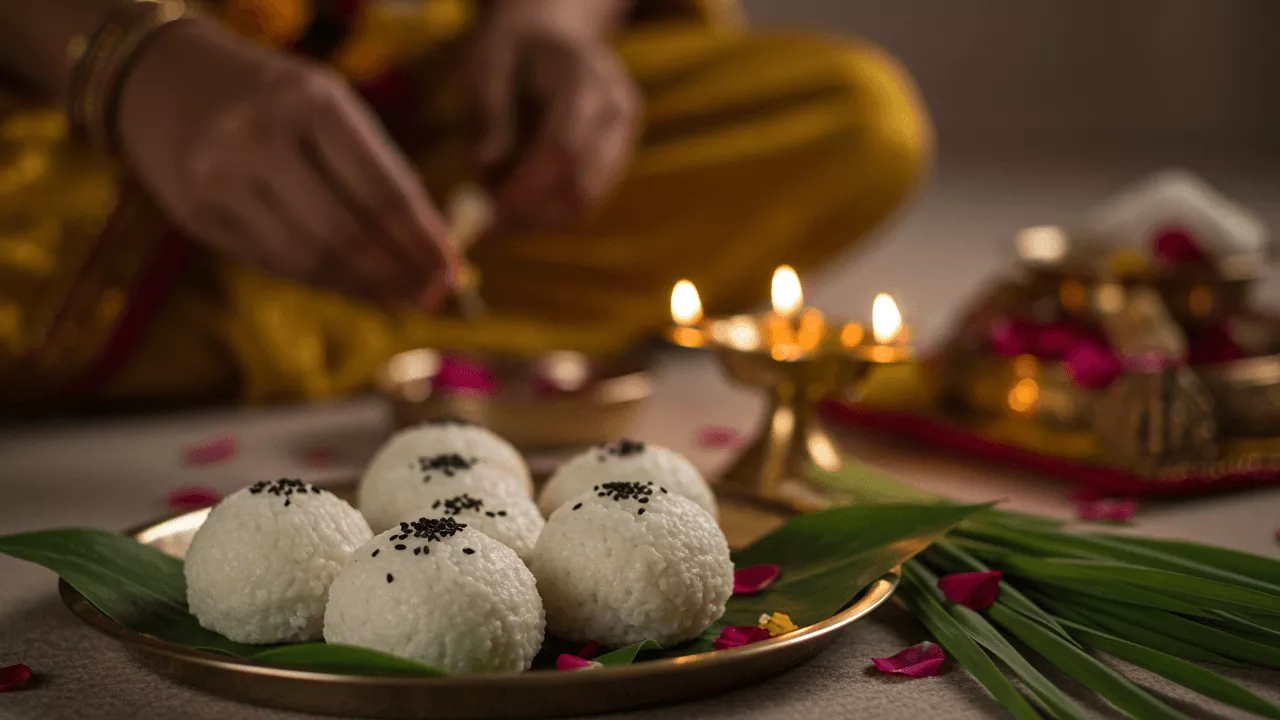
- Take a portion of the rice mixture into your palm. The size can vary, but often they are roughly the size of a small lime or a large betel nut. The Skanda Purana, quoting the sage Vyasa, gives a beautifully practical measure: a size that “a young calf could easily eat them” [Skanda Purana].
- Gently roll the mixture between your palms to form a smooth, round, or slightly oblong ball – the Pinda. Handle it with reverence; this represents the sustenance for your ancestor.
- Prepare the required number of Pindas. Most commonly, three Pindas are prepared during the main Shradh, representing the father, grandfather, and great-grandfather, as indicated in the Varaha Purana [Varaha Purana] and alluded to in the Garuda Purana [Garuda Purana]. Sometimes additional Pindas are made for other relatives or for specific rites. Follow the guidance of your family tradition or the officiating priest if one is present.
Placing on Darbha Grass
- Prepare a clean space where the Pindas will be offered during the Shradh ceremony.
- Lay down a few blades of the sacred Darbha or Kuśa grass. It’s crucial, as guided by tradition and texts like the Padma Purana [Padma Purana], that the sharp tips of the grass point towards the South (Dakṣiṇa), the direction associated with the Pitṛs.
- Carefully and respectfully place each prepared Pinda onto this bed of Darbha grass. The Markandeya Purana specifically mentions placing “pindas with rice and sesamum-seed on the darbha grass [Markandeya Purana]. This sacred grass creates a pure platform for the offering.
Your Pindas are now ready for the offering part of the Shradh ceremony.
Step 3: The Offering – An Act of Pure Devotion (During the Shradh Ritual)
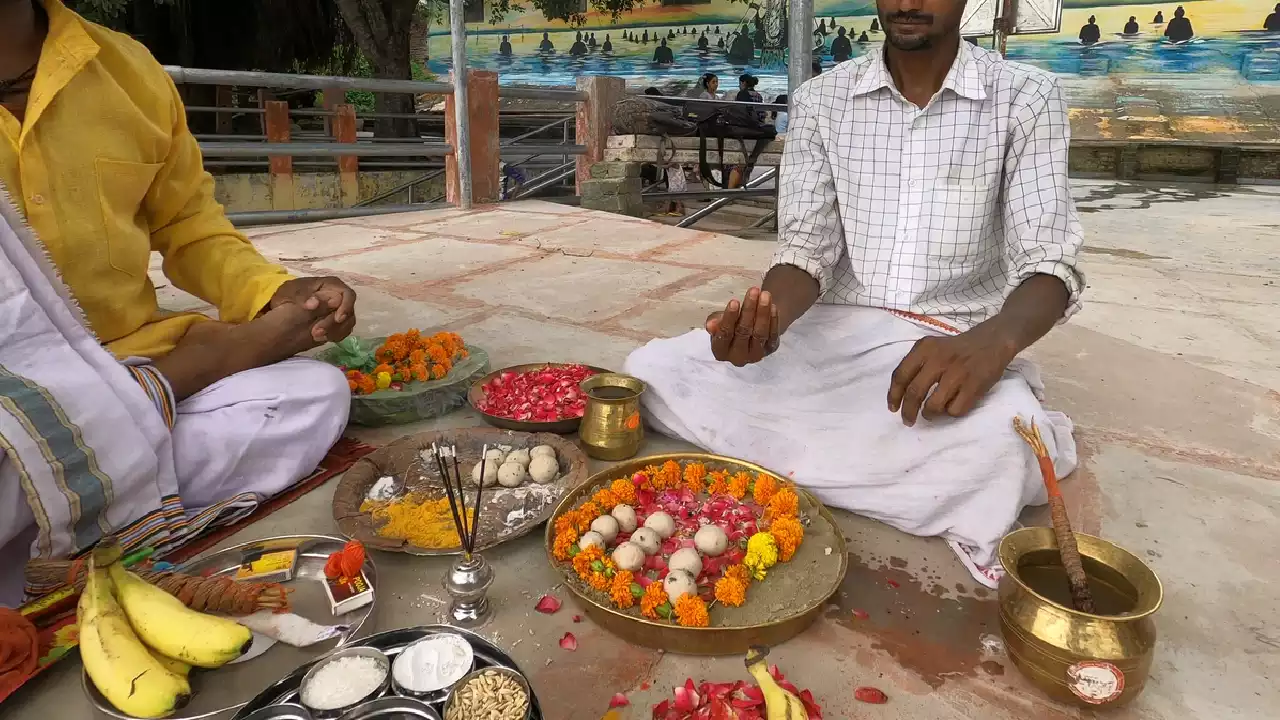
While this guide focuses on how to make Pindas, their purpose is fulfilled in the offering. During the actual Shradh ceremony, these prepared Pindas will be formally offered:
- Invocation (Āvāhana): The ancestors (Pitṛs) are respectfully invited to accept the offerings.
- Offering (Samarpaṇa): Facing South, the Pindas placed on the Darbha grass are formally offered. Often, libations of water mixed with sesame seeds (Til Tarpan) accompany this, as mentioned in the Agni Purana [Agni Purana] and Garuda Purana [Garuda Purana]. The Varaha Purana specifies offering the three Pindas for the father, grandfather, and great-grandfather [Varaha Purana].
- Mantras: Specific Vedic mantras are chanted by the performer or the priest, directing the offering and expressing reverence. The Narada Purana gives an example of the intention behind such mantras [Narada Purana].
- Completion: After the ancestors have symbolically received the essence, the Pindas might be left for some time before being respectfully disposed of, often by offering them to a cow, immersing them in flowing water, or sometimes leaving them for crows or other creatures, as alluded to in the Garuda Purana [Garuda Purana].
A Word on Significance – Why This Simple Act Matters So Deeply
Never underestimate the power of this humble offering, my child. The Puranas assure us of its profound impact. When our ancestors receive these Pindas, offered with faith and love, they feel nourished, remembered, and deeply satisfied (tṛpti).
The Brahma Purana beautifully states the result: “Propitiated with Sraddha, the Pitrs confer longevity, progeny, riches, knowledge, happiness, sovereignty, heaven and Moksa (liberation)” [Brahma Purana]. The Skanda Purana echoes this repeatedly, emphasizing that pleased Pitṛs bestow abundant blessings upon their descendants [Skanda Purana].
By learning how to make Pindas and offering them correctly, you are strengthening the sacred bonds of lineage, expressing profound gratitude, fulfilling a vital duty (dharma), and opening your family to the gentle, guiding blessings of those who came before.
Concluding Blessings
Prepare these sacred offerings with a calm mind and a heart full of love. Remember, the purity of your intention and the sincerity of your faith are the most precious Pind Daan ingredients. Even the simplest Pinda, made with true śraddhā, carries immense spiritual weight.
May your ancestors receive your offerings with joy, may their souls find peace and progress, and may their benevolent blessings shower upon you and your entire family, bringing harmony, well-being, and spiritual upliftment.
|| हरि ॐ तत् सत्।|
Considering a rite for your own family?
Tell us what your family needs and a coordinator will contact you personally. No online payment is requested.
Send an enquiry