The Sweetest Offering: Perfect Kheer Recipe for Pitrupaksha and Its Significance
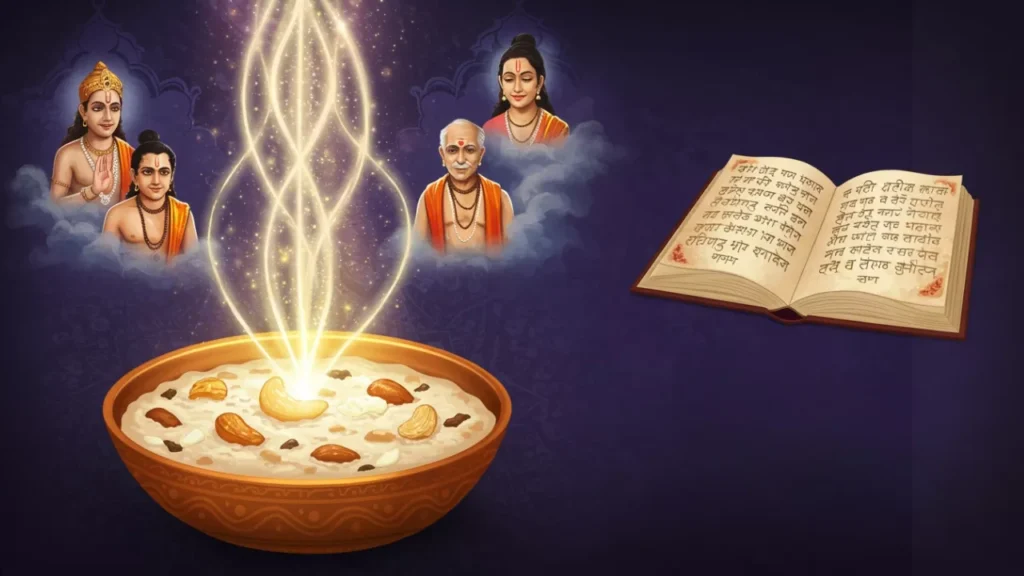
During Pitrupaksha, offering Kheer (Payasa or milk pudding) holds profound significance, believed to deeply satisfy our ancestors and bring immense blessings. But what makes this sweet dish so cherished in Shradh feasts, and how can you prepare an authentic Kheer recipe Pitrupaksha honors, rooted in Puranic wisdom? This guide delves into the scriptural importance of Kheer, highlighting why its core ingredients – milk, rice, sweetener, ghee, and often honey – are consistently lauded in texts like the Agni, Garuda, and Brahma Puranas for pleasing the Pitṛs. Discover a traditional, Sattvic recipe that emphasizes purity in preparation (Shuddhi) and devotion (Bhakti) in every step, from selecting good quality rice and pure cow's milk to the slow simmering process that creates a creamy, divine offering. Learn about optional Sattvic additions like cardamom or saffron, and the crucial practice of first offering the Kheer as Naivedyam to your family deity. More than just a recipe, this exploration emphasizes the bhava (feeling) and Shradh (faith) that transform simple ingredients into a sublime expression of love and remembrance. Are you ready to prepare the sweetest offering that connects you to your cherished ancestors and invokes their invaluable blessings this Pitrupaksha? This guide will illuminate the way.
|| हरी ॐ तट सत ||
In the grand tapestry of Hindu rituals, especially during Pitrupaksha, the act of Shradh (rites for ancestors) holds a place of paramount importance. As your insightful research highlights, feeding worthy Brahmins is a cornerstone of these rites. [Agni Purana, Garuda Purana] The Puranas teach us that the food offered with Shradh (faith) and devotion to deserving Brahmins acts as a conduit, mystically nourishing and satisfying our ancestors in their subtle realms. The gift of cooked food, particularly when offered with purity and love, is extolled as a superior form of Daana (charity), bringing immense merit to the performer and profound peace to the Pitrs- Kheer Recipe for Pitrupaksha
The Sweet Embrace: Why Kheer (Payasa) Holds a Special Place in Shradh Bhojan

Among the myriad of pure and Sattvic foods recommended in our scriptures for offerings, Kheer (often referred to as Payasa, Kshira, or milk pudding) occupies a uniquely cherished position. Its consistent mention in the Puranas as an offering pleasing to Lord Vishnu, Lord Shiva, Goddess Lakshmi, and importantly, to our Pitrs, underscores its profound auspiciousness.
- Direct Puranic Injunctions: Your findings correctly point out specific mentions:
- Offering milk pudding to Brahmins for the satisfaction of the Pitrs is a recurring theme.
- Even a small quantity of cow’s milk mixed with honey, ghee, and Payasa, when offered in a sacred Tirtha (pilgrimage site), can provide “eternal satisfaction” to the ancestors. [Skanda Purana, Matsya Purana]
- In instances where highly prized offerings (like rhinoceros meat, in ancient contexts) were unavailable, excellent milk and cooked rice (the essence of Kheer) were recommended as a worthy substitute for ensuring ancestral satisfaction. [Garuda Purana]
- The ritualistic offering of milk pudding, honey, and water mixed with sesame seeds to the Pitrs further solidifies its importance. [Brahma Purana]
- Confluence of Pleasing Ingredients: The inherent composition of Kheer aligns perfectly with what the Puranas describe as pleasing to the ancestors:
- Milk (क्षीर – Cow’s milk is particularly recommended in Shradh. [Agni Purana, Garuda Purana] It symbolizes purity, nourishment, and life itself.
- Rice (अन्न – Anna): A fundamental offering, representing sustenance. Various forms of cooked rice and milk-cooked rice are central to Shradh Bhojan. [Agni Purana, Padma Purana]
- Sweetness (माधुर्य – Madhurya): Offerings of sweet foods are generally favored. Sugar (sharkara), jaggery (guda), and sugar candy are mentioned. [Agni Purana, Padma Purana] Sweetness represents joy and contentment.
- Ghee (घृत – Ghrita): Pure cow’s ghee is an exceptionally sacred substance, vital for homa (fire oblations) and for enhancing the purity and flavor of offerings. It contributes significantly to the satisfaction of the Pitrs. [Agni Purana, Padma Purana]
- Honey (मधु – Madhu): Explicitly recommended in Shradh rites for the deep satisfaction it accords to the ancestors. A Shradh is considered more complete with its inclusion. [Brahma Purana, Matsya Purana]
Thus, Kheer, a harmonious blend of these divinely approved ingredients, naturally becomes a perfect offering – embodying purity, nourishment, sweetness, and profound spiritual significance.
Weaving the Offering: A Traditional Kheer Recipe for Pitrupaksha (Rooted in Puranic Components)
While our ancient Puranas provide the divine rationale and list the essential components for sacred dishes, they don’t typically offer step-by-step culinary instructions like a modern cookbook. They give us the tattva (essence) and the dravya (substances). The actual preparation methods are often passed down through parampara (tradition).
Based on the sacred ingredients highlighted in your Puranic research, here’s how one might approach preparing a truly authentic and Sattvic Kheer recipe for Pitrupaksha:

Ingredients:
- Rice (चावल – Chawal): 1/4 cup (approx. 50-60g) – Preferably a good quality, fragrant white rice like Basmati or Sali rice. Wash it gently a few times. Some traditions soak it for 30 minutes.
- Milk (दूध – Dugdha): 4 cups (approx. 1 liter) – Full-fat cow’s milk is ideal for richness and authenticity.
- Sweetener (शर्करा/गुड – Sharkara/Guda): 1/2 cup (approx. 100g) of natural rock sugar (mishri), regular sugar, or jaggery (if using jaggery, add it after the Kheer is cooked and slightly cooled to prevent curdling). Adjust to taste.
- Ghee (घी – Ghrita): 1 to 2 tablespoons of pure cow’s ghee.
- Cardamom (एला – Ela): 2-3 green cardamom pods, slightly crushed, or a pinch of fresh cardamom powder (optional, but highly traditional for fragrance).
- Honey (मधु – Madhu): 1 teaspoon (optional, to be drizzled on top before offering, or mixed in if compatible with other ingredients and not overheated).
- Optional Sattvic Additions (as per family tradition and Puranic mentions of fruits/nuts in offerings):
- A few strands of Saffron (केसर – Kesar), soaked in a tablespoon of warm milk.
- A few slivered Almonds (बादाम – Badam) or Pistachios (पिस्ता – Pista) (ensure nuts are permitted in your family’s Shradh cooking).
- Chopped ripe Plantain (कदली फल – Kadali Phala) or a few Raisins (किशमिश – Kishmish). Coconut kernels are also mentioned. [Agni Purana, Padma Purana]
Method of Preparation (with a Puranic Spirit):

- Purify the Space and Yourself: Before you begin, ensure your kitchen is clean and your mind is calm and prayerful. Take a bath and wear fresh, clean clothes. Mentally offer your actions to your ancestors and the Divine.
- Prepare the Rice: Gently wash the rice. You can lightly sauté the washed and drained rice in 1 teaspoon of ghee in a heavy-bottomed pot for a minute or two until fragrant. This is a traditional step that enhances the flavor.
- Boil the Milk: In the same heavy-bottomed pot (or a separate one if you sautéed rice separately), bring the milk to a gentle boil. Stir occasionally to prevent it from sticking to the bottom.
- Cook the Rice in Milk: Once the milk boils, add the rice. Reduce the heat to low and let the Kheer simmer gently. Stir frequently, especially scraping the bottom of the pot, to prevent the rice and milk from scorching. This slow simmering is key to a creamy Kheer. Allow it to cook until the rice is very soft and well-cooked, and the milk has thickened considerably (this could take 40-60 minutes, depending on the rice and the heat). The Puranas mention “unbroken, swollen, and puffed-up rice” for Naivedya, suggesting well-cooked grains. [Agni Purana]
- Add Sweetener: Once the rice is cooked and the Kheer has reached a desirable consistency, add your chosen sweetener (sugar or mishri). Stir well until it dissolves completely. If using jaggery, it’s best to turn off the heat, let the Kheer cool slightly, and then stir in powdered or liquid jaggery to avoid curdling the milk.
- Incorporate Ghee and Aromatics: Stir in the remaining ghee. Add the crushed cardamom pods or powder and soaked saffron (if using). Mix gently.
- Final Touches (Optional): If you are adding nuts or raisins, you can lightly fry them in a tiny bit of ghee separately and add them now, or simply stir them in. If using fresh fruit like plantain, add it just before offering.
- Offering with Reverence: Once the Kheer is ready, let it cool to a lukewarm temperature. Before serving it as part of the Brahmin Bhojan or offering it directly to the Pitrs through rituals, a portion should first be offered to your family deity or Lord Vishnu as Naivedyam. This sanctifies the entire preparation. When offering, remember the importance of silence and devotion, as mentioned in the Puranas. [Agni Purana, Markandeya Purana] A drizzle of honey at this stage can be a beautiful addition, keeping in mind its significance. [Brahma Purana]
A Simple Puranic Kheer (Payasa) Focus:
For utmost scriptural adherence with minimal additions, the core would be:
Rice + Milk + Sugar/Jaggery + Ghee + Honey.
This combination itself is profoundly pleasing to the Pitrs.
The Principles of Offering and Consumption: Beyond the Kheer Recipe for Pitrupaksha
Remember that the true essence of this offering lies not just in perfecting the Kheer recipe Pitrupaksha style, but in the bhava (feeling) and Shradh (faith) with which it is prepared and offered.
- Purity (Shuddhi): Maintain scrupulous cleanliness of body, mind, ingredients, utensils, and the cooking area.
- Devotion (Bhakti): Cook with a prayerful attitude, remembering your ancestors and the divine. Chant mantras if you know them, or simply focus your love and gratitude.
- Silence (Mauna): As your research highlighted, silence during the Brahmins’ meal is crucial for the Pitrs to partake of the offerings. [Agni Purana, Markandeya Purana]
- Respectful Serving: Serve with humility and respect. Avoid directly handing salt. [Kurma Purana – a general rule of purity in offering]
- The Sacred Remnants (Prasadam): The Kheer, once offered as Naivedyam to the deity and then to the Brahmins/Pitrs, becomes highly sacred Prasadam. Partaking of this Prasadam is considered meritorious and purifying.
A Humble Concluding Thought: The Sweetness of Remembrance
While the Puranas guide us with the divine rationale and list the sacred components for offerings like Kheer – emphasizing milk, rice, sweeteners, ghee, and honey for the profound satisfaction of the Pitrs – they entrust the specific culinary artistry to tradition and the loving hands of the devotee.
The most perfect Kheer recipe for Pitrupaksha is one that is cooked not just with ingredients measured by cups and spoons, but with devotion measured by the heart, with purity as its base, and with remembrance as its sweetest flavoring. When Kheer is prepared with these principles, in accordance with your capacity and family customs rooted in scriptural understanding, it transforms into more than just a dish; it becomes a sublime expression of love, a bridge of sweetness connecting you to your cherished ancestors, bringing them peace and drawing their invaluable blessings upon your entire lineage.
May your humble efforts in honoring tradition through such sacred offerings be filled with divine grace and bring immense peace and satisfaction to all.
|| हरि ॐ तत् सत् ||
Considering a rite for your own family?
Tell us what your family needs and a coordinator will contact you personally. No online payment is requested.
Send an enquiry