Decoding the Symbolism in PitruPaksha: A Spiritual Perspective
Have you ever wondered about the deeper meanings hidden within ancient rituals? The Hindu observance of Pitru Paksha, a fortnight dedicated to honoring ancestors, is rich with profound symbolism that transcends mere tradition. But what do these age-old practices truly signify about life, death, and our connection to those who came before us? This article decodes the intricate Symbolism in PitruPaksha, inviting you to look beyond the surface. Why is this period observed during the waning moon (Krishna Paksha), and what does this celestial phase represent about letting go and introspection? What is the true essence of offering food and Pindas (rice balls) – is it simply nourishment, or does it point to the soul's journey and the body's elemental transformation? When water is offered in Tarpan, what does this vital element tell us about the cyclical nature of existence and the unbroken bond with our ancestors? Even acts like fasting and feeding the needy hold significant symbolic weight, reflecting purification and the universal cycle of giving. Could engaging with these rituals offer more than just solace, perhaps serving as a poignant reminder of life's transience and the importance of a virtuous life? Delve into this exploration to understand the spiritual tapestry woven into Pitru Paksha, gaining insights that resonate with our understanding of existence itself.
Decoding the Symbolism in PitruPaksha: A Spiritual Perspective
Hindu rituals and festivals often carry a wealth of symbolic meanings that offer a deeper understanding of life, death, and the universe’s workings. One such tradition is PitruPaksha, a period dedicated to honouring and remembering departed ancestors. This article aims to decode the symbolism inherent in PitruPaksha, providing a more profound spiritual perspective.
PitruPaksha: A Brief Overview
The Symbolism of Time: The Waning Moon
PitruPaksha is observed during the dark fortnight or Krishna Paksha, when the moon wanes. The waning moon is symbolic of letting go, release, and introspection, making it a fitting time to remember and honour the departed.
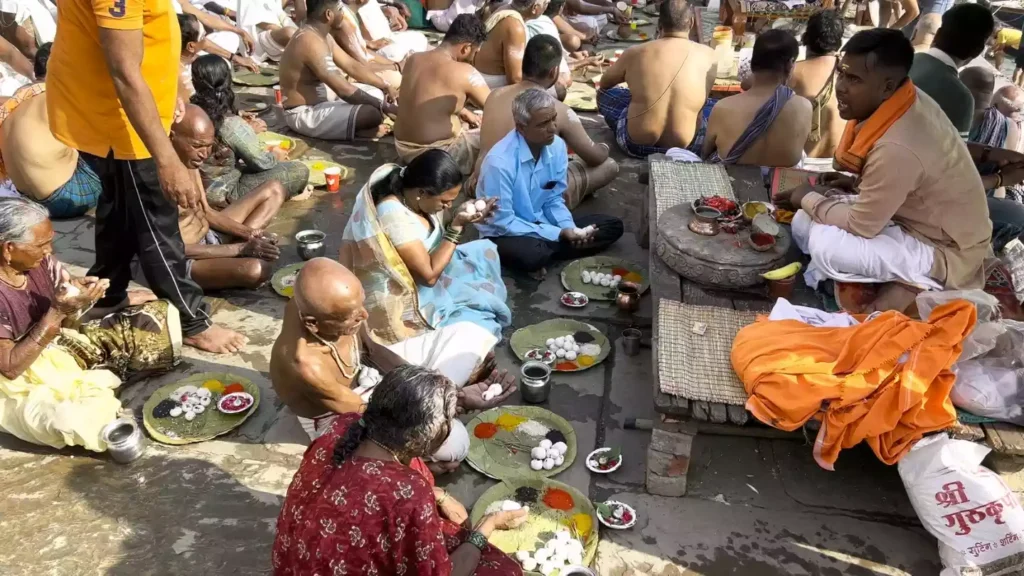
Food and Pinda Daan: Nourishment Beyond the Physical
The act of offering food to the ancestors is a significant aspect of PitruPaksha. This ritual not only expresses gratitude but also symbolizes the belief in the continuity of the soul beyond physical death. Particularly, the Pinda Daan, offering balls of rice and sesame, represents the body’s transformation back into the five elements after death.

Tarpan: Water, Life, and Renewal
In the Tarpan ritual, water is offered to the ancestors, symbolizing the cycle of life and death. Water, an essential life-sustaining element, stands for purity, renewal, and the unbroken connection between the living and the departed.
The Symbolism of Fasting: Purification and Respect
The act of fasting until the rituals are completed is also symbolic. Fasting signifies purification, discipline, and self-control. It is a sign of respect towards the departed and the solemnity of the occasion.
Feeding the Needy: The Cycle of Giving
Feeding the needy during PitruPaksha is seen as an act of charity and a way of giving back to the community. This act symbolizes the cycle of giving, emphasizing the interconnectedness of all beings.
Embracing Mortality: A Reminder of Life’s Transience
The observance of PitruPaksha serves as a stark reminder of life’s transience and the inevitability of death. It underscores the need to live a righteous life and leaves a lasting legacy for future generations.
Conclusion
The symbolism embedded in the PitruPaksha observance offers insightful reflections on life, death, and our roles in the cosmic scheme. It underscores the belief in the soul’s immortality and the cyclical nature of existence, providing a broader spiritual context to understand this profound tradition.
Join us as we continue our exploration into the rich symbolism and profound wisdom embedded in Hindu rituals and traditions. Stay tuned for more enlightening insights.
Considering a rite for your own family?
Tell us what your family needs and a coordinator will contact you personally. No online payment is requested.
Send an enquiry