Perfect Pitrupaksha bread recipe: Easy Poori and Chapati (Shradh Compliant)
When preparing a sacred Shradh feast during Pitrupaksha, what kind of bread is traditionally and scripturally appropriate? This insightful exploration delves into Puranic texts like the Agni and Brahma Puranas to determine the perfect Pitrupaksha bread recipe, focusing on Poori (fried puffed bread) and Chapati (un-fried flatbread). Discover why Poori, or similar ghee-fried flour cakes referred to as Pupalika or Purika in the scriptures, is a strongly supported choice. The Puranas frequently mention such fried items, especially when prepared in pure cow's ghee, as suitable offerings for deities and ancestors. This guide provides a simple, Shradh-compliant Poori recipe using whole wheat flour and ghee. However, when it comes to Chapati, the Puranic evidence is less direct. While terms like Mandaka (thin flat cake) exist, a clear, unambiguous equivalent to the everyday dry-griddle cooked Chapati is not explicitly listed for Shradh offerings in these texts. Learn the key considerations for any Pitrupaksha food, emphasizing permitted ingredients, purity of preparation, the sacred role of ghee, and reverent offering. By understanding this Puranic wisdom, you can confidently choose and prepare bread that truly honors your ancestors and aligns with ancient traditions. Is Poori the go-to bread for your Shradh meal? This guide clarifies.
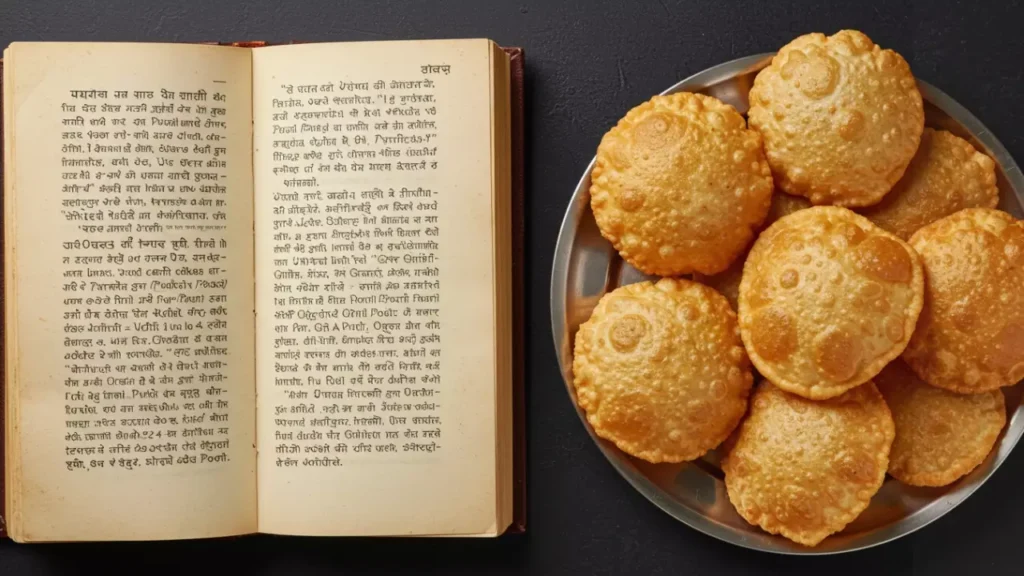
We find rich descriptions of various food items and preparations deemed suitable for worship, offerings (Naivedya, Homa), feeding deities, revered Brahmins, honored guests, and for personal consumption by those undertaking specific vows or sacred rites.
Among these, items made from grains and flour are frequently and prominently noted. The sources speak with approval of:
- Cooked Rice ( A staple in all sacred meals.
- Rice boiled with pulses (like green gram – Mudga) or milk and sugar (Payasa or milk pudding – Kshira/Payasam).
- Gruel (Peya, Yavagu): Light and nourishing preparations.
- Fried Barley Powder (Saktu): A traditional and pure food.
- Various forms of Cakes and Pies: These are particularly relevant to your query about “breads.” The texts mention Apupa (cakes/pies), Purika (fried pancakes/Poori-like items), Pupalika (cakes fried in ghee/oil), Polika (often sweet, baked cakes), Vataka (pulse-based fried items), Mandaka (thin flat cakes), Phenika (sweet, flaky fried items), etc. These are often specified as being made of flour (wheat or barley) and sometimes enriched with sugar or jaggery.
Examining Poori (Fried Puffed Bread) in the Light of Puranic Sources

Items that are akin to Poori – essentially small, puffed cakes made from flour and deep-fried – are indeed mentioned favorably in the Puranic sources, particularly in contexts related to worship, offerings, and festive or sacred meals. Let’s look at the terms that align with this:
- Pupalika: Described in texts like the Agni Purana as “a kind of cake filled in ghee or oil” and also more directly as “Puri or circular pan-cakes deep-fried in ghee.” The preparation process is described as being “made in that manner” (referring to frying) and sometimes these cakes are mixed with ingredients like Khajura (date-fruit) or specific flavorings. Pupalikas are noted as delightful and beneficial for wealth and family.
- Purika: Also described as “fried pan-cakes” and “thin pan-cakes fried in edible oil or ghee.” These could be plain or mixed with ingredients like asafoetida (Hingu – if permissible in your specific Shradh tradition, as some Puranas list it as forbidden).
- Apupa: Mentioned frequently as “a small round cake of flour and meal” and as “small pies.” Apupas are consistently listed among food items suitable for offerings or for feeding Brahmins and guests during certain vows and sacred occasions.
- General “Cakes/Pies”: Various Puranic sources list “cakes” or “pies” among items offered or consumed. These are often specified as being fried or baked, with flour as the base.
Crucially, the Puranas frequently emphasize the paramount importance of ghee (clarified butter from cow’s milk) in the preparation and offering of sacred food. Food for Shradh, particularly cooked rice, is described as being soaked in or having ghee poured over and beneath it. Fried items, when mentioned for sacred purposes, are often specifically noted as being fried in ghee. While oil is also sometimes mentioned for frying in a general sense, ghee is consistently highlighted for its purity and auspiciousness in relation to sacred food.
Therefore, based on the detailed descriptions of Pupalika, Purika, and other fried cakes/pies made from flour and specifically fried in ghee, preparations resembling Poori are strongly supported by the Puranic sources as suitable for offering and consumption in sacred contexts, which would naturally extend to the solemn observances of Pitrupaksha.
Examining Chapati (Un-fried Flatbread) in the Light of Puranic Sources

When we search the provided Puranic texts for mentions of simple, un-fried flatbread cooked on a dry griddle (like the everyday Chapati or Roti), the references are not as explicit or direct as those for fried breads.
- Mandaka: This term is described as “a thin flat circular cake-like dish,” which might sound somewhat similar. However, Mandakas are often listed alongside milk and sugar or as part of gruel-like preparations, and the precise method of cooking (whether on a dry griddle or otherwise) is not explicitly stated in a way that definitively equates it to a modern Chapati.
- Polika: This is mentioned as “a cake with sweet material inside and baked,” which clearly does not match the description of a simple, un-fried Chapati.
The Puranic sources, while detailing a wide variety of preparations from flour (including baked items and many fried cakes), do not provide a clear and unambiguous equivalent to the everyday Chapati cooked without oil or ghee directly on a pan or griddle, in the specific lists of offerings or foods recommended for sacred meals like Shradh.
Furthermore, one of your sources (Skanda Purana) mentions avoiding “steam cooked food, etc.” in the context of a student’s vow. While a Chapati is primarily cooked by dry heat, it does involve some internal steaming as the moisture within the dough heats up and causes it to puff. While other Puranic texts clearly list foods cooked in water or by steaming (like boiled rice, gruel, and even steam-cooked radish) as perfectly acceptable, this isolated mention, coupled with the lack of a direct positive reference for Chapati in Shradh contexts, warrants caution if one is aiming for strict adherence to explicitly mentioned items.
Therefore, based strictly on the provided Puranic texts, while flour-based preparations like fried cakes (Poori-style items) and various sweets, gruels, and rice dishes are frequently and positively mentioned, a simple un-fried flatbread like Chapati does not appear to be explicitly listed or described among the foods specifically recommended for Pitrupaksha Shradh or other closely related sacred observances.
Key Considerations for Pitrupaksha Food Compliance (Shradh Compliant)
For any food item to be consumed or offered during Pitrupaksha (Shradh), several crucial factors, consistently emphasized in the Puranic sources you’ve studied, must be meticulously considered:
- Permitted Ingredients (Graahya Padarth): Only ingredients explicitly mentioned as acceptable or not forbidden by the scriptures should be used. This means strict avoidance of items like onion, garlic, masoor dal, and other specifically prohibited vegetables or grains. The purity of all ingredients is paramount.
- Purity of Preparation (Paaka Shuddhi): The food should be prepared in a ritually clean space (traditionally on the ground below, not on an elevated platform, though this refers to ancient hearths). It must be fresh, not stale, never twice-cooked, and not burnt. The purity (both physical and mental) of the cook is of utmost importance.
- The Sacred Role of Ghee (Ghritasya Mahatvam): Cooked food offered during Shradh should ideally be “soaked in butter (ghee),” or ghee should be poured over and beneath it. Fried items, as discussed, are often noted as being fried specifically in ghee.
- Reverent Offering and Consumption (Samarpanam evam Bhojan Vidhi): Food should be offered with the recitation of appropriate mantras and with deep reverence to the Pitrs and the invited Brahmins. The Brahmins should be fed with fresh, tasty meals, anointed with butter (ghee), and often sprinkled with honey. Sacred silence should be observed by those partaking of Shradh food.
- Sattvic Principles: While the term “Sattvic” encompasses a broad philosophy, the principles emphasized in the Puranas for Shradh food – purity, freshness, the use of wholesome and sacred ingredients like ghee, milk, specific grains (like rice, wheat, barley), permitted pulses, fruits, roots, and acceptable spices – all align perfectly with Sattvic qualities.
A Simple, Scripturally Guided Pitrupaksha Bread Recipe: Poori (Fried Puffed Bread)
Based on the clear Puranic acceptance of fried flour cakes (Pupalika, Purika, etc.), especially when fried in ghee, here is a simple recipe grounded in these sacred principles, making it a suitable Pitrupaksha bread recipe.
Pitrupaksha-Suitable Fried Flour Cakes (Poori-Style)
Drawing upon the Puranic mentions of Pupalika, Purika, and other Apupa (cakes) that are fried, often specifically in ghee, this recipe utilizes permitted ingredients for a preparation suitable for offering and consumption during sacred times like Pitrupaksha.
- 1 cup Whole Wheat Flour (Atta) (Wheat is mentioned as an acceptable grain)
- Approx. 1/2 cup Pure Water (for kneading the dough)
- Pure Cow’s Ghee (for frying – the Puranas emphasize ghee for such preparations)
- A tiny pinch of Rock Salt (Saindhava Lavana) (Optional, if your family tradition for Shradh cooking permits a minimal amount of rock salt in Pooris. Some traditions make them entirely without salt for offerings).
- Prepare the Dough with Purity:
- In a clean vessel (paatra), take the whole wheat flour. If using, add the tiny pinch of rock salt.
- Gradually add pure water, kneading it into a firm yet pliable dough. The dough should not be too soft (it will absorb too much ghee) nor too hard (it will be difficult to roll).
- Ensure this entire process is done in a clean, sanctified kitchen space, with a calm and prayerful mind. The Puranas mention preparing food on the ground below, which in a modern context translates to maintaining utmost cleanliness and sanctity in the cooking area.
- Shape the Cakes (Pooris):
- Divide the dough into small, equal-sized portions (about the size of a small lime).
- Roll each portion into a smooth ball, then flatten it slightly.
- Lightly dust a clean rolling surface with a tiny bit of flour (or use a tiny bit of ghee on the rolling pin and surface to prevent sticking).
- Roll each portion into a small, circular disc, about 3-4 inches in diameter. Try to keep them even in thickness. The Puranas mention “small round cakes” and cakes “as big as the fruit of Terminalia Belerica” for oblations, suggesting a manageable, modest size.
- Heat the Sacred Ghee:
- In a clean kadhai (deep frying pan) or a suitable vessel, heat a generous quantity of pure cow’s ghee. The Puranas consistently emphasize the use of ghee, and frying in ghee is explicitly mentioned for these types of sacred cakes. The ghee should be hot enough for the Pooris to puff up quickly but not so hot that it smokes excessively.
- Fry the Cakes (Pooris):
- Carefully slide one rolled disc (Poori) into the hot ghee. It should sink initially and then rise to the surface.
- Gently press the Poori down with a slotted ladle (jhara); this helps it to puff up beautifully.
- Once it puffs up and the underside is golden brown (this happens quickly), flip it over and fry the other side until it too is golden brown.
- The Puranic mention of cakes being “fried or cooked in ghee” and “deep-fried in ghee” directly supports this traditional Poori-making process.
- Remove and Drain Excess Ghee:
- Lift the fried Poori from the ghee using the slotted ladle, allowing any excess ghee to drain back into the kadhai.
- Place the Pooris on a clean plate, perhaps lined with a clean cloth or paper to absorb a bit more of any surface ghee.
- Offer and Serve with Reverence:
- These fresh, ghee-fried Pooris are now ready. They can be offered as part of the Brahmin Bhojan or the Shradh meal along with other Puranically permitted items like cooked rice (often served with ghee), Payasam (milk pudding), suitable pulse dishes (e.g., simple moong dal, if family tradition and specific Puranic interpretations allow for Shradh), or vegetable preparations made from permissible vegetables (like raw banana or yam) using Sattvic spices.
- Remember the Puranic injunction that food for Shradh should be served with an abundance of butter (ghee) and sometimes sprinkled with honey. Ensure the entire meal is served and consumed according to the prescribed rituals, maintaining purity, mindfulness, and observing silence while eating Shradh food.

Regarding Chapati (Un-fried Flatbread):
As discussed earlier, a simple un-fried flatbread (Chapati) cooked on a dry griddle does not find explicit and unambiguous mention in the Puranic sources you provided, specifically in the context of Shradh offerings or sacred meals. While Mandakas (thin flat cakes) and baked Polikas are mentioned, their preparation methods differ from that of a standard Chapati.
Therefore, based strictly on the information within these sacred texts, I cannot confidently provide a recipe for Chapati as a Puranically supported Pitrupaksha bread recipe for Shradh observances. To maintain the integrity of adherence to the sources, it is best to focus on the food types that they do explicitly mention as suitable and auspicious.
Conclusion: Embracing Puranic Wisdom in Our Sacred Kitchens
In drawing upon the extensive and profound details within the Agni, Brahma, Brahma Vaivarta, Garuda, Linga, Padma, Siva, Skanda, Vamana, and Vayu Puranas, we find that preparations resembling Poori (fried flour cakes like Pupalika or Purika), especially when fried in pure cow’s ghee, are indeed described as acceptable and appropriate for sacred offerings and meals during Pitrupaksha. However, a simple un-fried flatbread like Chapati is not explicitly listed or described among the foods specifically recommended for these solemn observances in the provided texts.
In preparing any food for Pitrupaksha, the utmost attention to purity of ingredients, adherence to prescribed methods (like the sacred use of ghee for frying cakes), and a heart filled with devotion are paramount. These ensure that the meals we offer are not only delicious but, more importantly, spiritually potent and deeply pleasing to our revered Pitrs, thereby fulfilling the sacred purpose outlined in our venerable Puranas.
May this humble exposition, based entirely on the timeless wisdom of the Puranic sources you have shared, assist you in your sacred observances during this Pitrupaksha. May your offerings be accepted, and may your ancestors shower you with their choicest blessings.
|| हरि ॐ तत् सत् ||
Considering a rite for your own family?
Tell us what your family needs and a coordinator will contact you personally. No online payment is requested.
Send an enquiry