The Hindu Concept of Pitrus: Who Are We Honoring?
Dive deep into the profound understanding of who the Pitrus truly are – they are far more than just a word! In Hindu tradition, Pitrus encompasses not only your immediate father but all departed ancestors, the very forefathers and foremothers who paved your path of existence. While rituals often focus on the three preceding paternal generations (father, grandfather, great-grandfather) and their spouses due to the strongest energetic and karmic links, the reverence extends to maternal lines and even unknown ancestors, ensuring no soul is forgotten. These cherished Pitrus reside in Pitru Loka, a subtle realm governed by Lord Yama, where they are sustained by the love, remembrance, and offerings from their living descendants. Imagine your ancestors, the Manushya Pitrus, existing in subtle forms, capable of bestowing immense blessings for health, prosperity, and harmony when nourished by your heartfelt Shraddha and Tarpan. Then there are the Deva Pitrus, primordial ancestors who oversee this sacred connection. Understanding this intricate system reveals that honoring your Pitrus is not merely a ritualistic duty but a profound act of recognizing your roots, healing ancestral imbalances (Pitra Dosha), and fostering a living connection with those who shaped your lineage. They are your extended family in another realm, eagerly awaiting your loving acknowledgment. Knowing that your ancestors are believed to be sustained by your remembrance and offerings, how might this understanding transform the way you view your lineage and your role in its spiritual continuity?
ॐ गुरवे नमः | ॐ पितृभ्यो नमः |
“Who are the ‘Pitrus’?” This is a vital question, for how can we honour someone without understanding who they are? The term Pitru, while seemingly simple, unfolds into layers of meaning within the vast landscape of Hindu thought. Let this old Pandit illuminate the concept for you.
The Hindu Concept of Pitrus: Who Are We Honoring?
The Root Meaning: From ‘Father’ to ‘Forefathers’
The Sanskrit word Pitru (पितृ) literally translates to ‘Father’. In its most immediate sense, it refers to one’s own father. However, in the context of rituals like Shraddha and the period of Pitrupaksha, the meaning expands significantly.
Here, ‘Pitru’ (often used in plural form as Pitrus or Pitarah – पितरः) encompasses all departed ancestors, the forefathers and foremothers who form our lineage. They are the spirits of those who came before us, whose lives paved the way for our own existence.
So, when we speak of Pitrus during Pitrupaksha, we are not just talking about our immediate father (if deceased), but a broader circle of ancestors who are remembered and revered.
The Circle of Reverence: Which Ancestors Are Included?
While ‘Pitru’ can broadly mean all ancestors, the Shraddha rituals performed during Pitrupaksha typically focus on specific generations. The general rule, followed in most traditions, is to honour the three preceding generations on the paternal side:
- Pitr (पितृ): Father
- Pitamaha (पितामह): Grandfather (Father’s father)
- Prapitamaha (प्रपितामह): Great-grandfather (Father’s grandfather)
Along with them, the corresponding female ancestors are also revered:
- Matr (मातृ): Mother
- Pitamahi (पितामही): Grandmother (Father’s mother)
- Prapitamahi (प्रपितामही): Great-grandmother (Father’s grandmother)
Why these three generations?
- Strongest Connection: The energetic and karmic link is believed to be strongest with these immediate ancestors. Their influence, blessings, and potential unresolved issues (Pitra Dosha) are considered most directly impactful on the current generation.
- Memory and Identification: Often, these are the ancestors whom the performer of the ritual might have known personally, or at least heard about directly from parents or grandparents. This allows for a more personal and heartfelt remembrance.
- The Cycle of Pitru Loka: Some scriptures suggest that the souls reside in Pitru Loka (the ancestral realm) for three generations before moving on (either to higher realms, liberation, or rebirth).When a person dies, their soul enters Pitru Loka, and the soul of their great-grandfather moves beyond that specific connection to the descendants performing Shraddha, making way for the newcomer. Hence, offerings are primarily directed towards those currently residing within this three-generation sphere of influence.
Beyond the Paternal Line:
While the primary focus is often paternal, Shraddha rituals, especially comprehensive ones, also include offerings for:
- Maternal Ancestors (मातामह, प्रमातामह, वृद्धप्रमातामह): Maternal grandfather, great-grandfather, and great-great-grandfather, along with their wives. Offerings to the maternal line (nanihal) are considered very important, especially on specific days like Navami Tithi or during Sarva Pitru Amavasya. The daughter’s son (dauhitra) holds a special place in performing rites for the maternal grandfather.
- Other Relatives: Depending on family tradition and specific circumstances, offerings might also be made for other departed relatives like uncles, aunts, brothers, sisters, gurus, friends, or even servants for whom one feels a sense of responsibility.
- Universal Ancestors (अज्ञातपितृ – Ajñātpitṛ): Especially on Mahalaya Amavasya (also called Sarva Pitru Amavasya – the Amavasya for all ancestors), offerings are made for those ancestors whose Tithi (date of death) is unknown, those who died unnatural deaths, or those who have no descendants left to perform Shraddha for them. This is a compassionate act of universal remembrance.
The concept of Sapinda (सपिण्ड) relationship is relevant here. Sapinda refers to relatives connected by the offering of the same Pinda (rice ball). Traditionally, this extends up to seven generations on the father’s side and five on the mother’s side, defining lineage purity and rules for marriage and mourning. While Shraddha focuses on three generations, the Sapinda concept underscores the broader web of lineage connections.
The Realm of the Fathers: Understanding Pitru Loka (पितृ लोक)
Where do these Pitrus reside after departing the physical body? Hindu cosmology describes various Lokas or realms of existence. The primary abode of the ancestors is Pitru Loka, the ‘Realm of the Pitrus’.
- Location: Its location varies slightly in different texts. Often described as a realm between Bhuloka (Earth) and Swarga Loka (Heaven), possibly within Bhuvar Loka (the atmospheric plane). Some traditions place it as a higher region within the earthly realm itself, while others associate it with the southern celestial sphere.
- Governed by Yama: Pitru Loka is traditionally governed by Lord Yama (यम), the deity of Death and Justice. He oversees the transition of souls from Earth to this realm.
- State of Existence: It is an intermediate plane. It’s not necessarily a place of suffering like Naraka (hell) nor the ultimate bliss of Moksha (liberation) or the heavens enjoyed by highly evolved souls. It’s a realm where ancestors reside in subtle bodies (sukshma sharira), experiencing the results of their karma and awaiting their next phase – rebirth, liberation, or movement to other realms.
- Dependence on Descendants: A crucial aspect of Pitru Loka is the belief that the inhabitants are sustained and comforted by the offerings (food, water, prayers) made by their living descendants during Shraddha and Tarpan. These offerings provide them with energy (ojas) and peace (tripti).
- Visiting Earth: As mentioned earlier, it’s believed that during Pitrupaksha, Lord Yama grants leave to the Pitrus to visit their descendants on Earth, making the offerings made during this time particularly effective.
Not All Pitrus Are the Same: Classes and Categories
Our scriptures, particularly the Puranas (like Vishnu Purana, Brahmanda Purana, Vayu Purana, Markandeya Purana), delve deeper and classify Pitrus into different categories. There’s a broad distinction often made between:
- Manushya Pitrus (मनुष्य पितृ): These are the spirits of our recently departed human ancestors – the fathers, grandfathers, etc., whom we specifically invoke during Shraddha.
- Deva Pitrus (देव पितृ): These are considered divine or primordial ancestors, beings of a higher order who were progenitors of races or lineages, or who attained a divine status. They often oversee the well-being of the Manushya Pitrus and the proper conduct of rituals.
Some Puranas list various classes of Deva Pitrus with specific origins and functions. These classifications can be complex and vary between texts, but here are some prominent names you might encounter:
- Agnishvattas (अग्निष्वात्ताः): Pitrus who, in their earthly lives, did not maintain the sacrificial fires (Agnihotra) properly according to household rules. They are often associated with householders and are invoked in certain Shraddha rites. They are sometimes considered descendants of Marichi.
- Barhishadas (बर्हिषदः): Pitrus who dutifully maintained the sacred fires. They are often associated with sages and forest dwellers. They are sometimes considered descendants of Atri.
- Somapas (सोमपाः): Pitrus who are sustained by Soma (the divine nectar or moon’s energy). Often associated with Brahmin ancestors or those who performed Soma sacrifices. Descendants of Bhrigu.
- Kavyas (काव्य): Associated with poets or sages, possibly linked to Bhrigu lineage as well.
- Ajyapas (आज्यप): Pitrus sustained by offerings of ghee (ajya). Sometimes linked with Vaishya ancestors and descendants of Pulastya.
- Sukalas (सुकाल): Sometimes associated with Shudra ancestors and descendants of Vashishtha.
- Vairajas (वैराज): Descendants of Manu Vairaja.
- Havirbhujas (हविर्भुज): Associated with Kshatriya ancestors, descendants of Angiras.
Some texts like the Pretapitru Vijnanopanishad offer a simpler, perhaps more relatable classification based on their state or realm:
- Nandimukha Pitrus (नान्दीमुख पितृ): Divine ancestors residing in heavenly realms (Dyuloka), invoked during auspicious ceremonies like weddings and Upanayana.
- Parvana Pitrus (पार्वण पितृ): Celestial ancestors residing in the intermediate realm (Antariksha), connected to natural cycles, invoked during annual Shraddhas.
- Preta Pitrus (प्रेत पितृ): Souls immediately after death, residing closer to the earthly plane (Bhuloka), dealing with transformation.
Understanding these classifications highlights the intricate cosmology and the belief that the ancestral realm is varied and structured. The Deva Pitrus act almost as overseers and facilitators, ensuring the offerings reach the intended Manushya Pitrus.
The Subtle Existence: How Pitrus Live On
After death, the soul sheds the gross physical body (sthula sharira) but retains subtle bodies (sukshma sharira and karana sharira), which carry karmic imprints and consciousness. The Pitrus exist in these subtle forms.
- Dependence: As mentioned, they are believed to depend on the Shraddha offerings for sustenance and energy in Pitru Loka. Without these, they may remain dissatisfied (atripta) and restless.
- Ability to Bless: Satisfied Pitrus (tripta) have the capacity to bestow blessings upon their descendants, influencing their health, wealth, progeny, and overall well-being.
- Subtle Influence: They are believed to be able to perceive the thoughts and feelings of their descendants. Sincere remembrance and gratitude reach them.
- Pitra Dosha: Conversely, neglect or disrespect towards ancestors, or severe negative karma accumulated by ancestors, can lead to Pitra Dosha – an ancestral affliction that can manifest as various obstacles and suffering in the lives of descendants. Performing Shraddha is a primary remedy for this.
- Messengers: Traditions often associate certain beings, like crows, with the Pitrus, considering them messengers or even temporary forms the ancestors might take to accept offerings.
Pitrus and the Divine: Are They Gods?
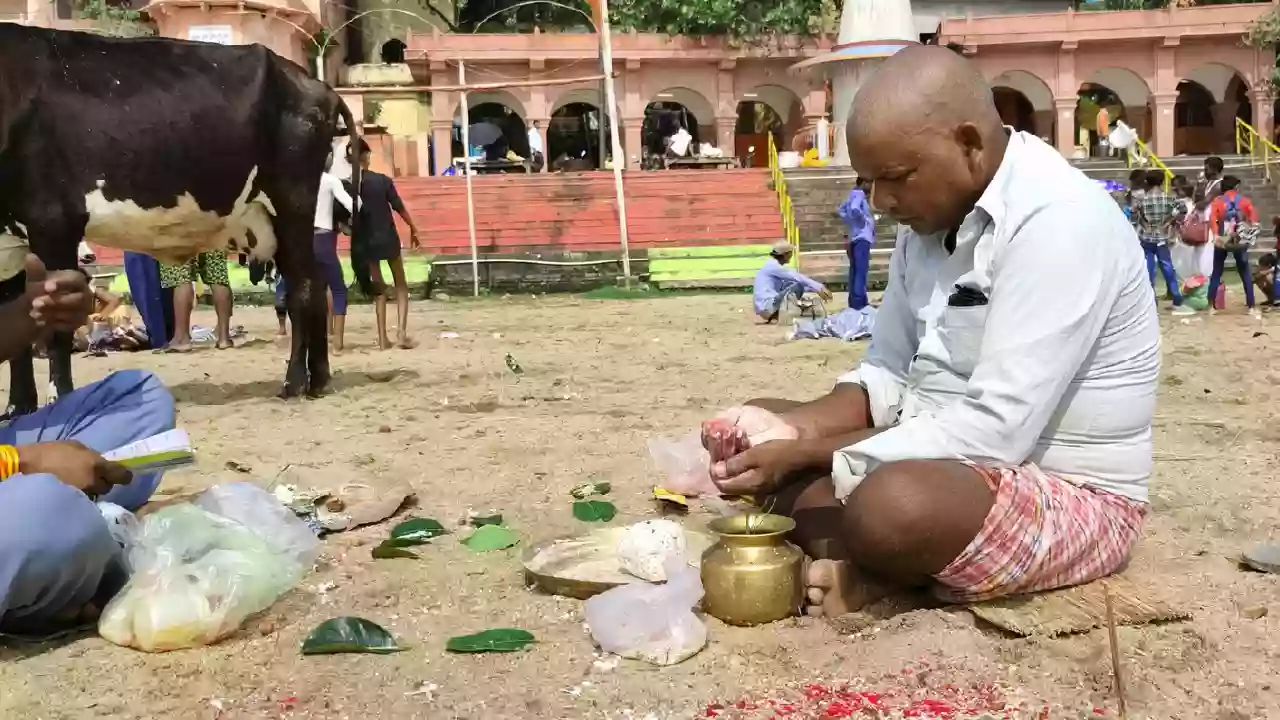
This is an important distinction, Vatsa. While we revere our Pitrus as if they are divine during the rituals (following the principle Pitrudevobhava – Treat your Ancestors as God), they are generally not considered Devas (Gods like Vishnu, Shiva, Indra, Agni) in the same sense.
- Devas: Are cosmic forces, controllers of natural elements and universal functions, often immortal or having extremely long lifespans, worshipped through specific Vedic hymns and yajnas for boons related to worldly or heavenly gains.
- Pitrus: Are departed human souls, our own kith and kin, residing in an intermediate realm. The rituals for them are focused on providing sustenance, peace, expressing gratitude, fulfilling duty (Pitru Rina), and seeking their specific blessings for the lineage.[7]
However, the Deva Pitrus (the primordial ancestors) blur this line somewhat, being considered divine beings themselves. Also, the rituals for Pitrus often involve invoking Devas like Agni (to carry the offerings) and Vishnu (as the ultimate recipient and preserver), showing an interconnectedness. Lord Yama, the ruler of Pitru Loka, is himself a Deva.
So, Pitrus are revered like gods for the purpose of the ritual, acknowledging their elevated position and power to bless from the subtle realm, but they occupy a distinct category within the Hindu pantheon.
The Living Connection: Why Understanding Pitrus Matters
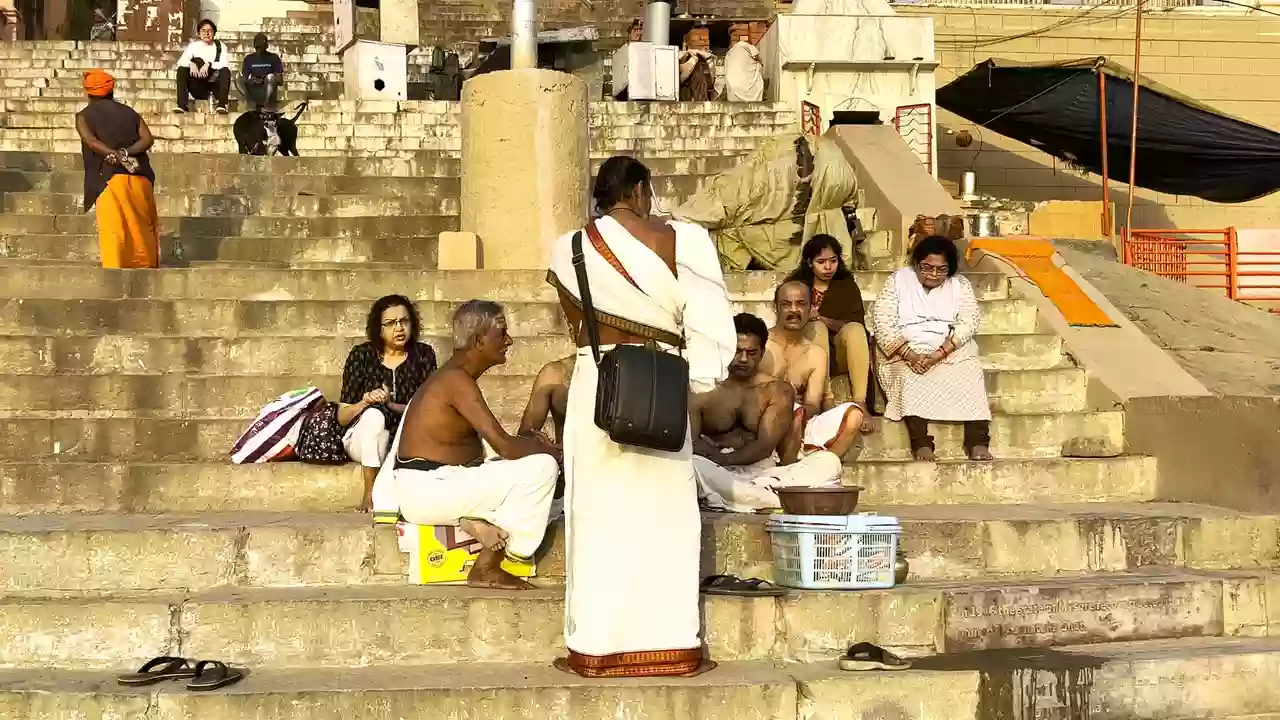
Understanding who the Pitrus are transforms Pitrupaksha from a mere set of rituals into a deeply meaningful practice. They are:
- Our roots, the source of our physical existence.
- Beings existing in a subtle realm, connected to us energetically.
- Recipients of our gratitude and duty.
- Sources of blessings when satisfied.
- Part of the cosmic cycle overseen by Lord Yama.
They are not distant, forgotten figures, but an integral part of our extended family, albeit residing in a different plane. Recognizing their identity, their needs, and our connection to them allows us to perform the rites of Pitrupaksha with the right bhaav (feeling) – one of love, respect, and sincere devotion.
ॐ शांतिः शांतिः शांतिः |
Considering a rite for your own family?
Tell us what your family needs and a coordinator will contact you personally. No online payment is requested.
Send an enquiry