Crows Eating Pindas: Decoding This Important Sign of Ancestral Acceptance
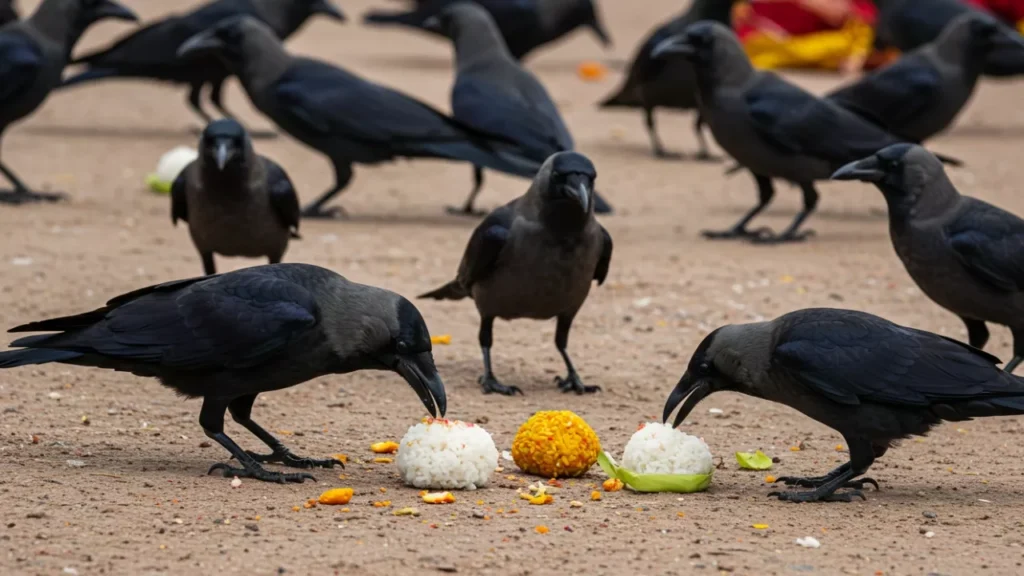
Have you ever performed Pind Daan or Shradh and seen crows descend to partake in the offerings? What does this common sight truly signify? Is the phenomenon of Crows eating Pindas just a coincidence, or is it a deeply meaningful sign rooted in ancient Hindu scriptures? This exploration delves into the practice of Kaka Bali – the specific offering made to crows, sanctioned by texts like the Agni and Skanda Puranas. Why are crows chosen for this role? Are they merely birds, or do they act as messengers or even representatives of the Pitrs themselves? Discover the compelling scriptural explanations, particularly from the Markandeya and Garuda Puranas, linking this act to how ancestors, potentially reborn in various forms, receive vital nourishment. Learn why observing crows eating the offered pindas is widely interpreted as a highly positive sign, indicating acceptance, successful delivery of sustenance, and the overall satisfaction (Pitru Tripti) of your ancestors. Are there specific mantras involved? What if crows don't appear? Dive into the full article to understand the complete context, scriptural basis, and nuances behind decoding this significant event in ancestral worship.
Namaste,
When Crows Eating Pindas: Decoding This Important Sign of Ancestral Acceptance
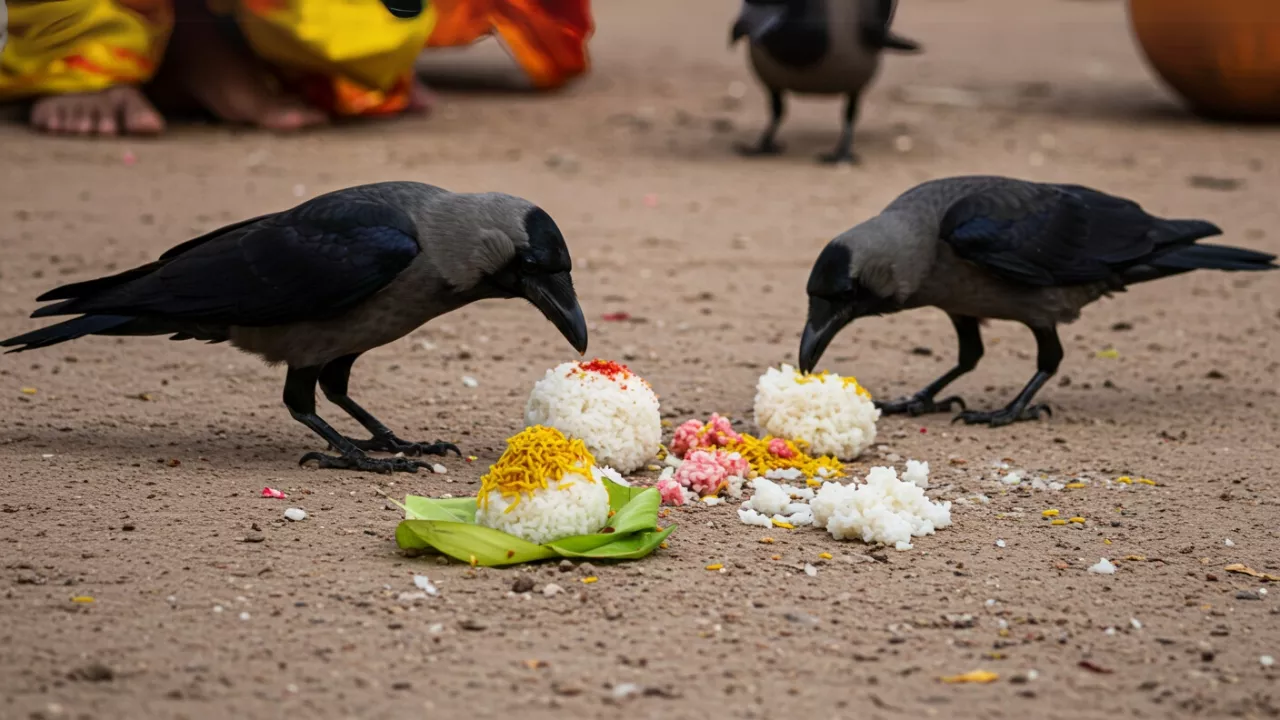
When we perform Pind Daan, we engage in a profound act of seva (service) and remembrance (smaranam) for our Pitrs (ancestors). We offer the pindas – carefully prepared balls of rice or barley, imbued with sesame seeds (til), ghee, honey, and the sacred power of Pind Daan mantras – as sustenance (anna) and solace (shanti) for their journey. A question that naturally arises, and one we seek to understand fully, concerns what it signifies when these common birds partake of the offerings made.
From my long years spent by the banks of Mother Ganga here in Kashi, observing countless rituals and pondering the wisdom of our Puranas, I can tell you that this observation holds significant weight. Let us explore the Crows eating Pindas meaning, drawing light from our ancient scriptures.
Kaka Bali – The Prescribed Offering to Crows (काक बलि)
First, let us address a fundamental point: is offering food specifically to crows (kaka – काक) even part of our scriptural injunctions? Understanding this helps frame the significance of the event. The answer, found within the vast ocean of Puranic literature, is yes.
- Explicit Instructions: The Agni Purana provides clear guidance, instructing that offerings of rice balls (pindas) to crows should be made while chanting specific mantras, inviting them from various directions to partake [Agni Purana]. Similarly, the Skanda Purana directs that food should be scattered outside for beings like crows and worms. It even provides a specific mantra for offering a rice ball on the ground for crows from different directions [Skanda Purana].
- Contextual Implication: The Skanda Purana also mentions performing the Nitya Shradh (daily ancestral offering) without necessarily making an offering to crows [Skanda Purana]. This very exception implies that in other, more elaborate forms of Shradh, offering to crows is indeed a standard practice in many traditions, making their acceptance relevant to the ritual’s purpose.
So, offering food, sometimes even specific pindas or rice balls (often termed Kaka Bali – काक बलि), to crows is not merely a folk custom; it has roots in the procedural guidance given in certain Puranas.
Why Crows? Unraveling the Symbolic Connection (कौवे ही क्यों?)
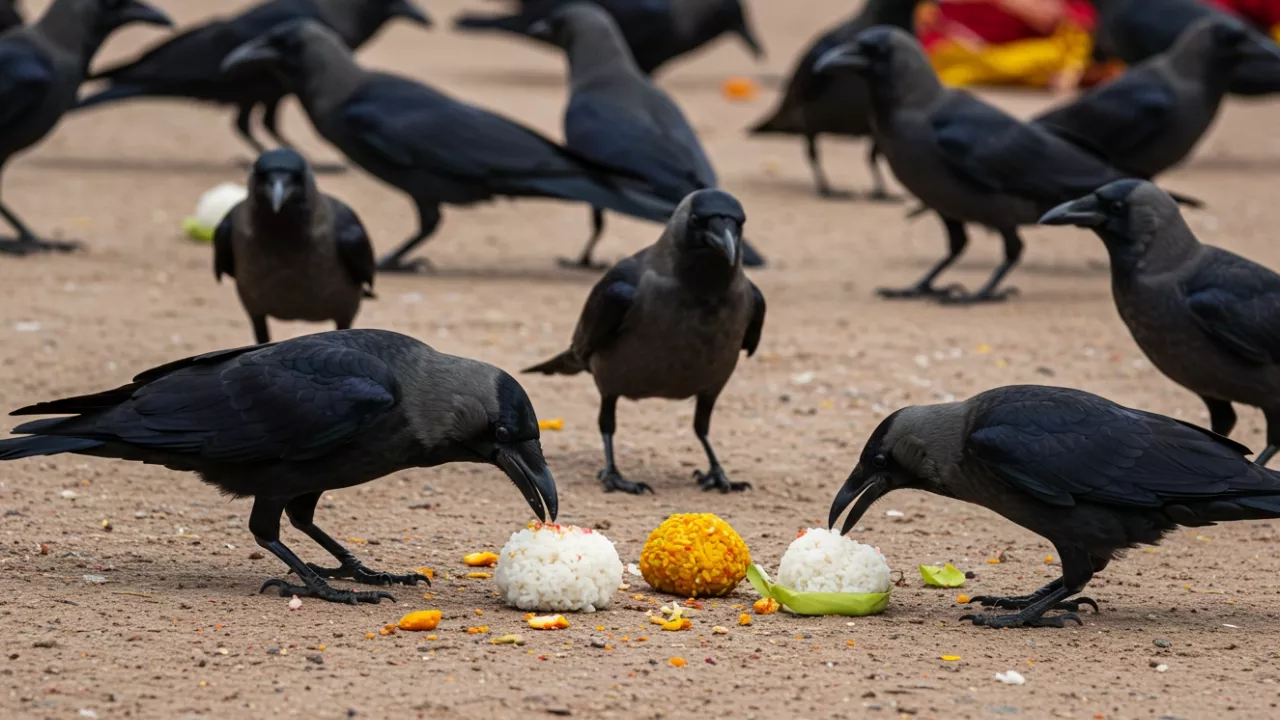
But why crows specifically? What makes these particular birds significant in this context? Our traditions and scriptures offer several layers of understanding:
- Messengers of Yama: Crows are often symbolically associated with Lord Yama, the righteous Judge and Ruler of the ancestral realm (Pitru Loka). Their acceptance can be symbolically interpreted as the offering’s essence being conveyed.
- Representatives of Pitrs: In some interpretations, crows are seen as direct representatives of the Pitrs themselves, taking that form to accept the offering.
- Ancestors in Various Forms (Vividha Yoni – विविध योनि): This scriptural explanation is key to understanding this sign. Puranas like the Markandeya Purana teach that souls, based on karma, may take birth in various forms – animal, bird, insect, or even as Pisacas (ghosts) [Markandeya Purana, Garuda Purana, Vayu Purana].
- Nourishment Through Scattered Offerings: Crucially, scriptures state that ancestors in these different states receive nourishment through Shradh. The Markandeya Purana clarifies that ancestors as Pisacas find satisfaction (tripti) from food scattered on the ground, and many ancestors, whether as animals or residing subtly within creatures, derive nourishment from such offerings [Markandeya Purana, Skanda Purana].
Therefore, when we offer Kaka Bali or when crows consume the pindas or scattered food, they act as potential recipients representing those ancestors who rely on these specific offerings.
Decoding the Sign: Understanding What it Signifies When Crows Eat Pindas (संकेत का अर्थ)
Now we arrive at the heart of your question: What is the true Crows eating Pindas meaning within the ritual context?
Based on the Puranic understanding outlined above, when crows readily consume the pinda or the Kaka Bali offering:
- Sign of Acceptance: It is widely interpreted as a positive sign (shubh sanket) indicating that the offering has been accepted by the intended forces or beings.
- Nourishment Reaching: It suggests that the nourishment, directed by your sankalpa and mantras, is reaching an ancestor, particularly one in a state (like an animal form or Pisaca state) that receives sustenance this way. This directly informs the positive interpretation as successful delivery of the offering. The Garuda Purana assures us the Shradh offering finds the soul, even in a different form, guided by names, Gotra, and mantras [Garuda Purana].
- Ancestral Satisfaction (Pitru Tripti – पितृ तृप्ति): The willing acceptance by the crow signifies potential satisfaction of the ancestor(s) connected to that offering, bringing fulfillment to the performer (karta).
- Fulfillment of Ritual Aspect: Since offering to crows is prescribed, their acceptance marks the successful completion of that ritual component, reinforcing the positive meaning of this sign.
So, observing crows eating the offered food is generally taken as an auspicious sign. It implies the ritual mechanism, designed to nourish souls across various states, is functioning as intended by the Shastras.
Navigating Nuances and Differing Perspectives (मतभेद और सूक्ष्मता)
As we noted, scriptures sometimes offer varying perspectives, like the Padma Purana passage. How do we reconcile this when interpreting this sign?
- Different Contexts: The passage might refer to specific conditions or types of Shradh.
- Primacy of Explicit Instruction: Explicit instructions in Agni and Skanda Puranas to offer to crows often guide the practice of Kaka Bali.
- Importance of Tradition (Kula Parampara – कुल परम्परा): Adhering to one’s family traditions and Guru’s guidance, based on specific Gṛhyasūtras, is crucial for resolving such nuances and understanding the accepted interpretation within one’s lineage.
The multifaceted symbolism of crows in Puranic thought—as messengers, karmic forms, or beings associated with Yama—reinforces their significant role in Shradh rites.

The Heart of the Matter: Faith and Sincere Intention (श्रद्धा और भाव)
While interpreting signs like crows eating provides confirmation, the core essence remains Shradh (faith) and Bhava (sincere intention). Your devotion and respect are primary. The meaning of this sign, while significant, is secondary to the purity of your offering.
Perform your duty with dedication, whether crows appear or not. Trust in the Shastras and divine grace.
Conclusion: A Sign of Compassionate Reach
In conclusion, the Crows eating Pindas meaning, according to prominent Puranic sources, is largely interpreted as a positive sign of acceptance, especially for ancestors potentially existing in forms nourished by such offerings. It reflects the compassionate scope of Shradh rites. While acknowledging textual nuances, the explicit instructions to offer to crows in key Puranas support the importance of this practice and the generally accepted auspicious Crows eating Pindas meaning.
Always perform your ancestral duties following tradition and expert guidance. Offer with a pure heart, trusting your reverence reaches its destination.
May your Pitrs be ever satisfied (tṛpta) and bestow their blessings (ashirvad) upon you and your lineage.
|| हरि ॐ तत् सत् ||
Considering a rite for your own family?
Tell us what your family needs and a coordinator will contact you personally. No online payment is requested.
Send an enquiry