Life, Death, and the Ancestral Echo: Deep Reflections During Pitrupaksha
Pitrupaksha is far more than just a period of rituals; it's a sacred invitation for Deep Reflections During Pitrupaksha, prompting us to explore life's most profound truths. The act of remembering departed ancestors vividly underscores the impermanence of physical existence, urging us to value the present moment and live with greater awareness. It encourages a mature view of death (Mrityu) not as a terrifying end, but as a natural transition for the eternal Atman (soul) within the grand cosmic cycle of Samsara. By engaging with our ancestors, we demystify death and foster acceptance rather than fear. Amidst this impermanence, Deep Reflections During Pitrupaksha also reveal the comforting reality of continuity. We see ourselves as links in an unbroken chain of lineage (Kula), carrying forward a legacy of values and traditions. This period illuminates the vital importance of our roots (Mula) for stability, nourishment, and understanding our own place in the cycle of Dharma (duty). Contemplating our ancestors inspires us to consider the legacy we are creating and helps transcend the ego by recognizing our interconnectedness with a larger whole. Ultimately, Pitrupaksha is a divinely ordained pause to cultivate wisdom, deepen gratitude, and reaffirm our connection to timeless spiritual truths. How might dedicating specific time during Pitrupaksha for quiet contemplation on these themes of impermanence, continuity, and legacy enrich your spiritual experience of this sacred fortnight?
ॐ पूर्णमदः पूर्णमिदं पूर्णात्पूर्णमुदच्यते |
पूर्णस्य पूर्णमादाय पूर्णमेवावशिष्यते ||
ॐ शांतिः शांतिः शांतिः ||
The very act that defines Pitrupaksha – remembering and honouring those who have departed – serves as a stark and potent reminder of a fundamental truth of existence: Impermanence (Anityatā).
- They Were, They Are Not (Physically): We remember our parents, grandparents, great-grandparents. They walked this earth, breathed this air, experienced joys and sorrows, just as we do now. Yet, their physical forms are gone. This simple, inescapable fact cuts through the illusion (Maya) of permanence we often cloak ourselves in during our daily lives.
- Our Own Transience: Seeing the line of ancestors inevitably leads to the reflection: “Just as they were and are no longer physically present, so too will I, one day, join their ranks.” Pitrupaksha gently compels us to confront our own mortality, not morbidly, but realistically.
- The Value of the Present Moment: Recognizing life’s fleeting nature imbues the present moment with profound value. If life is transient, how are we using this precious opportunity? Are we living with awareness, purpose, and kindness? Are we fulfilling our Dharma? The memory of the departed urges us to live more fully and consciously now.
Pitrupaksha acts as an annual reality check, pulling us back from the distractions of worldly pursuits to contemplate the fragile, beautiful, and temporary nature of embodied life.
Deep Reflections During Pitrupaksha: Understanding Death (Mṛtyu – मृत्यु) as Transition
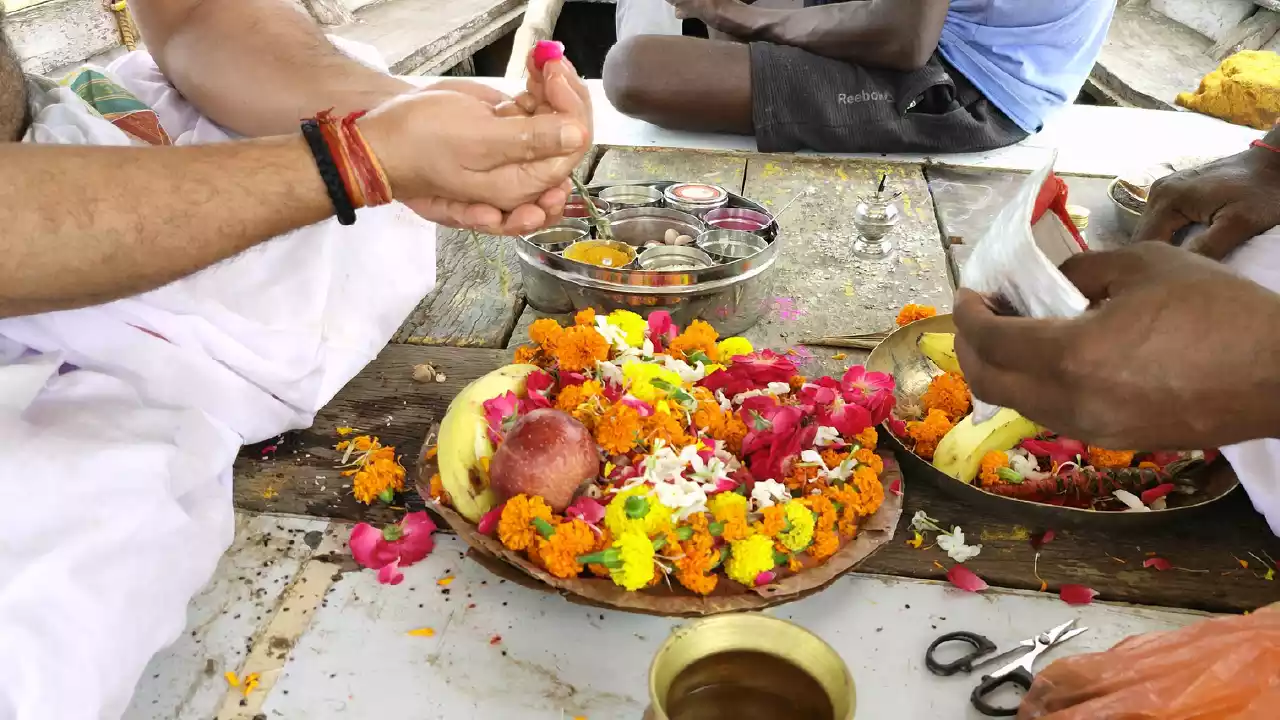
Pitrupaksha encourages a mature and balanced perspective on Death (Mṛtyu), viewing it not as a terrifying end, but as a natural transition within a larger cycle.
- Not Annihilation, but Transformation: Hindu philosophy asserts that the essential Self (Atman – आत्मा) is eternal and unchanging. Death is merely the shedding of the physical body (sthula sharira), like changing worn-out clothes. The soul continues its journey, carrying its karmic baggage (karma) and subtle impressions (samskaras).
- Part of the Cosmic Cycle (Samsāra – संसार): Death is an integral part of Samsara – the endless cycle of birth, death, and rebirth driven by karma. Pitrupaksha acknowledges this cycle respectfully. The rituals are designed to aid the soul’s smooth transition within this cycle, providing peace and support.
- Demystifying the Departed: By actively engaging with the departed through rituals and remembrance, Pitrupaksha demystifies death to some extent. Ancestors are not fearsome ghosts (unless severely disturbed due to lack of rites or extreme negative karma), but members of the extended family residing in a different realm (Pitru Loka), still connected to us, still receptive to our love and offerings. This fosters acceptance rather than just fear.
- Focus on a Peaceful Passage: The emphasis on Shraddha for providing peace (shanti) and satisfaction (tripti) underscores the desire for a positive transition for the departed soul, reflecting a compassionate view of the afterlife journey.
Pitrupaksha encourages us to view death as a significant threshold, a change of state within the soul’s ongoing journey, rather than a horrifying full stop.
The Unbroken Thread: Embracing Continuity (Santāna – संतान / Nityatā – नित्यता)
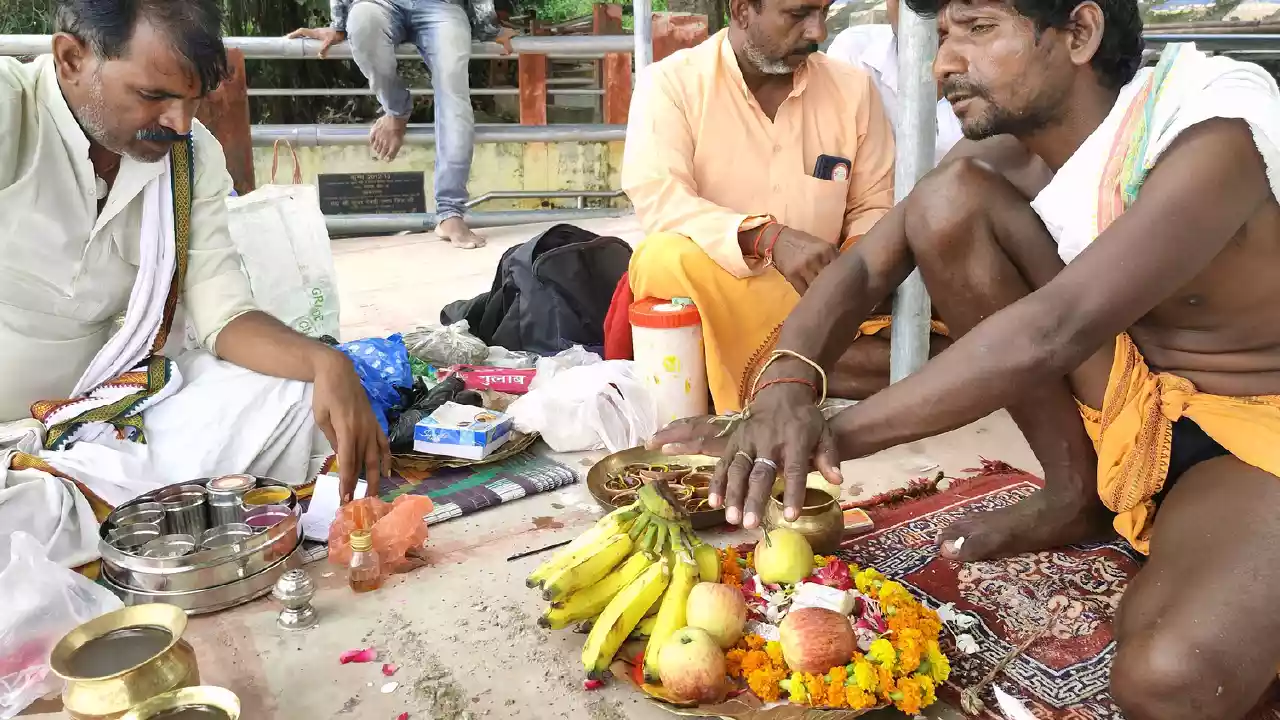
Amidst the undeniable truths of impermanence and death, Pitrupaksha simultaneously offers a powerful vision of Continuity (Santāna or Nityatā).
- The Flow of Lineage (Kula – कुल): While individuals come and go, the lineage (kula) continues. We are links in an unbroken chain stretching back generations and potentially extending forward. This sense of being part of a continuous stream provides stability and meaning beyond our individual lifespan.
- The Persistence of the Atman: The ultimate continuity lies in the eternal nature of the Atman, the divine spark within each being. Though bodies change, the underlying consciousness persists. Honouring ancestors is, on a deeper level, honouring the journey of that eternal Self through different manifestations within our specific family stream.
- Legacy of Values and Traditions: Continuity is also maintained through the passing down of values, culture, traditions, and knowledge (jnana) from one generation to the next. Pitrupaksha itself is a tradition that ensures this continuity of remembrance and respect.
- The Lamp Relay: Imagine life as a relay race where each generation carries the lamp of life and lineage forward, passing it on before their own lap ends. Pitrupaksha honours those who passed the lamp to us.
Pitrupaksha beautifully balances the awareness of individual endings with the experience of collective continuation. It reminds us that while forms change, the essential life force and the stream of consciousness flow on.
Watering the Roots (Mūla – मूल): The Indispensable Importance of Ancestry
The focus on ancestors naturally highlights the profound importance of our roots (Mūla). Pitrupaksha is, in essence, the annual act of consciously tending to these roots.
- Source of Nourishment: Our ancestors are our source – biologically, culturally, and often emotionally and spiritually. Just as a tree draws sustenance from its roots, we draw our physical existence, our initial conditioning (samskaras), and our inherited context from our lineage. Acknowledging this source is vital for healthy growth.
- Stability and Anchoring: In a world that often feels chaotic and rootless, knowing our lineage provides a crucial anchor. It gives us a sense of identity, belonging, and history. Strong roots help the tree withstand storms. A strong connection to lineage helps individuals navigate life’s challenges with greater resilience.
- Hidden Wisdom: The experiences of our ancestors – their successes, failures, wisdom gained through hardship – form a repository of learning. While we may not know all the details, the energetic imprint exists within the lineage. Connecting respectfully can subtly allow us to draw upon this collective wisdom.
- Health of the Whole: The health of the roots directly impacts the health of the entire tree. Similarly, the peace and satisfaction of the ancestors (nourished roots) contribute to the well-being and flourishing of the descendants (branches, leaves, fruits). Pitrupaksha is essential ‘root care’.
This period reminds us that we are not self-made individuals sprung from nowhere, but part of a vast, interconnected root system that grounds us and nourishes us in seen and unseen ways.
Our Place in the Cycle: Reflection on Duty (Dharma – धर्म) and Legacy
Contemplating the flow from ancestors to ourselves naturally leads to reflecting on our own role in this continuum.
- Inheritors and Trustees: We have inherited life, values, and a certain karmic context. Pitrupaksha reminds us we are trustees of this inheritance.
- Present Duty (Dharma): What is our Dharma now? It includes honouring the past (Pitru Rina), living ethically in the present, and contributing positively to the world. Pitrupaksha sharpens our awareness of these duties.
- Future Legacy: Just as we reflect on our ancestors, future generations may one day reflect on us. What legacy are we creating? Are we living lives that will inspire gratitude and respect? Are we passing on positive values? Pitrupaksha encourages us to consider our own impact on the continuity of the lineage.
This reflection shifts our perspective from solely self-centric concerns to our responsibilities within the larger flow of generations.
Transcending the Ego (Ahaṃkāra – अहंकार): Seeing the Larger Self
Ultimately, the philosophical reflection invited by Pitrupaksha helps us transcend the limitations of the individual ego (Ahaṃkāra).
- Part of a Greater Whole: By focusing on lineage and the cycle of life and death, we see ourselves not as isolated egos, but as integral parts of a vast, interconnected web of existence spanning time.
- Humility: Recognizing our dependence on ancestors and the impermanent nature of our own lives fosters humility.
- Universal Connection: Extending offerings even to unknown ancestors (Sarva Pitru) hints at a connection to the broader human family and ultimately, to the one Consciousness manifesting through all beings.
Deep Reflections During Pitrupaksha : The Wisdom Woven into Remembrance
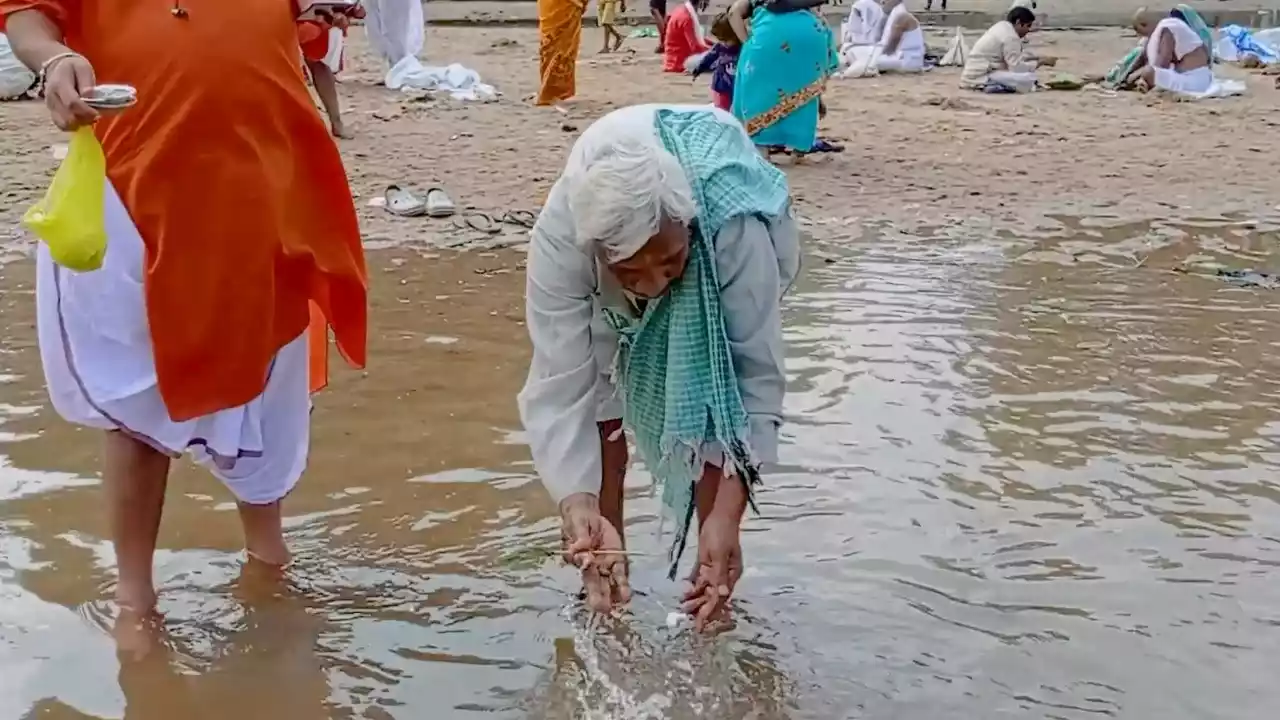
Therefore, Pitrupaksha is far more profound than just a fortnight of rituals. It is a divinely ordained pause, a sacred space carved out of the year for deep philosophical reflection. Prompted by the remembrance of our ancestors, it invites us to contemplate:
- The impermanence of individual life.
- The nature of death as a transition within the cosmic cycle.
- The comforting reality of continuity through lineage and the eternal Atman.
- The vital importance of our roots for stability and nourishment.
- Our own duty (Dharma) and the legacy we are creating.
- The need to see beyond our individual ego to our place in the larger web of life.
It is a time to gain perspective, cultivate wisdom (viveka), deepen gratitude (kṛtajñatā), and reaffirm our connection to the timeless truths that underpin our existence. The rituals provide the structure, but the true gift of Pitrupaksha lies in the inner transformation sparked by these profound reflections.
May this period bring you not only the blessings of your ancestors but also the illuminating light of self-awareness.
ॐ शांतिः शांतिः शांतिः |
Considering a rite for your own family?
Tell us what your family needs and a coordinator will contact you personally. No online payment is requested.
Send an enquiry