Ancestor’s Death Tithi Unknown? Here’s How to Perform Shradh During Pitrupaksha
You've heard Sarva Pitru Amavasya is for "all ancestors," especially when dates are forgotten. But is simply performing any ritual on that day enough? Do you know why this day is so crucial according to texts like the Garuda Purana? Are there specific ways the Sankalpa (intention) and offerings should be adapted when addressing unknown ancestors? Is Amavasya the only Puranic solution, or are there other auspicious windows you might be missing? Ensure your efforts truly reach them – learn the specifics.
Namaste,
What is to be done when the precise thread of time, the exact tithi (lunar day) marking an ancestor’s departure from this mortal realm, has been lost to the mists of memory? Does this lapse mean our duty remains unfulfilled, our beloved Pitṛs (ancestors) unattended during the sacred fortnight of Pitṛ Pakṣa?
Our Sanātana Dharma, in its infinite wisdom and compassion, anticipates such human frailties. The ancient sages, through the divine revelations enshrined in our revered Purāṇas, have provided clear pathways, ensuring that no ancestor need feel forgotten simply because a date has faded.
There are indeed effective ways to perform Śrāddha during Pitrupaksha, specific solutions for when the ancestor’s death tithi is unknown. Finding the correct unknown shradh tithi solution is a testament to the flexibility and depth of our traditions.
Ancestor’s Death Tithi Unknown? Discover the Puranic Solution for Shradh During Pitrupaksha

The ideal, as prescribed in our scriptures, is undoubtedly to perform the annual Śrāddha on the specific lunar day (tithi) corresponding to the ancestor’s passing. This alignment is believed to create a potent channel, making the connection and the transfer of offerings most direct. It’s like tuning into a specific frequency where the communication is clearest.
However, life unfolds in unpredictable ways, records are lost, memories blur, and migrations sever connections to ancestral knowledge. What then? Does the door to remembrance slam shut? Absolutely not.
Pitrupaksha itself, this sacred fortnight dedicated entirely to the ancestors, becomes the primary window for addressing such situations. Let us explore the guidance offered by our sacred texts to find the most appropriate unknown shradh tithi solution.
The Foremost Unknown Shradh Tithi Solution: Sarva Pitru Amavasya (Mahalaya Amavasya)
If there is one day that stands out universally within Pitrupaksha for addressing the issue of unknown death dates, it is the final day – the New Moon day, Sarva Pitru Amavasya, also known as Mahalaya Amavasya. Its significance in this context cannot be overstated.
Why Sarva Pitru Amavasya is the Prime Remedy
- Meaning of “Sarva Pitru”: The name itself declares its purpose – “For All Ancestors.” This day transcends specificity. It is designated for honouring every single departed soul connected to one’s lineage, whether their tithi is known or unknown, whether they are from the paternal or maternal side, whether they are immediate ancestors or those lost in the depths of time. It is the great net of remembrance that gathers all.
- The Great Gathering (Mahalaya): The Garuḍa Purāṇa paints a vivid picture of ancestors gathering expectantly at the thresholds of their descendants’ homes on Amavasya, yearning for offerings. This belief underscores Amavasya as the day they are most accessible and receptive, making it the perfect occasion to offer solace when specific dates are forgotten. Performing Śrāddha ensures their tṛpti (satisfaction).
- Culmination of Pitrupaksha Energy: The entire fortnight builds spiritual energy directed towards the Pitṛ Loka. Sarva Pitru Amavasya, being the concluding day, acts as a powerful culmination point, concentrating the merits and intentions of the preceding days. Offerings made on this day carry the weight of the entire period.
- Puranic Sanction: Multiple Puranas highlight Amavasya’s importance:
- Garuda Purana: Besides the poignant description of waiting ancestors, it explicitly states that if the day of death is unknown (ajñāta mṛta dine) but the month is known, then Darśa (the New Moon day) should be the day for Śrāddha. This provides direct scriptural backing for using Amavasya as the unknown shradh tithi solution.
- Skanda Purana: This vast repository emphasizes the critical importance of Mahalaya Śrāddha performed on Amavasya. It speaks of the immense merit gained and the potential negative consequences of neglecting this day, further solidifying its position. Its advice to perform Śrāddha at sacred places like Lohayati specifically on the New Moon day during Pitrupaksha adds another layer of emphasis.
Therefore, the most highly recommended and scripturally supported unknown shradh tithi solution during Pitrupaksha is to perform the Śrāddha rites with full faith and devotion on Sarva Pitru Amavasya. This single observance can cover all ancestors whose specific tithis have been lost to time.
Other Auspicious Windows within Pitrupaksha for Remembrance
While Sarva Pitru Amavasya is the primary answer, our tradition offers other potent times within Pitrupaksha that hold significance for ancestral rites. While not always specifically designated as the sole solution for unknown tithis like Amavasya is, their inherent auspiciousness makes them valuable opportunities for remembrance, especially if Amavasya observance is challenging or if one wishes to perform additional rites.
Bharani Nakshatra Shraddha (Maha Bharani)
- Significance: The Nakṣatra (lunar mansion) ruling the day of death also holds importance. Bharani Nakshatra, presided over by Lord Yama, the deity of death and dharma, is considered particularly significant for ancestral rites.
- Maha Bharani: If the Bharani Nakshatra falls during the Pitrupaksha period, that day is known as Maha Bharani and is deemed exceptionally powerful for performing Śrāddha. While traditionally associated with Śrāddha performed at places like Gaya, its occurrence during Pitrupaksha amplifies its merit manifold.
- Relevance for Unknown Tithi: Although not its exclusive purpose, the sheer potency of Maha Bharani makes it a highly meritorious day to offer Śrāddha for all ancestors, including those whose specific details are unknown. Performing rites on this day is believed to yield results comparable to Śrāddha performed at Gaya.
Ashtami Tithi (Madhya Ashtami)
- General Significance: The 8th day (Aṣṭamī) of the dark fortnight holds general auspiciousness in many contexts.
- Madhya Ashtami: Within Pitrupaksha, this day is sometimes referred to as Madhya Ashtami (Middle Eighth). Some traditions associate it specifically with performing Śrāddha for female ancestors, though this is not universally applied.
- Opportunity for Remembrance: Given its position within the sacred fortnight, performing general Tarpaṇa or Śrāddha on Ashtami can be considered beneficial, serving as another point of connection, even if Amavasya remains the principal solution for unknown tithis.
The Entire Pitrupaksha Period (Sun in Kanya Rashi)
- Skanda Purana’s Guidance: As you noted, the Skanda Purāṇa mentions that when the Sun transits the zodiac sign of Virgo (Kanyā Rāśi), typically coinciding with Pitrupaksha, one should ideally offer Śrāddha every single day (dine dine śrāddham Kanyāgate ravau).
- Practicality vs. Principle: While performing elaborate Śrāddha daily is impractical for most householders (gṛhasthas), the underlying principle is profound: the entire fortnight is spiritually charged and conducive to connecting with the Pitṛs.
- Implication: This reinforces the idea that any sincere act of remembrance – even simple Tarpaṇa (water offering) or dāna (charity) – performed with faith during any day of Pitrupaksha carries merit and reaches the ancestors. It provides a backdrop against which the specific recommendations for Amavasya, Bharani, etc., gain further weight as focal points within this generally auspicious period.
Guidance for Unknown Tithis Outside Pitrupaksha
It’s worth noting that our scriptures also provide guidance for situations where the death tithi is unknown outside the specific context of Pitrupaksha śrāddha.
- Magha / Margashirsha Amavasya: The Skanda Purāṇa advises that if the day of death is unknown (na jñāyate mṛtāhascet), one should perform the Śrāddha on the Amavasya of the month of Magha (approx. Jan-Feb) or Margashirsha (approx. Nov-Dec). This applies to general annual śrāddha considerations.
- Darsha (Amavasya) if Month Known: The Garuḍa Purāṇa confirms that if only the month of death is known, the Amavasya (Darśa) of that month is the appropriate day.
While these are valuable guidelines, within the special context of the Pitrupaksha fortnight, the emphasis overwhelmingly falls on the culminating Sarva Pitru Amavasya as the most fitting unknown shradh tithi solution.
How to Perform Shradh: Adapting Rituals for Unknown Tithis

When the specific ancestor and their tithi are unknown, the performance of Śrāddha, particularly on Sarva Pitru Amavasya, takes on a more universal character. The core components remain, but the intention (saṅkalpa) is broadened.
The Crucial Role of Sankalpa (Intention)
This is perhaps the most critical adaptation. Before beginning the rites, the kartā (performer) must make a clear and specific saṅkalpa. Instead of naming one ancestor, the intention should be stated along these lines (consulting a family priest for precise wording is always best):
“On this auspicious Sarva Pitru Amavasya tithi, I perform this Śrāddha with offerings of food (pinda) and water (tarpaṇa) for the satisfaction (tṛptyartham) of all my ancestors (sarveṣāṃ pitṛṇāṃ), paternal and maternal lineages, known and unknown, those whose tithis are forgotten or uncertain, and all souls connected to my family who seek solace. May these offerings reach them through divine grace, granting them peace and facilitating their onward journey (sadgati).”
This focused, universal intention directs the energy of the ritual appropriately.
Key Ritual Elements with Universal Focus
- Invocation (Āvāhana): Invoke not just immediate ancestors but the collective presence of the Pitṛs connected to your lineage (kula).
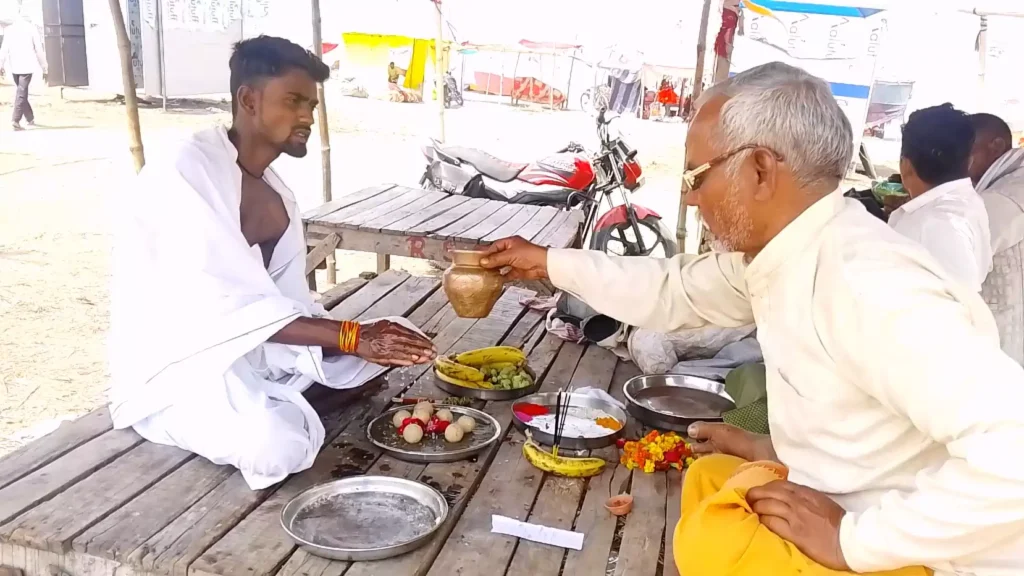
- Pinda Dāna: Offer piṇḍas (rice balls). Often, multiple piṇḍas are offered on Sarva Pitru Amavasya – typically three for the immediate paternal line (father, grandfather, great-grandfather), three for the maternal line (if applicable/known), and importantly, one or more piṇḍas specifically dedicated to sarveṣāṃ jñāta-ajñāta pitṛṇāṃ (all known and unknown ancestors).
- Tarpaṇa: Offer water libations (tilodaka – water with black sesame seeds) generously, naming known ancestors but also making offerings addressed to the collective ancestors (sakala pitṛ gaṇa) of both paternal (pitṛ vamśa) and maternal (mātṛ vamśa) lines.
- Brāhmaṇa Bhojana / Dāna: Feeding virtuous Brahmins or giving dāna (charity – food, clothes, money) to the needy is especially important on Amavasya. When performed with the saṅkalpa for all unknown ancestors, the merit is believed to reach them universally. Giving food to cows, crows, or dogs is also considered beneficial, as these beings are sometimes seen as intermediaries or representatives.
When Elaborate Rituals Aren’t Possible
Remember, śraddhā (faith) is the essence. If performing a full Śrāddha is not feasible due to circumstances:
- Simple Tarpaṇa: Even just offering water with black sesame seeds facing south, with sincere prayers and the universal saṅkalpa, holds immense value during Pitrupaksha, especially on Amavasya.
- Acts of Charity (Dāna): Donate food, clothes, or money to the poor or to venerable institutions in the name of your unknown ancestors.
- Feeding Animals: Offer food to cows, crows, or dogs with the intention that it benefits your ancestors.
- Sincere Prayers: Recite mantras like the Pitru Gayatri (Om Pitru Ganaya Vidmahe, Jagat Dharine Dhimahi, Tanno Pitro Prachodayat) or simply pray from the heart for the peace and liberation of all departed souls connected to you.
- Reading Scriptures: Read relevant chapters from the Garuḍa Purāṇa or other texts related to Pitrupaksha and Śrāddha.
The sincerity of your remembrance and the purity of your intention are paramount.
Overcoming Doubts: Trusting the Path Provided
It is natural to feel a twinge of doubt – will these offerings truly reach them if I don’t know the specifics? Our scriptures offer reassurance:
- Divine Mechanism: Trust in the divine mechanism established by the sages. The energies invoked during Pitrupaksha, especially on Amavasya, combined with your sincere saṅkalpa, are believed to guide the offerings appropriately.
- The Power of Mahalaya Shraddha: The Skanda Purāṇa itself emphasizes that performing the Mahalaya Śrāddha (rites during Pitrupaksha, culminating on Amavasya) is crucial and compensates even if annual rites on specific tithis are missed. The Purana goes so far as to say one should even beg, if necessary, to perform this vital duty, highlighting its significance.
- Intention is Key: In Sanātana Dharma, intention (bhāva) holds immense power. A sincere desire to honour and provide solace, backed by faith (śraddhā), transcends procedural limitations.
Do not let the lack of a specific date deter you from fulfilling this sacred duty. Embrace the unknown shradh tithi solution provided by our compassionate tradition.
Conclusion: Fulfilling Your Duty with Faith When Tithis Are Lost

The path of Dharma is always one of compassion and practicality. The challenge of an unknown shradh tithi is met with the profound and universally embracing solution of Sarva Pitru Amavasya. This day, standing as the culmination of the sacred Pitrupaksha fortnight, is the most potent time to offer your remembrance, gratitude, and sustenance to all ancestors, especially those whose details have faded from memory.
Supplement this with sincere observances during other potent times like Maha Bharani if possible, or through simple daily acts of remembrance during the entire fortnight. Focus on a clear, universal saṅkalpa, perform the rites (elaborate or simple) with unwavering faith (śraddhā), and trust in the wisdom of our ancient Puranas.
By doing so, you not only fulfill your Pitṛ Rṇa (debt to ancestors) but also bring peace to departed souls, strengthen your own roots, and invite abundant blessings upon your family. Let not the forgotten date be a barrier, but let the universal embrace of Sarva Pitru Amavasya be the bridge that connects you to all those who came before.
May your sincere efforts bring peace and sadgati (noble destiny) to your ancestors.
शुभमस्तु!
Considering a rite for your own family?
Tell us what your family needs and a coordinator will contact you personally. No online payment is requested.
Send an enquiry