The A to Z of Pitrupaksha: Essential Terms Explained
Navigate the sacred period of ancestral reverence with clarity using The A to Z of Pitrupaksha, your essential glossary to its core concepts! Understand that Pitrupaksha (पितृपक्ष) is the "Fortnight of the Ancestors," dedicated to honoring Pitrus (पितृ)—departed forefathers, typically the three preceding generations. The central rite is Shraddha (श्राद्ध), performed with faith, often including Tarpan (तर्पण), the offering of water with Til (तिल) (black sesame seeds) to quench subtle thirst, and Pinda Daan (पिण्ड दान), the offering of rice balls (Pinda - पिण्ड) to nourish their subtle bodies. These acts fulfill Pitru Rina (पितृ ऋण), the sacred ancestral debt. The A to Z of Pitrupaksha explains that this period falls in the Krishna Paksha (कृष्ण पक्ष) (waning moon) of Ashwin (अश्विन) month, culminating in Mahalaya Amavasya (महालय अमावस्या), a day for all ancestors. These rituals, performed with sincere Bhaav (भाव) (feeling), are believed to bring Tripti (तृप्ति) (satisfaction) to ancestors in Pitru Loka (पितृ लोक), governed by Lord Yama (यम), and in turn, bestow Pitru Kripa (पितृ कृपा) (ancestral blessings) upon the descendant (Kartā - कर्ता), helping to mitigate Pitra Dosha (पितृ दोष) (ancestral afflictions). This glossary will demystify key terms, making your observance more meaningful. With this quick guide to The A to Z of Pitrupaksha at your fingertips, which specific term now makes more sense to you, and how does it enhance your understanding of the rituals?
ॐ श्री सरस्वत्यै नमः | ॐ वाग्देव्यै नमः |
Namaste,
This is very common when we come across a word (or some words) in context of shradh, or some other ritual or when reading about Pitrupaksha, which we may have listened before, but we never thought of the exact meaning. If this has happened to you, or if you want to quickly learn about the essential terms used in pitrupaksha, then you arrived at the right place!
We present you, a clear glossary, a Shabdakosha (शब्दकोश), which will serve as a valuable tool for any seeker wishing to understand Pitrupaksha more deeply. It helps solidify the knowledge and provides a quick reference.
The A to Z of Pitrupaksha: Essential Terms Explained
Core Concepts & The Period of Pitrupaksha Itself
- Pitrupaksha (पितृपक्ष): Literally “The Fortnight (Paksha) of the Ancestors (Pitrus).” The 15-16 day period in the Hindu lunar month of Ashwin (Krishna Paksha) dedicated to honouring departed ancestors.
- Pitru / Pitris / Pitarah (पितृ / पितरः): ‘Pitru’ means Father, but in plural (Pitris/Pitarah), it refers to all departed ancestors, typically the preceding three generations (father, grandfather, great-grandfather and their corresponding wives/female ancestors), who are invoked during ancestral rites.
- Shraddha (श्राद्ध): The core set of rituals performed with faith and devotion (Shraddha – श्रद्धा) to honour and nourish ancestors. It often includes Tarpan and Pinda Daan.
- Dharma (धर्म): Sacred duty, righteousness, cosmic law, the inherent nature of things. Performing Pitrupaksha rites is considered a vital part of one’s Dharma.
- Karma (कर्म): Action, deed, and also the universal law of cause and effect, where actions create consequences that influence the soul’s journey through Samsara. Ancestral karma and descendant’s karma are interconnected.
- Samsara (संसार): The continuous cycle of birth, death, and rebirth driven by karma and desire, from which liberation (Moksha) is sought. Pitrus are generally within this cycle.
- Moksha (मोक्ष): Liberation or release from the cycle of Samsara. Aiding ancestors towards Moksha is a high aspiration of Shraddha.
Key Rituals and Offerings in Pitrupaksha
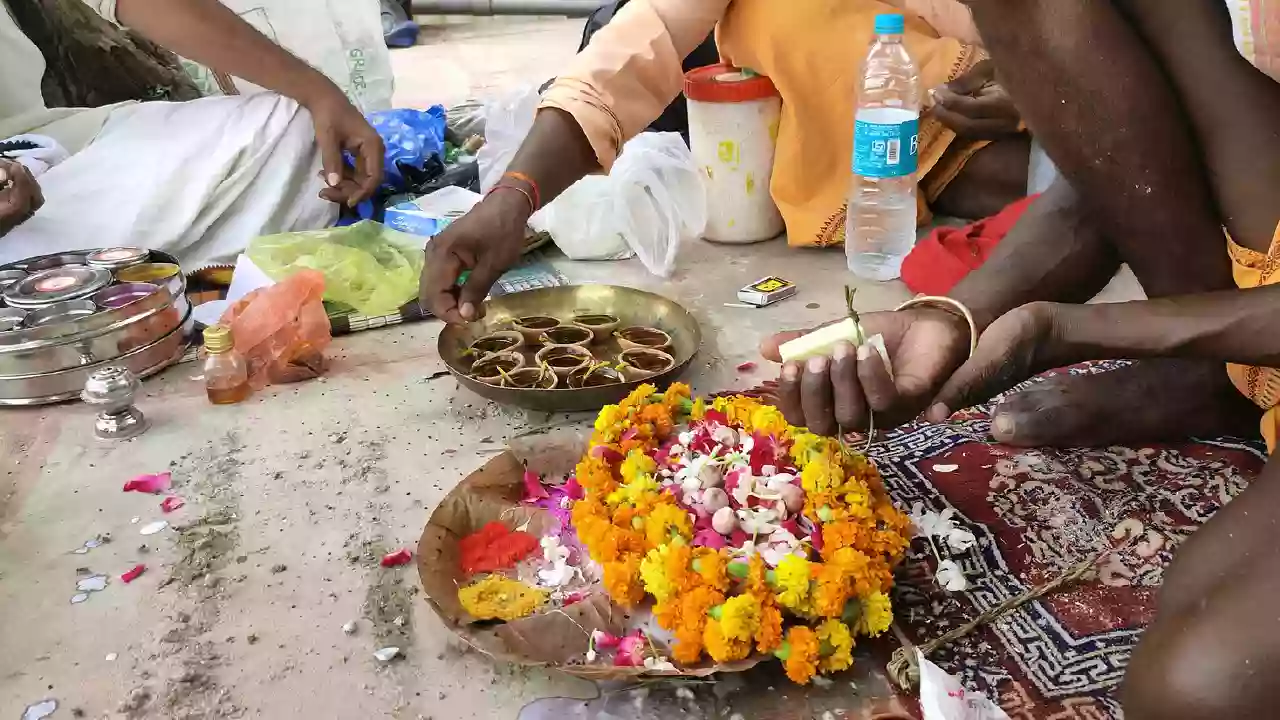
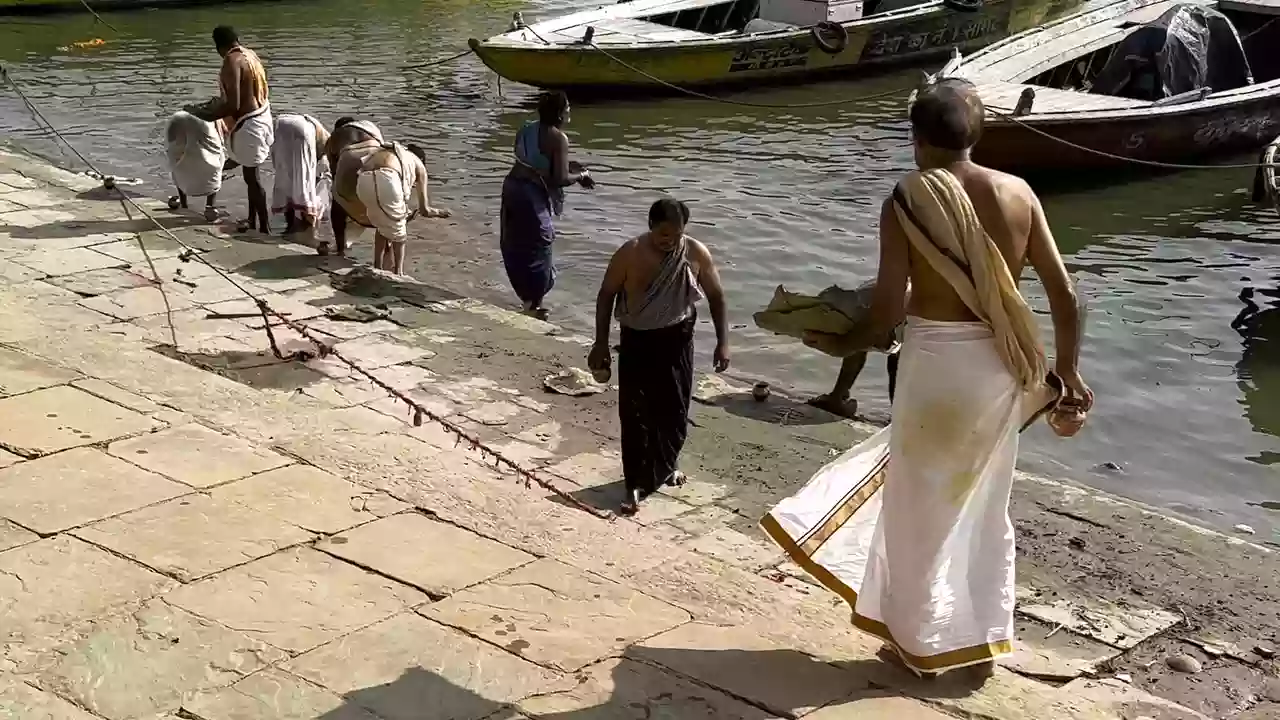
- Tarpan / Tarpana (तर्पण): From ‘tṛp’ (to satisfy). The ritual offering of water, usually mixed with black sesame seeds (Til), to quench the subtle thirst of Devas, Rishis, and especially Pitrus. Often performed daily during Pitrupaksha.
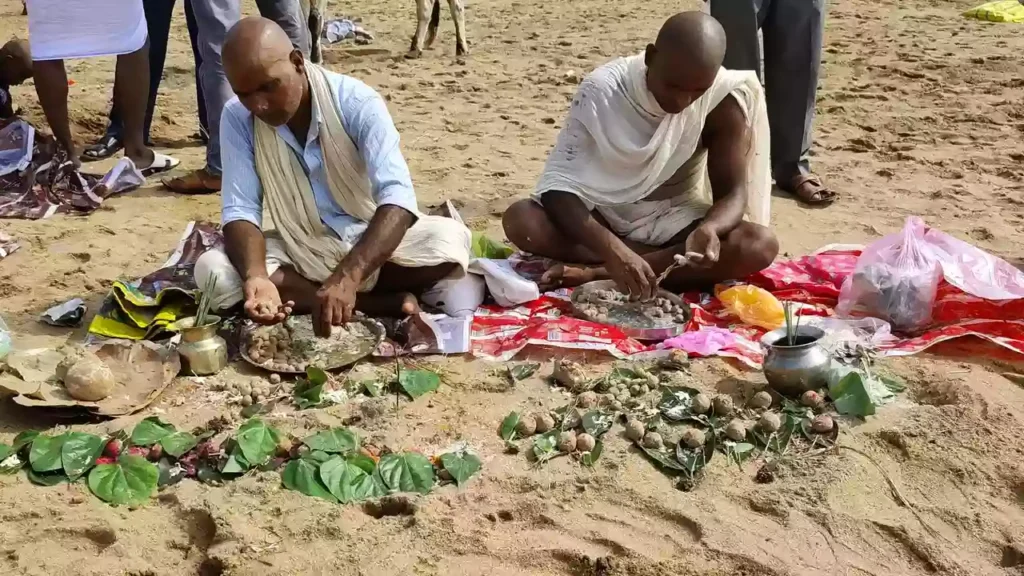
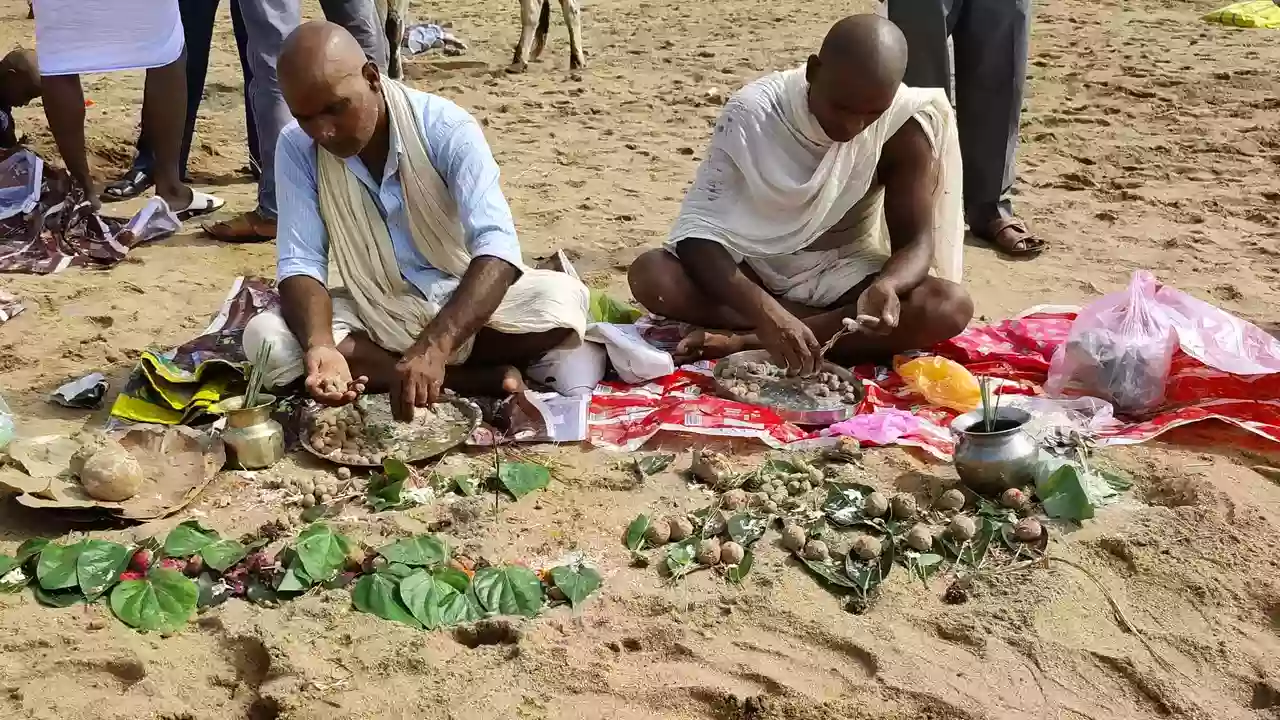
- Pinda Daan (पिण्ड दान): The offering (‘Daan’) of rounded balls (‘Pinda’) made primarily of cooked rice, ghee, honey, and sesame seeds. These symbolically nourish and provide form to the subtle bodies of the ancestors. Central to Shraddha.
- Pinda (पिण्ड): A ball, lump, or portion; specifically, the rice ball offered during Shraddha representing the ancestor’s subtle body.
- Anna Daan (अन्न दान): The offering or donation (‘Daan’) of food (‘Anna’). Feeding Brahmins or the needy during Pitrupaksha is a form of Anna Daan highly beneficial for ancestors.
- Brahman Bhojan (ब्राह्मण भोजन): The ritual feeding (‘Bhojan’) of qualified Brahmins during a Shraddha ceremony, who act as representatives or conduits through whom the ancestors receive the nourishment.
- Dakshina (दक्षिणा): An offering of money, clothes, or other gifts given to Brahmins or priests after a ritual, expressing gratitude and ensuring the completeness of the rite.
- Swadha (स्वधा): A sacred exclamation used when making offerings specifically to the Pitrus (ancestors), similar to how ‘Swaha’ (स्वाहा) is used for offerings to Devas in yajnas. It signifies the offering being dedicated and carried to them.
- Avahana (आवाहन): The ritual invocation or inviting of deities or ancestors to be present during a ceremony.
- Visarjan (विसर्जन): The ritual act of respectfully bidding farewell or dismissing the invoked deities or ancestors at the conclusion of a ceremony.
- Sankalpa (सङ्कल्प): A sacred vow or statement of purpose/intention made at the beginning of a ritual, dedicating the action to a specific deity or outcome (e.g., for the satisfaction of specific ancestors).
Timing and Calendar Terms
- Tithi (तिथि): A lunar day in the Hindu calendar. There are 15 Tithis in each Paksha. Shraddha is often performed on the Tithi corresponding to the ancestor’s death date.
- Krishna Paksha (कृष्ण पक्ष): The ‘dark fortnight’ – the waning phase of the moon, from Full Moon (Purnima) to New Moon (Amavasya). Pitrupaksha occurs during this phase.
- Shukla Paksha (शुक्ल पक्ष): The ‘bright fortnight’ – the waxing phase of the moon, from New Moon (Amavasya) to Full Moon (Purnima). Generally associated with Devas and auspicious beginnings.
- Amavasya (अमावस्या): The New Moon day, the last day of the Krishna Paksha.
- Mahalaya Amavasya (महालय अमावस्या): The Amavasya falling at the end of Pitrupaksha (in Ashwin month). Considered the most important day, suitable for honouring all ancestors. Also called Sarva Pitru Amavasya.
- Sarva Pitru Amavasya (सर्व पितृ अमावस्या): “Amavasya for all ancestors.” Another name for Mahalaya Amavasya, emphasizing its suitability for honouring all Pitrus collectively.
- Purnima (पूर्णिमा): The Full Moon day, marking the end of Shukla Paksha and often the beginning of Pitrupaksha (Bhadrapada Purnima).
- Ashwin / Ashwayuja (अश्विन / आश्वयुज): The Hindu lunar month (approx. September-October) during which most of Pitrupaksha falls.
- Bhadrapada (भाद्रपद): The Hindu lunar month preceding Ashwin. Pitrupaksha sometimes begins on the Purnima of this month.
- Dakshinayana (दक्षिणायन): The six-month period of the sun’s apparent southward journey (approx. June solstice to December solstice). Pitrupaksha falls within this period, considered conducive for ancestral rites.
- Uttarayana (उत्तरायण): The six-month period of the sun’s apparent northward journey (approx. December solstice to June solstice). Considered the ‘day’ of the Devas.
- Kanya Rashi (कन्या राशि): The zodiac sign of Virgo. The Sun’s transit into Kanya Rashi often coincides with the start of Pitrupaksha.
Ancestors and Related Beings/Realms
- Pitru Loka (पितृ लोक): The ‘Realm of the Ancestors,’ an intermediate subtle realm governed by Lord Yama, where Pitrus reside after death and receive offerings.
- Yama / Dharmaraja (यम / धर्मराज): The Hindu deity of Death and Justice, who presides over Pitru Loka and ensures souls receive their due based on karma.
- Chitragupta (चित्रगुप्त): The divine record-keeper who assists Lord Yama, maintaining the karmic records of all souls.
- Preta (प्रेत): A departed spirit, often one that died unnaturally or without proper rites, lingering restlessly between realms. Shraddha helps prevent or alleviate this state.
- Vishwadevas (विश्वेदेवाः): “All Gods;” a specific group of deities invoked during Shraddha to protect the ritual space and ensure offerings reach the ancestors.
- Kula (कुल): Family, lineage, clan.
- Gotra (गोत्र): Patrilineal lineage tracing back to a common male ancestor, often a Rishi. Important for ritual identification.
- Pitamaha (पितामह): Paternal grandfather.
- Prapitamaha (प्रपितामह): Paternal great-grandfather.
- Matamaha (मातामह): Maternal grandfather.
- Dauhitra (दौहित्र): Daughter’s son. Considered highly auspicious to perform Shraddha for the maternal grandfather.
- Sapinda (सपिण्ड): Relatives connected by the offering of the same Pinda, defining lineage boundaries for rituals and marriage. Usually extends up to 7 generations paternally and 5 maternally.
- Kartā (कर्ता): The performer or doer of the ritual, the descendant performing Shraddha.
Concepts of Duty, Blessing, and Affliction
- Pitru Rina / Rin (पितृ ऋण / ऋण): The sacred ‘Debt’ (Rina) owed to the Ancestors (Pitrus) for the gift of life and lineage. Repaid primarily through Shraddha.
- Deva Rina (देव ऋण): Debt owed to the Gods (Devas) for sustaining the cosmos. Repaid through Yajna/worship.
- Rishi Rina (ऋषि ऋण): Debt owed to the Sages (Rishis) for transmitting wisdom. Repaid through study/teaching/living Dharma.
- Rina Traya (ऋण त्रय): The collective term for the three primary debts (Deva, Rishi, Pitru).
- Pitra Dosha (पितृ दोष): An ‘ancestral affliction’ or imbalance believed to arise from neglected Pitru Rina or the dissatisfaction/negative karma of ancestors, potentially causing obstacles in the descendants’ lives.
- Pitru Kripa (पितृ कृपा): Ancestral Grace or Blessings bestowed by satisfied Pitrus upon their descendants, bringing health, prosperity, harmony, etc.
- Tripti (तृप्ति): Deep satisfaction, contentment, satiation. The primary state sought for ancestors through Shraddha offerings.
Ritual Materials and Inner States
- Kusha / Darbha (कुश / दर्भ): A type of sacred grass considered highly purifying, used extensively in Hindu rituals, including Shraddha, for making seats, rings (pavitri), and tools for offering.
- Til / Tila (तिल): Black sesame seeds. Considered very dear to ancestors and possessing energy to penetrate subtle realms. Essential ingredient in Pitru Tarpan and Pinda Daan.
- Jau / Yava (जौ / यव): Barley. Sometimes used in Tarpan and Pinda offerings.
- Bhaav / Bhava (भाव): Inner feeling, emotion, intention, attitude, state of mind. The sincerity and devotion accompanying the ritual, considered crucial for its efficacy.
- Shraddha (श्रद्धा): (Reiterated for emphasis on inner state) Faith, belief, devotion, conviction. The essential inner foundation for the Shraddha ritual.
General Terms
- Shubha (शुभ): Auspicious, favourable, conducive to positive outcomes, growth, and new beginnings.
- Ashubha (अशुभ): Inauspicious, unfavourable, generally for new beginnings or celebrations. Pitrupaksha is ashubha for new ventures but shubha for ancestral rites.
- Pavitra (पवित्र): Holy, sacred, pure. Pitrupaksha is a pavitra period.
- Nitya Karma (नित्य कर्म): Daily obligatory rituals or duties (e.g., Sandhyavandanam, daily puja).
- Naimittika Karma (नैमित्तिक कर्म): Occasional or circumstantial obligatory rituals performed at specific times or occasions (e.g., Shraddha during Pitrupaksha).
- Sukshma Sharira (सूक्ष्म शरीर): The subtle body (composed of mind, intellect, ego, subtle senses) in which the soul resides after leaving the physical body.
- Sthula Sharira (स्थूल शरीर): The gross physical body made of the five elements.
We hope this glossary was helpful to you in understanding the essential terms of Pitrupaksha.
|| ॐ तत् सत् ||
Considering a rite for your own family?
Tell us what your family needs and a coordinator will contact you personally. No online payment is requested.
Send an enquiry