Understanding Pitru Paksha: A Fortnight of Ancestral Communion
What truly lies behind the solemn sixteen-day observance of Pitru Paksha? Is it merely a set of ancient customs, or does a deeper spiritual wisdom guide this 'fortnight of the ancestors'? This exploration offers a profound Understanding Pitru Paksha, delving into why devout Hindus worldwide dedicate this period to honoring their departed forebears. Why is it believed that ancestral souls draw closer to us during this specific time, and how do sacred rituals like Shraddha – the offering of specially prepared foods like Ksheeram and Lapsika – and Tarpanam – the libation of consecrated water – truly nourish and bring peace to these spirits? Could the careful performance of these duties, traditionally by the Karta of the family, influence not just the ancestors' journey but also the lives of the living? We'll uncover the philosophical bedrock of these practices, from the eternal cycle of Samsara and the sacred Pitru Rina (ancestral debt) to the importance of self-discipline and charity (Daana) during this time. How does this ancient tradition continue to foster deep familial bonds and connect modern Hindus, even those in the diaspora, to their cultural roots and the timeless understanding of the soul's immortal journey? Prepare to see Pitru Paksha not just as a ritual, but as a luminous bridge to your heritage.
Understanding Pitru Paksha: A Fortnight of Ancestral Communion
Pitru Paksha, a term that resonates with filial piety and spiritual duty, translates directly from our ancient Sanskrit tongue as the ‘fortnight of the ancestors.’ It is a sacred and solemn period spanning sixteen lunar days, meticulously marked in the Hindu Panchangam (lunar calendar), typically gracing us during the Krishna Paksha (waning phase of the moon) in the month of Bhadrapada (which, I am told, often aligns with your months of September or October).
During this spiritually charged time, we, as devout Hindus, are enjoined to honor and pay profound homage to our departed ancestors, our ‘Pitrs.’ It is a belief, deeply embedded in our philosophical firmament, that during this sacred fortnight, the souls of our ancestors descend from Pitru Loka (the realm of ancestors) to the Bhur Loka (the earthly plane). They draw near to their descendants, expectantly awaiting the offerings of love, respect, and sustenance that will bring them peace, contentment, and aid them in their onward celestial journey. Thus, rituals performed during Pitru Paksha are not mere acts but bridges of spiritual communion.
The Sacred Rituals of Shraddha and Tarpanam: Nourishing the Ancestral Spirits
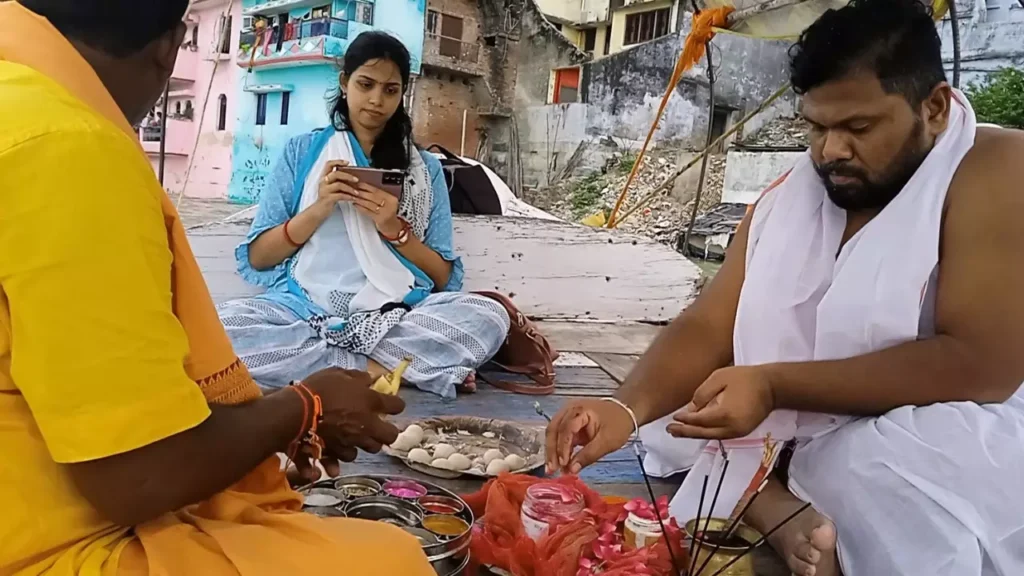
Central to the observance of Pitru Paksha, as it has been for millennia, is the Shraddha ceremony. The very word ‘Shraddha’ emanates from ‘Shraddha’ – faith, reverence, and unwavering conviction. This is a private, yet profoundly significant, ceremony conducted by family members, traditionally by the male descendants, particularly the son, who is seen as the Karta (performer) responsible for continuing the lineage and offering the Pindas. This act is an expression of profound gratitude and respect towards one’s ancestors for the gift of life and heritage.
The Shraddha rituals usually involve the sacred offering of food, the Naivedyam, meticulously prepared with purity and devotion. This ritualistic meal, believed to nourish the subtle bodies of the ancestors in their spiritual journey, often consists of Ksheeram (a sublime preparation of rice simmered in milk with sweeteners, akin to your Kheer), Lapsika (a wholesome sweet dish crafted from broken wheat or semolina), Annam (cooked rice), Varan (dal or lentils prepared in a sattvic manner, typically without strong spices), and various seasonal vegetables. These offerings are traditionally served on a Kadali Patram (banana leaf) or a Patravali (leaf plate), facing the southern direction, which is associated with the Pitrs. Following this sacred meal offering, a fire ritual, a Havan or Agnihotra, may also be performed, wherein oblations are made to Agni Deva, the divine messenger, to carry the essence of the offerings to the departed.
In addition to these food offerings, another indispensable component of Pitru Paksha observance is Tarpanam. This is the sacred and ritualistic offering of consecrated water, often mingled with black sesame seeds (Til), barley (Yava), and blades of Kusha grass (Darbha). Tarpanam is typically performed on the banks of holy rivers like Ganga, Yamuna, Godavari, or other sanctified bodies of water, or even at home with due reverence. This act is a symbolic purification and a direct form of ancestral worship. Water, the very essence of life, the Prana Jalam, is offered to quench the spiritual thirst of the departed souls, signifying our enduring connection, love, and the continuity of care. The sanctity of water in Hindu Dharma, combined with the poignant act of remembrance, underscores the profound spiritual importance of Tarpanam during this sacred fortnight.

Pitru Paksha: A Luminous Window into Hindu Darshana (Philosophy)
The faithful and meticulous observance of Pitru Paksha provides a fascinating and deeply insightful window into the philosophical underpinnings of our Sanatana Dharma.
-
It powerfully underscores the eternal principle of Samsara – the continuous cycle of birth, life, death, and rebirth. Our Dharma teaches that life and death are not absolute ends but merely transitions for the Atman (the immortal soul) on its vast cosmic journey.
-
The act of honoring ancestors during Pitru Paksha reflects a deep reverence for one’s familial lineage (Vamsha Parampara) and a profound belief that the spirits of the deceased, their subtle energies, continue to influence and bless the lives of the living.
-
It highlights the concept of Rina Traya – the three sacred debts with which a human being is born: Deva Rina (debt to the Gods), Rishi Rina (debt to the Sages), and Pitru Rina (debt to the ancestors). The performance of Shraddha is the primary means of discharging this sacred Pitru Rina.
-
The belief that our offerings can bring peace and happiness to ancestors in their afterlife affirms the interconnectedness of all realms and the enduring power of love and duty beyond the veil of physical existence.
A Time for Spiritual Reflection, Self-Discipline, and Compassionate Charity
Pitru Paksha is not merely a period for performing prescribed rituals; it is also a deeply significant time for spiritual reflection (Atma Chintan), introspection (Manana), and the practice of acts of loving kindness. During these sixteen sacred days, it is customary for devout Hindus to practice self-restraint (Sanyam) in various aspects of life. This includes observing dietary simplicity (often avoiding non-vegetarian food, onions, garlic, and certain grains), abstaining from auspicious new beginnings (like housewarmings, weddings, or starting new ventures), and focusing one’s energies on spiritual pursuits and ancestral remembrance.
Furthermore, the act of Daana (charity) is considered an essential moral duty (Dharma) during Pitru Paksha and is seen as a potent way to seek blessings from the ancestors and to purify oneself. Offering food, clothing, and other necessities to Brahmins, the poor, the needy, and even to animals (especially crows, cows, and dogs, who are seen as spiritually significant during this period) is highly meritorious. This compassionate outreach broadens the heart and generates positive karmic vibrations that benefit both the giver and, by extension, their ancestors.
Impact on Modern Hindu Samskriti (Culture)
In this contemporary age, even as the world undergoes rapid transformations, the observance of Pitru Paksha continues to hold profound significance and exert a formative influence on Hindu culture.
-
It serves as a vital bridge, connecting the past with the present, fostering a sense of continuity (Nairantarya) and shared heritage (Paramparika Sampada).
-
The observance of Pitru Paksha also powerfully reinforces community ties and familial bonds (Parivarika Bandhan). Families often travel from far and wide, coming together to participate in communal Shraddha ceremonies, sharing stories of their ancestors, and strengthening their relationships.
-
It keeps alive the cardinal virtues of gratitude, respect for elders, and the importance of fulfilling one’s duties – values that are timeless and essential for a harmonious society.

Final Ponderings: The Enduring Light of Pitru Paksha
Pitru Paksha, with its profound spiritual nuances, its intricate rituals, and its rich cultural tapestry, offers an enlightening and deeply moving insight into the depth, wisdom, and diversity of Hindu practices. By honoring and remembering our ancestors, we not only fulfill a sacred duty but also foster a vital connection with our roots, providing a sense of stability and continuity in an ever-changing world. It gently reminds us of the eternal cycle of life and death, urging us to acknowledge the transient nature of physical existence while affirming the immortality of the soul.
Despite its ancient origins, attested in our oldest scriptures, Pitru Paksha remains a remarkably relevant, deeply respected, and widely observed period in modern Hindu culture, both in Bharatavarsha and amongst our diaspora scattered across the globe. Through this understanding of Pitru Paksha, one gains insight not only into specific Hindu practices but also into a universal human yearning for connection with one’s lineage, for meaningful commemoration, and for the assurance of spiritual continuity.
Considering a rite for your own family?
Tell us what your family needs and a coordinator will contact you personally. No online payment is requested.
Send an enquiry