Varanasi Pitrupaksha Role: Moksha and Sacred Ancestral Rites in the Holy City
This guide explores the profound Varanasi Pitrupaksha Role, explaining why Kashi is considered the ultimate destination for ancestral rites. As a Moksha-Dham (abode of liberation) that Lord Shiva never forsakes (Avimukta), any ritual performed here is exceptionally potent. During Pitrupaksha, when ancestors are closest to the earthly realm, performing Shraddha in Varanasi offers them not just nourishment (tripti) but a direct path to final liberation (Moksha). Key sacred sites like Manikarnika Ghat and Pishachamochana Tirtha further amplify the benefits. The synergy of this sacred place and auspicious time makes a Shraddha in Kashi the ultimate act of service, placing your ancestors' souls directly in the hands of Mahadev for their eternal peace.
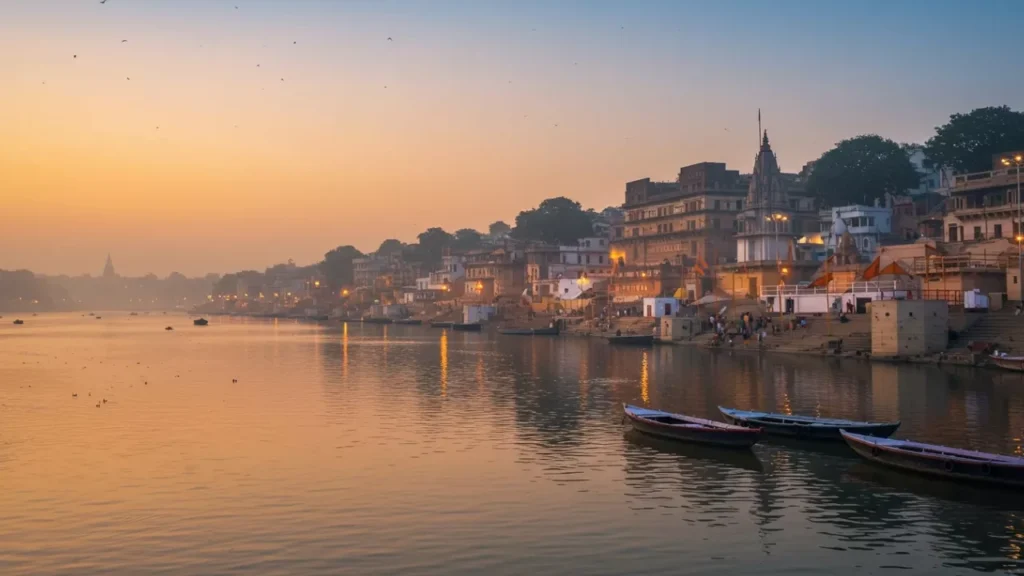
Har Har Gange!
The Unique Sanctity of Kashi: The City of Final Liberation

Before we can understand the Varanasi Pitrupaksha role, we must first understand why Kashi is unlike any other place on Earth. It is not merely a Tirtha (a holy pilgrimage site); it is a Moksha-Dham, an abode of liberation itself. Its power comes from three profound truths that our scriptures have lovingly preserved.
Avimukta: The City Never Forsaken by Lord Shiva
Let me tell you of its most secret and sacred name: Avimukta—”The City Never Forsaken.” Lord Maheshwara (Shiva) himself gave this promise to his consort, Mother Gauri. He declared that He would never, ever leave this sacred place. His divine presence, along with that of the merciful Mother Annapurna, permanently imbues every speck of dust in Kashi with divine energy. This is why any act of devotion performed here—a simple prayer, a small act of charity, or the performance of a sacred rite—yields “undecaying” or “undiminishing” benefits.
The Sacred Waters: Ganga’s Auspicious Turn
Our Mother Ganga is holy everywhere she flows. But in Kashi, she does something unique. She changes her course and flows north, towards the Himalayas, towards her source. This northward flow, known as Uttaravahini, is considered exceptionally auspicious. It is as if the river herself is performing penance, turning back towards the divine. Furthermore, Kashi is defined by the confluence of two other rivers, the Varuna and the Asi, with the Ganga, giving the city its name: Varanasi. It is said that during holy times, all the sacred Tirthas of the world come to reside within the Ganga at Kashi, making a single dip here equivalent to bathing in all of them.
The Promise of Moksha: Shiva’s Final Whisper
This, is the ultimate secret and the greatest blessing of Kashi. It is a promise found nowhere else. It is believed with unshakable faith that anyone who breathes their last within the sacred precincts of Kashi is granted Moksha directly. How? At the very moment of death, Lord Shiva himself comes to the side of the departing soul and whispers the Taraka Mantra—the sacred mantra of liberation—into their ear. This divine intervention burns away the seeds of all remaining karmas, freeing the soul from the endless cycle of birth and death. This is why Kashi is not just a place to live or die; it is the ultimate destination for the soul.
The Ultimate Synergy: The Kashi Pitrupaksha Role

Now, imagine combining the inherent power of this City of Liberation with the most sacred time for our ancestors. This is the heart of the Kashi Pitrupaksha role. It creates a spiritual synergy of unparalleled potency.
A City of Open Gates During a Time of Open Doors
During Pitrupaksha, it is believed that the veil between our world and the ancestral realm thins. The ancestors are allowed to come closer to the earth, to be near their descendants and receive their offerings. Now, consider this: in Kashi, the gates to liberation are always open, thanks to Lord Shiva’s presence.
When you perform Shraddha in Kashi during Pitrupaksha, you are essentially inviting your ancestors, who are already close, to a feast being held right at the doorway to heaven. You are not just offering them nourishment; you are leading them directly to the threshold of final liberation.
Beyond Nourishment
At other holy Tirthas, the primary goal of Shraddha is to provide tripti—satisfaction and nourishment—to the ancestors, which helps them ascend to higher celestial realms (lokas) where they can enjoy the fruits of their good karma. This is a great and noble act.
But Kashi offers something more. Because of its inherent power of Moksha, the Shraddha performed here aims higher. The prayer is not just for the ancestors’ satisfaction, but for their complete and final dissolution into the Supreme, for the end of their cycle of rebirth. While other Tirthas offer a comfortable and luxurious journey to a heavenly abode, Kashi offers a direct flight to the final destination.
The Ultimate Offering: Pind Daan in the City of Shiva
Pind Daan, the offering of rice balls, is the central act of Pitrupaksha. When you offer a Pinda in Kashi, you are placing your ancestor’s symbolic body into the very lap of Lord Shiva. It is an act of ultimate surrender and trust, offering your beloved ancestor to the care of the Great Lord of Dissolution himself. The merit of such an act is considered immeasurable.
The Sacred Geography: Where to Perform Rites in Kashi

The entire city of Kashi is sacred, but certain Tirthas within the city are considered exceptionally potent for ancestral rites. For a pilgrim coming here for the Varanasi Pitrupaksha role, these are the key destinations:
| Tirtha in Kashi | Significance for Ancestral Rites |
| Manikarnika Ghat | The most sacred cremation ghat, where Lord Vishnu and Lord Shiva are believed to bathe daily. A Shraddha here is said to wash away sins of crores of births. It is the epicenter of Moksha. |
| Dasasvamedha Ghat | Where Lord Brahma is said to have performed ten horse sacrifices. Any rite performed here, especially Shraddha, is considered “everlasting” in its merit and deeply pleases the ancestors. |
| Pishachamochana Tirtha | The name itself means “liberation from the spirit/goblin state.” This is the primary site for performing rites for those who died an unnatural death or may be trapped in a suffering, ghostly form (preta yoni). |
| Ghantakarnahrada | A holy pond where bathing and performing Shraddha are said to have the power to redeem ancestors even from the depths of hell. |
| Kapilamocana Tirtha | A holy dip and Shraddha performed here are said to liberate one from even the gravest of sins, like Brahma-hatya (the slaying of a Brahmin). |
| Pancanada Tirtha (Panchganga Ghat) | The confluence of five sacred rivers (symbolically). Performing Shraddha here, especially during the holy month of Karttika, is exceptionally powerful and satisfying for the Pitrs. |
Practical Guidance for the Pilgrim’s Heart
For those blessed souls who undertake a pilgrimage to Kashi, especially during Pitrupaksha, certain observances will deepen the experience.
- Auspicious Times: While the entire Pitrupaksha fortnight is sacred, performing the main rites on your ancestor’s specific death tithi (lunar day), or on the Amavasya (new moon day) known as Sarva Pitru Amavasya, is ideal.
- The Pilgrim’s Conduct: As in any Tirtha, one should maintain a state of purity. This includes daily bathing in the Ganga, observing celibacy, eating simple sattvic food, and engaging in charity (daan) and chanting (japa). The power of the place is great, but so is the responsibility of the pilgrim to be a worthy vessel for its grace.
- Seeking Guidance: The rituals in Kashi can be intricate. It is always wise to seek the guidance of the local priests, the Kashi Pandas or Tirtha Purohits, who are well-versed in the specific procedures of each ghat and temple. For those planning a journey or seeking to have rites performed on their behalf, resources like pitrupaksha.org can provide invaluable assistance and connection to these traditions.
Conclusion:
let us conclude our journey here, on the sacred steps of the Ganga. We have seen that the Varanasi Pitrupaksha role is not just that of a holy city; it is that of a final gateway. It is a place where the divine compassion of Lord Shiva intersects with the most potent time for ancestral remembrance.
To perform Shraddha in your home is your sacred duty. To perform it at a Tirtha is to amplify its blessings. But to perform it in Kashi during Pitrupaksha is to make a direct appeal for the ultimate gift you can give your ancestors: not just a temporary heavenly abode, but eternal, final liberation—Moksha. It is to place their souls lovingly into the hands of Mahadev himself, in the city he never forsákes. There can be no greater offering, no greater act of love, and no greater fulfillment of your sacred ancestral debt.
Aashirvaad.
May the Lord of Kashi, Vishwanath, bless your noble intentions, and may your ancestors attain the supreme peace that this holy city promises to all.
Considering a rite for your own family?
Tell us what your family needs and a coordinator will contact you personally. No online payment is requested.
Send an enquiry