The Reason Behind the Ban: Why Non-Veg and Alcohol Are Avoided in Pitrupaksha
Ever wondered about the strict dietary rules during Pitrupaksha, particularly Why Non-Veg and Alcohol Are Avoided in Pitrupaksha? This sacred fortnight, dedicated to honoring our ancestors, demands utmost purity for the rituals to be effective. When it comes to non-vegetarian food, our scriptures like the Skanda Purana point to its inherent connection with violence (Hiṃsā), a stark contradiction when seeking peace for departed souls. Furthermore, meat is considered Tamasic, promoting dullness rather than the spiritual clarity needed. But what specific scriptural injunctions from the Puranas guide this avoidance, and how does choosing vegetarian offerings amplify the merit for your Pitṛs? The prohibition against alcohol (Surā) is even more emphatic. Why do texts like the Brahma Vaivarta Purana list its consumption as a grave sin, leading to dire consequences? How does alcohol's nature fundamentally pollute the sacred space and the consciousness required for connecting with ancestral spirits? The answer lies in the profound Dharmic principle of cultivating a Sattvic state. This article delves deep into how these substances, being Rajasic and Tamasic, hinder the sacred connection, while a Sattvic lifestyle elevates it. By understanding these Puranic insights, you're not just following rules, but actively participating in a tradition designed for profound spiritual benefit. Are you ready to uncover the deeper layers of wisdom that ensure your offerings truly reach your ancestors and bring their cherished blessings?
Namaste,
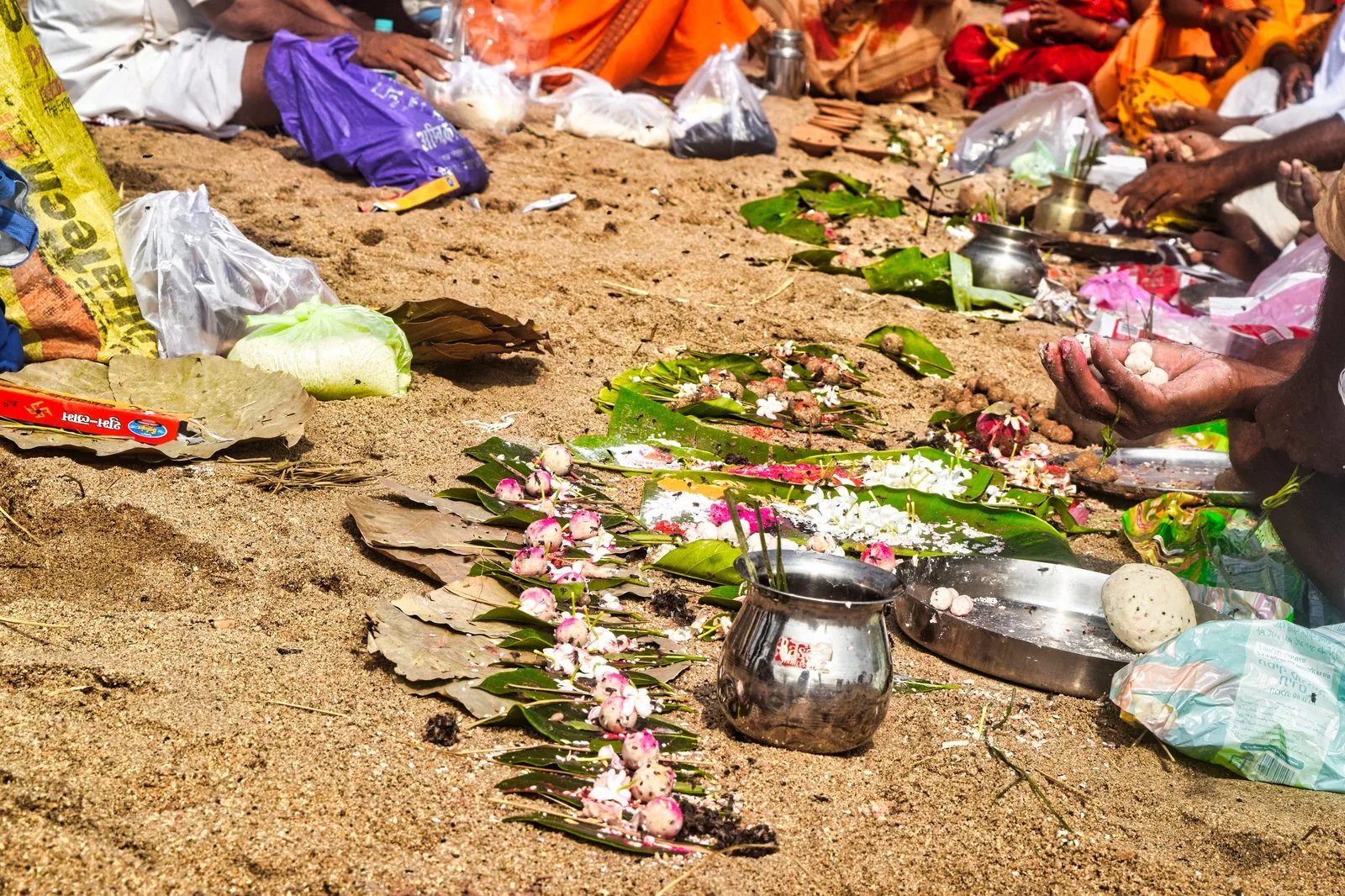
The fifteen days of Pitrupaksha, the dark fortnight of Bhadrapada, constitute a sacred period explicitly designated for honouring our Pitṛs (ancestors). The core purpose is to connect with them on a subtle level, offer them nourishment (tṛpti), express our gratitude (kṛtajñatā), and aid their peaceful journey (sadgati) towards higher realms or liberation (moksha). Such profound spiritual work demands the highest possible degree of purity – purity of body, mind, intention, space, and offerings.
The prohibition of non-vegetarian food and alcohol stems directly from this fundamental requirement of Śauca (Purity) and the nature of these substances as understood within our Dharmic framework.
Understanding the Purity Principle in Shradh
Our scriptures consistently emphasize that for any sacred rite (karma kāṇḍa) to be effective, purity is paramount. The Garuda Purana and Siva Purana remind us that the physical body is inherently prone to impurity, and conscious effort is needed to maintain a state suitable for sacred acts. When we engage in Shradh, we are essentially creating a subtle bridge between realms, inviting the Pitṛs (or their divine representatives) and deities to accept our offerings. This bridge must be built with pure materials and maintained with a pure heart. Substances considered impure or associated with lower energies can disrupt this connection, pollute the offerings, and render the entire ritual ineffective or even detrimental- Why Non-Veg and Alcohol Are Avoided in Pitrupaksha

Why Non-Vegetarian Food (Māṃsa) is Avoided
The Puranic view on meat consumption is nuanced, with some texts reflecting older societal norms or specific contexts. However, the overarching trajectory, especially concerning sacred rites, purity, and spiritual advancement (particularly for Brahmins and those observing vows), leans heavily towards avoidance.
- Association with Violence (Hiṃsā): Meat, by its very nature, involves the taking of life (hiṃsā). While acknowledging that life feeds on life, the act of killing animals for food is generally considered contrary to the principle of Ahimsa (non-violence), a cornerstone of Dharma. Performing a sacred rite meant to bring peace and liberation to ancestors while simultaneously consuming or offering food derived from violence creates a fundamental contradiction. The Skanda Purana strongly disapproves of non-vegetarian food in Shradh for this reason, viewing vegetarian offerings as superior.
- Impurity and Tamasic Nature: Meat is considered a Tamasic food in Yogic and Ayurvedic traditions, often cited implicitly or explicitly in Puranic contexts. Tamasic foods are believed to promote inertia, dullness, ignorance, attachment, and lower states of consciousness. Consuming meat can make the mind heavy, agitated, and less receptive to the subtle spiritual energies involved in Shradh. Offering such food is deemed inappropriate for beings one wishes to elevate.
- Specific Prohibitions in Shradh: Several Puranas explicitly list meat, or specific types of meat, as prohibited (varjya) during Shradh or on sacred days like Amavasya.
- The Brahma Purana forbids fish, boar, tortoise, and cow meat in Shradh, warning that offering prohibited items leads the performer to Raurava hell.
- The Skanda Purana forbids the flesh of pigs, tortoises, iguanas, swans, and certain birds for the twice-born, stating it should not be offered to Pitṛs, linking consumption or offering of such items to specific hells (Raurava, Puyavaha).
- The Brahma Vaivarta Purana prohibits meat consumption on Amavasya for householders.
- Contradiction with Merit: While some older passages mention specific meats satisfying Pitṛs for varying durations (a reflection perhaps of ancient customs or specific contexts), the overwhelming emphasis for achieving higher merit, pleasing deities, gaining longevity, and reaching heaven is on avoiding meat diligently (Brahma Purana, Skanda Purana). The provision of highly meritorious vegetarian alternatives like Kheer with honey further reinforces the preference for non-violence and purity.
- Purity of the Brahmin: The texts place particular emphasis on Brahmins avoiding meat. The Brahma Vaivarta Purana prohibits fish for Brahmins, prescribing penance for transgression. Since Brahmins often partake of the Shradh food as representatives of the Pitṛs, offering them meat would violate these injunctions.
Therefore, avoiding non-vegetarian food during Pitrupaksha aligns with the principles of Ahimsa, maintains the required Sattvic purity for the ritual and the performer, avoids specific scriptural prohibitions linked to Shradh, and focuses on generating positive, pure merit for the ancestors.
Why Alcohol (Surā/Madya) is Strictly Forbidden
The prohibition against alcohol (wine, liquor, spirituous drinks – often termed Surā or Madya) is even more stringent and universal across the Puranas, especially concerning religious observances and higher castes (particularly Brahmins).
- Grave Sin: Consumption of Surā is often listed among the Mahāpātakas (great sins) or considered equivalent in severity, particularly for Brahmins. The Brahma Vaivarta Purana states unequivocally that a Brahmin consuming liquor falls into Kumbhipaka hell.
- Loss of Purity and Consciousness: Alcohol fundamentally alters consciousness, clouds judgment, diminishes self-control, and pollutes the subtle energy system. This is completely antithetical to the state of focused awareness, reverence, and purity required for any sacred interaction with deities or ancestors. The Agni Purana mandates penance (prāyaścitta) to regain purity after consumption.
- Divine Displeasure and Negative Consequences: The Puranas link alcohol consumption to divine displeasure and severe negative karmic results. The Varaha Purana mentions that approaching a deity after drinking incurs poverty for millennia. The Skanda Purana equates association with certain sinful individuals to being a liquor-addict (Surāpī).
- Pollution of Ritual Space: Consuming or even smelling alcohol during a sacred rite like Shradh is considered deeply polluting, rendering the offerings unacceptable and negating the purpose of the ceremony. The Siva Purana and Skanda Purana emphasize avoiding even the smell, applicable to all castes.
- Equated with Impure Substances: The Puranic mindset often equates alcohol with highly impure substances. The Skanda Purana provides a striking example: buttermilk or ghee prepared on specific sacred days like Amavasya or a Shradh day is considered as impure as liquor or cow’s meat, respectively, highlighting how ritual timing affects even normally pure substances and placing alcohol firmly in the category of the forbidden during such times.
Thus, avoiding alcohol during Pitrupaksha is an absolute requirement for maintaining the sanctity of the period, the purity of the performer and the offerings, adhering to strict scriptural injunctions against a substance considered inherently impure and detrimental to spiritual consciousness, and avoiding severe negative karmic consequences.
The Underlying Principle: Sattvic Living for Sacred Connection
In essence, the reason why we avoid non-veg and alcohol during Pitrupaksha boils down to cultivating a Sattvic state. Pitrupaksha is a time dedicated to subtle spiritual work, connecting with beings in other realms, and facilitating their peace and our own well-being through acts grounded in Dharma.
- Meat and alcohol are fundamentally Rajasic and Tamasic. They stimulate the lower senses, agitate the mind, create energetic impurities, involve violence (in the case of meat), and hinder the clarity, peace, and focus needed for effective spiritual practice and communion.
- Sattvic foods (vegetarian diet, milk, fruits, grains) and Sattvic conduct (purity, truthfulness, non-violence, self-control, devotion) create the necessary internal and external environment for the Shradh rites to bear fruit. They elevate our consciousness and make us suitable channels for divine and ancestral grace.
By adhering to these dietary restraints, we are not merely following rules; we are actively choosing purity over impurity, peace over agitation, compassion over violence, and spiritual connection over sensory indulgence. We are honouring the sacredness of the occasion, respecting the teachings of our revered Puranas, and creating the best possible conditions for our offerings of love and remembrance to reach our ancestors effectively, bringing them solace and inviting their most profound blessings upon our lives.
May this deeper understanding strengthen your resolve to observe Pitrupaksha with the reverence and purity it deserves.
|| हरि ॐ तत् सत् ||
Considering a rite for your own family?
Tell us what your family needs and a coordinator will contact you personally. No online payment is requested.
Send an enquiry