Blog · Guidance on ancestry, scripture and practice
ग्रन्थालय

Pitrupaksha Blog

Explore the existing Pitrupaksha.org article library, including guidance on important dates, traditions, sacred sites and ancestral rites.

217
articles
Showing 12 of 217
Sorted by Most recent
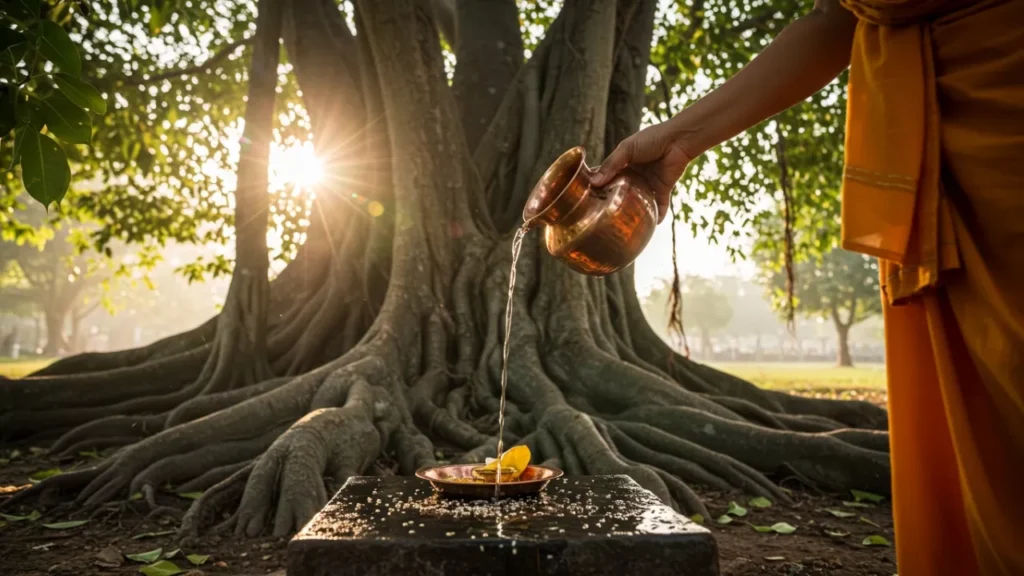
This image shows a 'Tarpan' ceremony, with water being offered to ancestors at a banyan tree's roots- Involving family home Shradh
Ancestors 9 min read

A Family Affair: Tips for Involving family home Shradh Rituals

This guide explains the profound importance of involving family home Shradh rituals, transforming it into a true family affair. It emphasizes that shared devotion strengthens family bonds, passes on vital traditions (sanskara) to the next generation, and ensures that the ancestors' blessings rain down upon the entire household. The guide provides a roadmap for finding meaningful roles for everyone: the son as the karta, the wife as the sacred chef (Annapurna), and children as joyful helpers with tasks like arranging flowers. It highlights the special place of daughters in upholding Dharma. By working together, the family creates a powerful, collective offering, turning the ritual into a beautiful symphony of love, remembrance, and shared spirituality.
Image of clock- Home Shradh timing Muhurat Tithi
Ancestors 8 min read

Right Time Matters: Home Shradh timing Muhurat Tithi Guide

Understanding the correct Home Shradh timing Muhurat Tithi is key to a powerful ritual, as it aligns your personal actions with cosmic rhythms. The most auspicious period is the dark fortnight (Krishna Paksha) of Bhadrapada, known as Pitru Paksha. The ideal time of day is noon (Madhyahna), specifically during the golden hours of Kutapa and Rauhina Muhurtas (approx. 11:36 AM - 12:24 PM). The most important lunar day (Tithi) is the new moon (Amavasya), but different tithis yield specific blessings. Special cosmic events like eclipses or the rare Gajacchaya Yoga multiply the merit infinitely. If the exact date is unknown, Sarva Pitru Amavasya serves as a universal day for all ancestors. Ultimately, the guide stresses that the most crucial timing is the 'inner Muhurta' of a calm and loving heart.

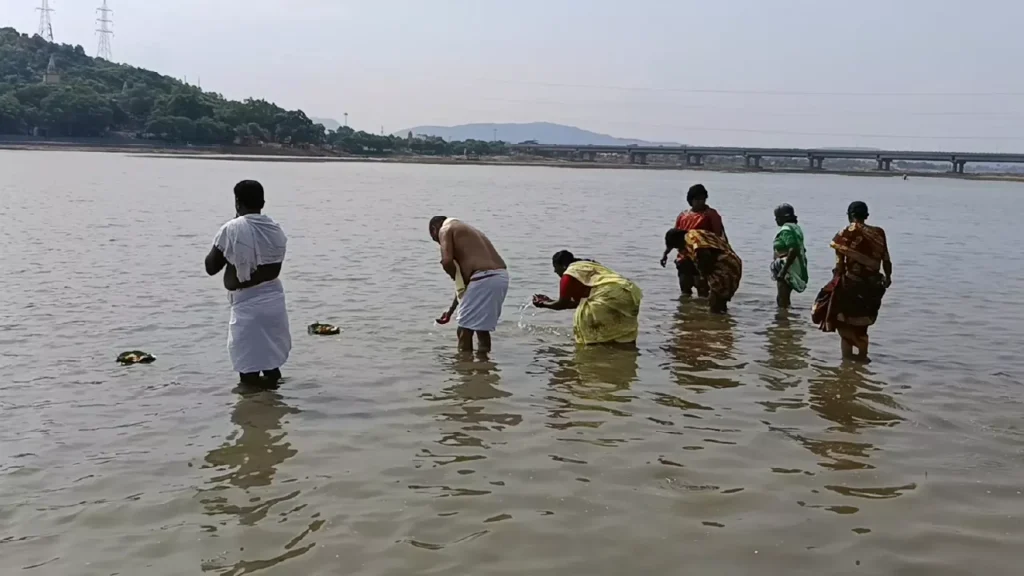
A person performs the 'Tarpan' ceremony, offering water and black sesame seeds to honor their ancestors during Pitrupaksha- Brahmin invitation for Shradh
Ancestors 9 min read

Can not Host a Priest? Symbolic Brahmin invitation for Shradh Alternatives

When a traditional Brahmin invitation for Shradh is not possible, this guide explores compassionate, scripturally-sanctioned alternatives. It explains the profound role of a Brahmin as a divine conduit (Pitra-mukha) and then details powerful substitutes to ensure your offerings reach your ancestors. These alternatives include offering food to the sacred fire (Agni Mukh), feeding the sacred cow (Go-Mata), or creating a symbolic presence using a Kusha grass effigy or an empty seat (asan). Another valid method is performing an act of charity (daan) in the ancestors' names. The guide emphasizes that the most crucial element is sincere faith (bhava), making any of these heartfelt acts a complete and powerful way to honor your ancestors and receive their blessings.

Cover · Ancestors
Ancestors 8 min read

No Priest? No Problem! How to Conduct Shradh without priest

This guide shows you how to conduct Shradh without priest, emphasizing that sincere faith (shraddha) is more important than complex formality. The scriptures compassionately permit self-performance, allowing anyone with a devout heart—son, wife, or daughter—to fulfill this sacred duty. The simplified sequence covers self-purification, making a sacred vow (Sankalpa), and using simple but powerful mantras like "Om Pitṛbhyo Namah." You will learn how to perform simplified Pinda Daan (offering rice balls) and Tarpan (offering water), transforming the ritual into a direct and heartfelt communion with your ancestors. Ultimately, this guide empowers you to become your own family priest, making the ceremony a profoundly personal and powerful act of love and remembrance.

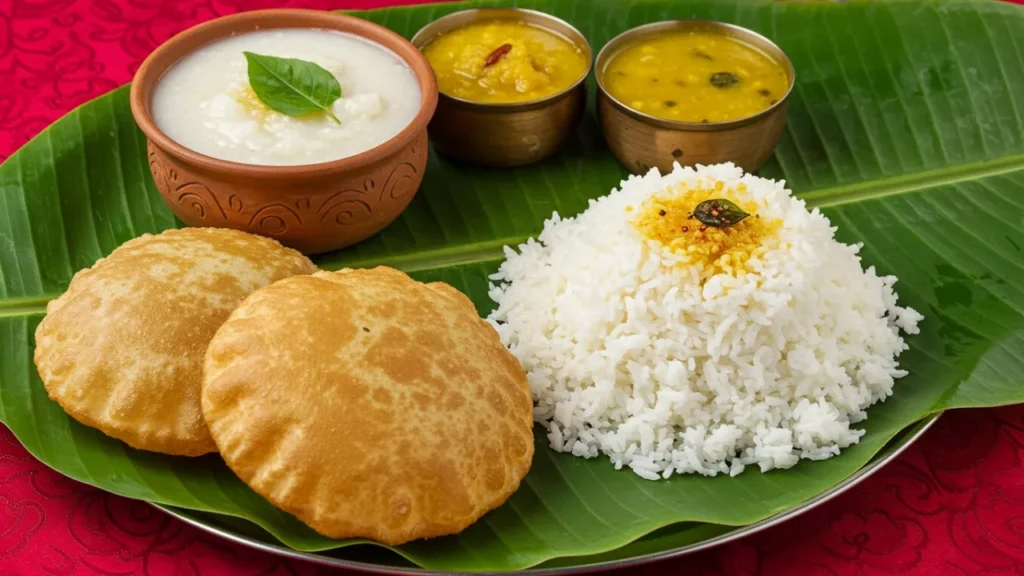
A traditional Shraddha meal served on a banana leaf, featuring kheer, dal, rice, and poori, prepared for ancestors- Shradh food offering at home
Ancestors 9 min read

Naivedyam Guide: Your Shradh food offering at home (What and How)

This guide details how to prepare a sacred Shradh food offering at home (Naivedyam), emphasizing that the food carries your love and intention to your ancestors (Pitrs). The ideal meal is sattvic, centered around pure dishes like Kheer, plain rice with ghee, and simple dal, while strictly avoiding tamasic items like onion, garlic, and masoor dal. The preparation itself is a sacred act, requiring a pure mind and clean kitchen. The guide outlines the offering sequence: first to the fire (Agni), then the main offering (Naivedyam) to the ancestors, followed by the compassionate Pancha Bali (five shares for all life forms). Finally, the family consumes the blessed food as Prasad, uniting them and distributing the ancestors' blessings. This transforms cooking into a profound expression of love and gratitude.

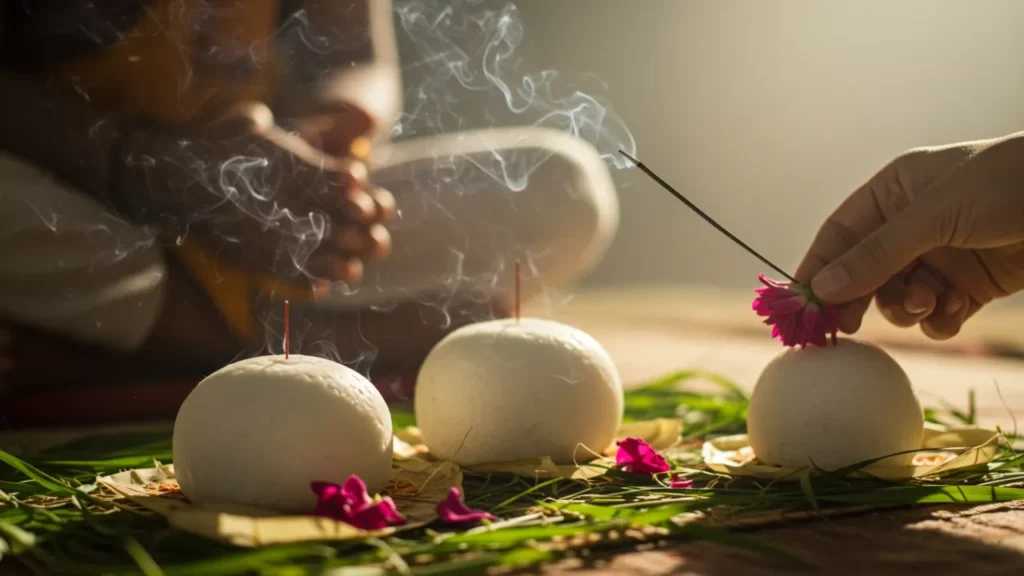
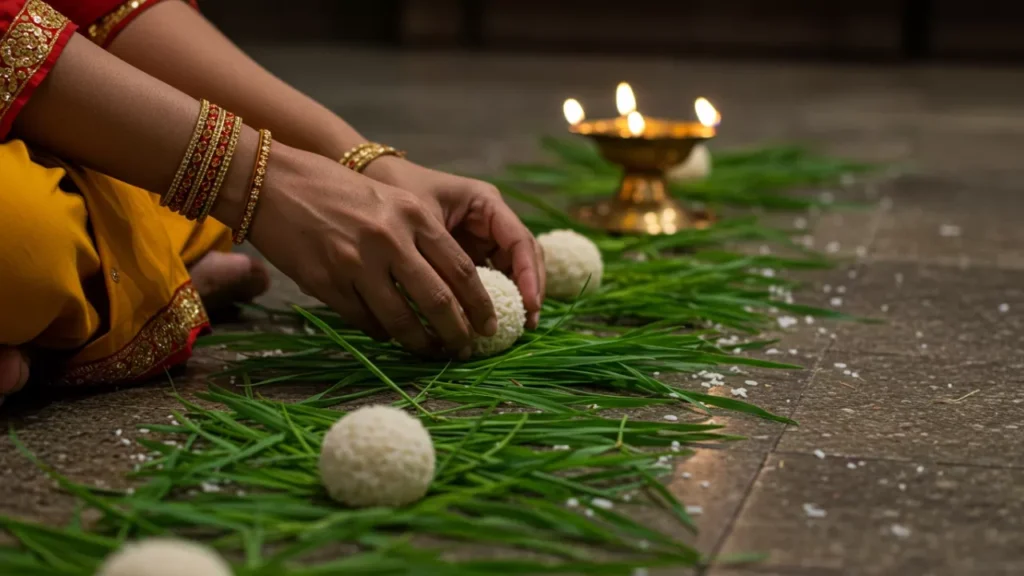
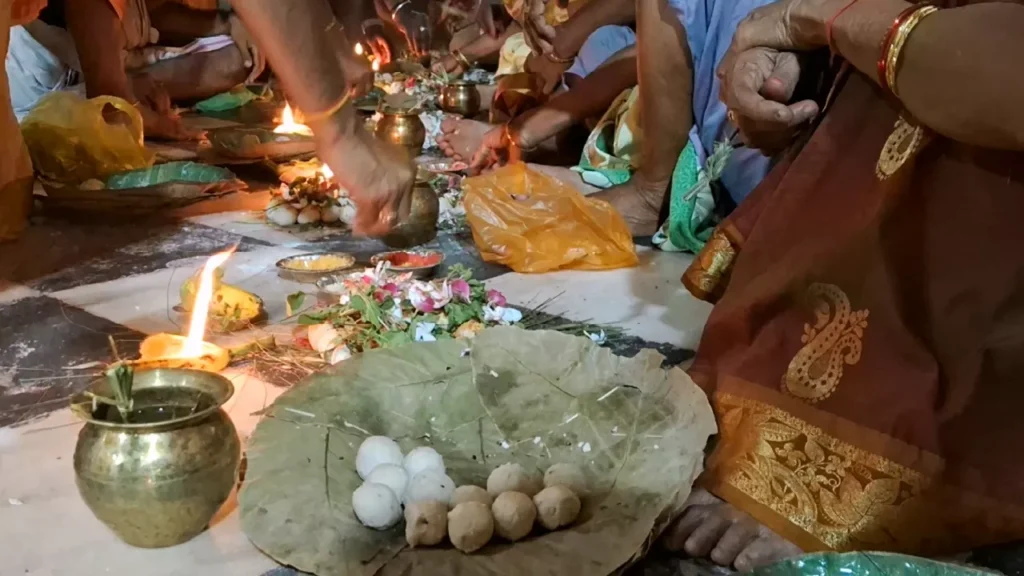
During a Pind Daan ceremony, a devotee offers flowers and incense on rice balls (pindas) to honor their ancestors- Making Pindas at home
Ancestors 9 min read

Simple Pind Daan: Guide to Offering and Making Pindas at home

This guide provides a compassionate walkthrough for making Pindas at home, transforming the sacred ritual of Pinda Daan into an accessible act of love. It explains that a Pinda is a symbolic body offered to nourish ancestors, made from simple, sattvic ingredients like cooked rice, black sesame seeds, ghee, and honey. The process begins with internal and external purity before detailing the meditative art of mixing and forming the three Pindas. It then outlines the offering ritual, from taking the Sankalpa (vow) to placing the Pindas on Kusha grass with reverence. The guide includes what to do with the Pindas after the ceremony and the importance of charity (Dakshina). It emphasizes that heartfelt devotion (shraddha) is the most crucial ingredient, making the rite powerful and meaningful even when performed simply at home.

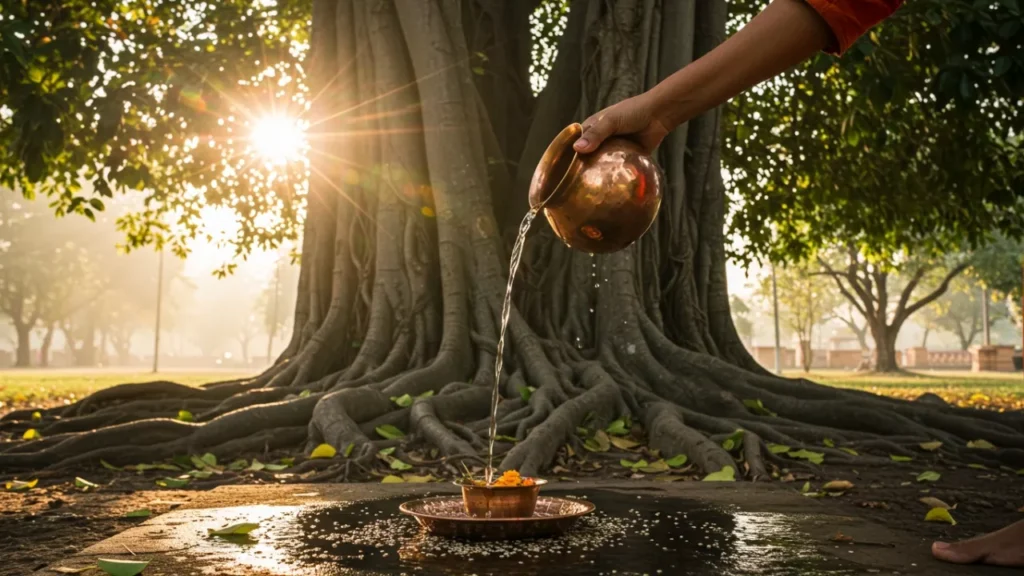
Here, a devotee performs a sunrise ritual, offering water from a copper vessel to honor their ancestors- Performing Tarpan at home
Ancestors 8 min read

Water Offerings Simplified: Step-by-Step Guide to Performing Tarpan at home

This guide explains the simple yet profound ritual of performing Tarpan at home, the sacred act of offering water to satisfy the gods (Devas), sages (Rishis), and ancestors (Pitrs). The preparation is minimal, requiring only a copper pot, water, black sesame seeds, and Kusha grass. The step-by-step sequence details the specific postures and hand positions (Tirthas) for each offering: facing East for Devas, North for Rishis, and South for Pitrs. The most personal part, Pitru Tarpan, involves offering water mixed with black sesame seeds while reciting the names of your father, grandfather, and great-grandfather. This heartfelt practice nourishes the souls of your ancestors, bringing peace to them and flowing their blessings back into your family's life, making it an accessible and powerful ritual for any householder.

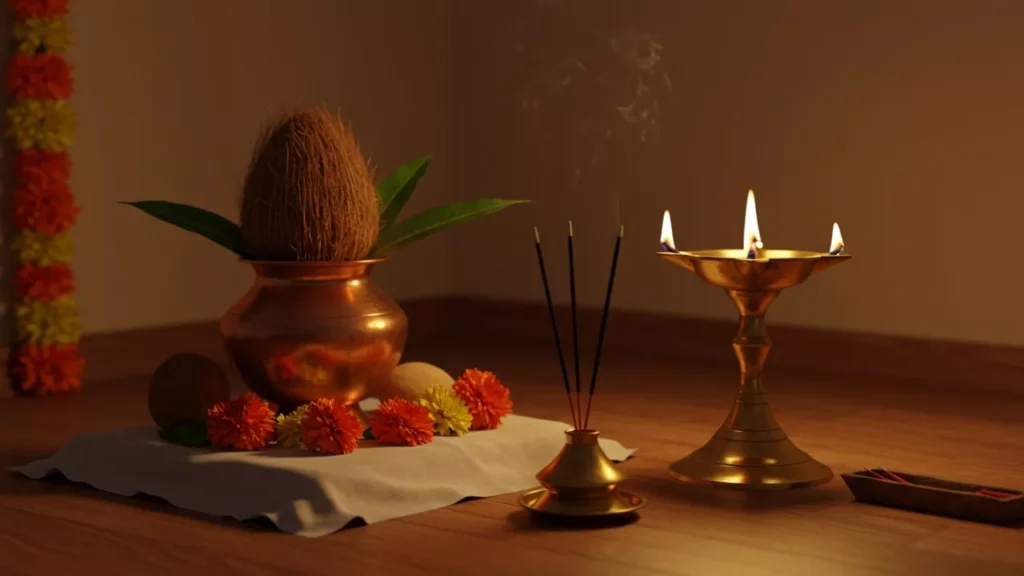
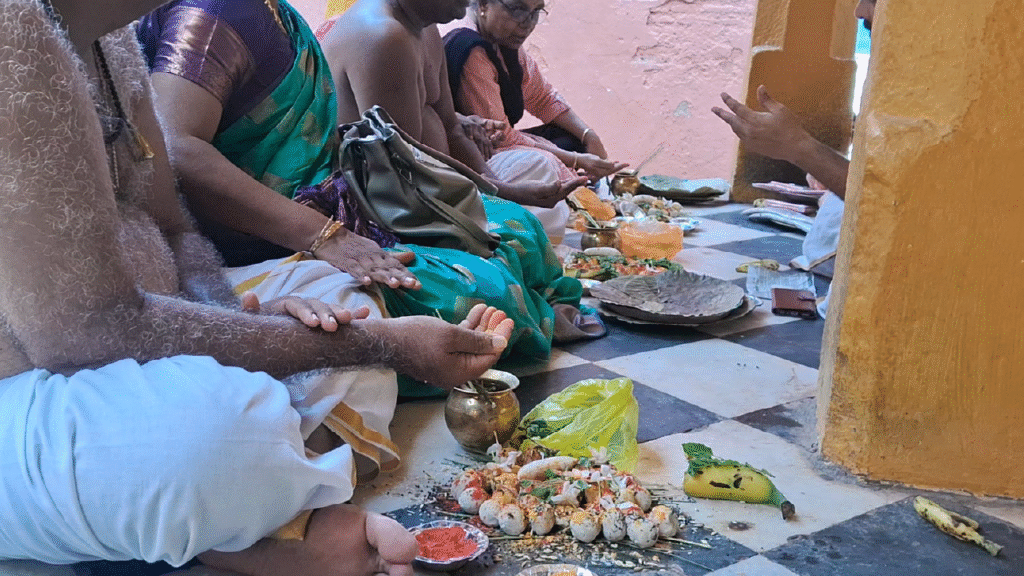
Sacred puja items for honoring ancestors during Pitrupaksha- Simplified Shradh Sequence for Home
Ancestors 9 min read

Your Simplified Shradh Sequence for Home Practice

This guide offers a Simplified Shradh Sequence for Home, transforming the ritual into a profound act of remembrance. The process begins with inner preparation: purifying the self (Atma Shuddhi), consecrating the space (Bhumi Shuddhi), and focusing the mind (Chitta Shuddhi). The core ceremony unfolds in seven meaningful steps: Sankalpa: Making a sacred vow. Avahana: Lovingly inviting the ancestors. Pujan: Worshipping them as divine guests. Pinda Daan: Offering the sacred rice ball, a vessel of love and nourishment. Tarpan: Quenching their spiritual thirst with water and sesame seeds. Naivedya & Prarthana: Offering food and heartfelt prayers. Visarjan: A graceful farewell. This sequence provides a powerful framework to connect with and honor your ancestors, ensuring their peace and inviting their blessings upon your family.

Offering pindas on sacred grass for ancestral peace- Where to perform Shradh at home
Ancestors 7 min read

The Right Spot: Where to perform Shradh at home

Deciding where to perform Shradh at home is crucial for aligning with cosmic energies. The ideal location is a clean, quiet, and energetically pure spot in the southern part of your home. This direction is spiritually significant as it is the domain of Lord Yama and is aligned with Dakshinayana, the ancestral realm (Pitra Loka). The preparation involves not just physical cleaning (Bhumi Shuddhi) but also energetic consecration using alternatives like turmeric or saltwater and creating a protective "armor of sound" (Mantra Kavach). For those in apartments, a living room corner or even a clean balcony can serve as this sacred space. The focus is on creating a sanctified pillar of silence and purity, shielded from disruptive energies. Ultimately, the most powerful sacred space is a heart filled with sincere devotion, transforming any prepared corner of your home into a divine gateway for your ancestors.

Devotees performing Tarpan in a holy river for ancestors- Home Shradh Materials Checklist
Ancestors 9 min read

Your Essential Home Shradh Materials Checklist (Simplified for Families)

This definitive Home Shradh Materials Checklist serves as your guide to gathering all the sacred samagri needed to honor your ancestors with devotion. The guide emphasizes that the most crucial preparation begins with the purity of the performer (karta). It details the foundational items like Kusha grass and the sacred thread (Janeu), core offerings such as black sesame seeds (Krishna Til) and ghee, and explains the profound spiritual significance of each, often referencing the Puranas. The checklist also covers ingredients for the Pindas and the sattvic feast. Crucially, it lists what to avoid, including specific foods and the use of iron vessels. Following this guide ensures you have all the elements for a powerful and complete Shradh ceremony, transforming mere objects into a universe of love and remembrance for your ancestors.

Sacred Pitrupaksha rituals with pindas and a lit diya- Prepare Home for Shradh
Ancestors 10 min read

Sacred Space Setup: How to Cleanse and Prepare Home for Shradh

To prepare home for Shradh is a profound act of transforming your dwelling into a divine gateway for your ancestors (Pitrs) and the divine witnesses (Vishwedevas). The process begins with purifying yourself, the performer, through a ritual bath and mental preparation like Achamana (ritual sipping) and Sankalpa (intention). Then, you must cleanse the physical space, ideally a quiet corner in the southern part of the house. This involves meticulous cleaning and energetically purifying the atmosphere by sprinkling sacred water, ringing a bell, and lighting incense and a ghee lamp.[2][3] Setting up a simple altar (Vedi) and gathering sacred items like Kusha grass, black sesame seeds, and white flowers are crucial next steps. This preparation creates a sanctified environment, ensuring your offerings of love reach your ancestors and their blessings flow back to your family.

Performing Pind Daan rituals to honor the ancestors- You Can Perform Shraddha at Home
Ancestors 12 min read

Yes, You Can Perform Shraddha at Home: Your Simple Step-by-Step Guide

Discover how you can perform the sacred ritual of Shraddha at home to honor your ancestors (Pitrs). This guide emphasizes that devotion (bhava) is more crucial than the location. Learn the meaning of Shraddha, an act of sincere faith to provide spiritual nourishment to the roots of your family tree. We explore the different types of Shraddha, how to prepare a sacred space in your home, and the essential items needed like Kusha grass and black sesame seeds. Understand the most auspicious timings, such as Pitru Paksha and Amavasya, and follow a simple, step-by-step process for the ritual, including Pinda Daan and Tarpan, to ensure your ancestors' peace and your family's well-being.

A monthly reading

One essay, one scripture reference, one calendar note for the month ahead. Nothing else. Never promotional.

REQUEST VIA COORDINATOR DESK · 12 ISSUES A YEAR · NO SPAM