Blog · Guidance on ancestry, scripture and practice
ग्रन्थालय

Pitrupaksha Blog

Explore the existing Pitrupaksha.org article library, including guidance on important dates, traditions, sacred sites and ancestral rites.

217
articles
Showing 12 of 217
Sorted by Most recent
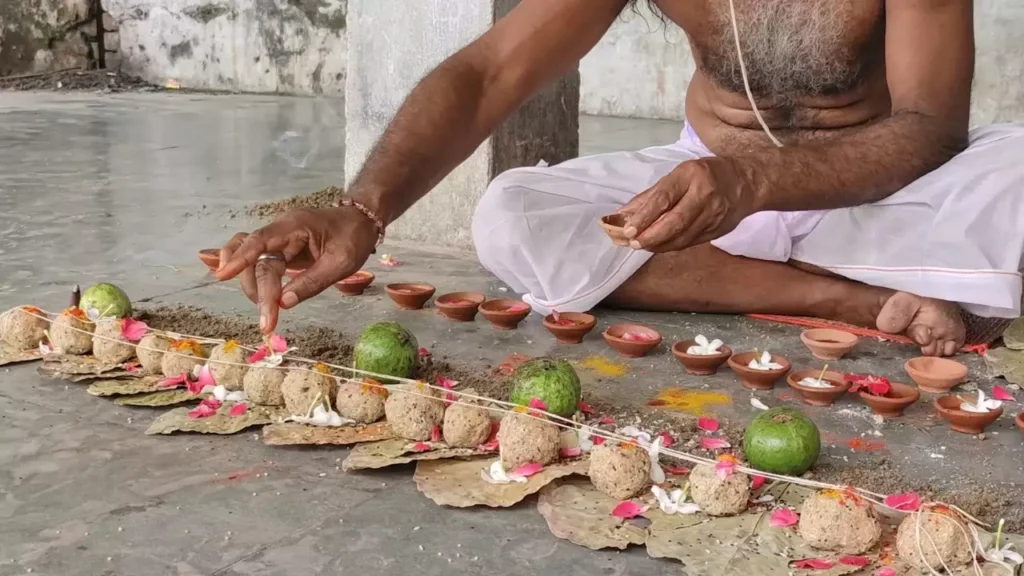
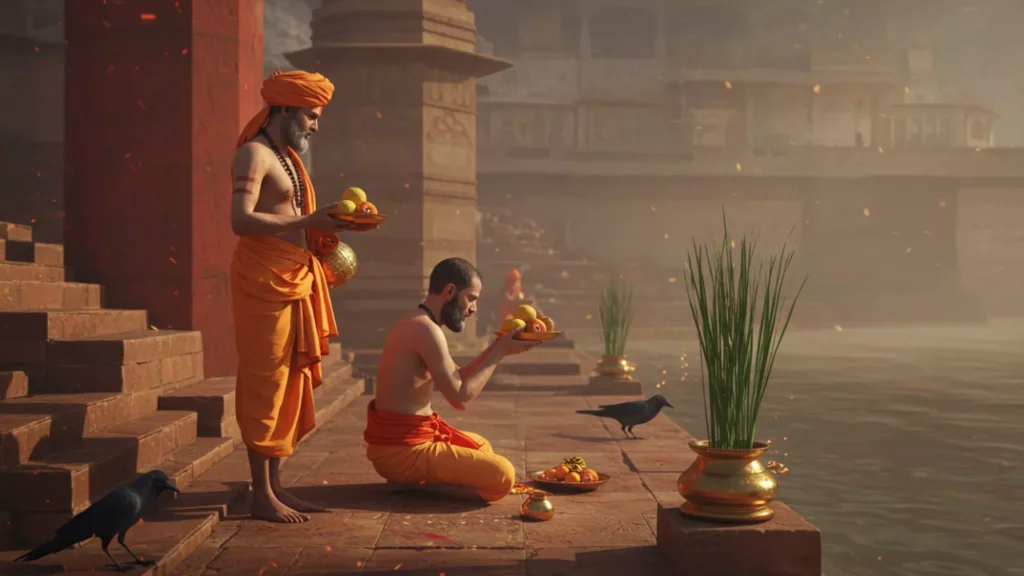
Two men perform Tarpan by a river, offering fruits to ancestors, with crows nearby. This is a Shradh ritual- Pitrupaksha food rules
Pitrupaksha 13 min read

Pitrupaksha food rules: What to Eat and Strictly Avoid During Shradh Days

During the sacred fortnight of Pitrupaksha, have you ever wondered why such specific Pitrupaksha food rules are prescribed, and how they impact the spiritual well-being of both your ancestors and yourself? This isn't just about following tradition; it's about understanding a profound energetic exchange. What makes certain foods like Ksheeram (rice pudding), pure ghee, honey, black sesame seeds, and barley so pleasing to the Pitṛs, ensuring their nourishment and peace? Conversely, why are items like meat, onions, garlic, and specific lentils strictly forbidden, and how does the ancient concept of Sattva, Rajas, and Tamas Gunas govern these choices? This detailed guide illuminates the critical importance of food in Shradh rites, explaining how the subtle essence of ritually pure offerings provides sustenance to ancestral souls. But it's not just what you offer; the purity of the performer (Kartā Śuddhi) and the intention (Bhāva) behind the preparation are equally vital. Are you aware of the comprehensive list of permitted and prohibited items, drawn from sacred texts like the Puranas, that can make the difference between a potent offering and one that falls short? From the minutiae of Pinda preparation to the significance of Brahmana Bhojana and the impact of your personal diet during these sixteen days, delve into this exploration to ensure your devotion translates into genuinely effective rituals, bringing profound peace to your ancestors and invaluable blessings to your lineage. What are the exact culinary keys to unlocking ancestral grace?
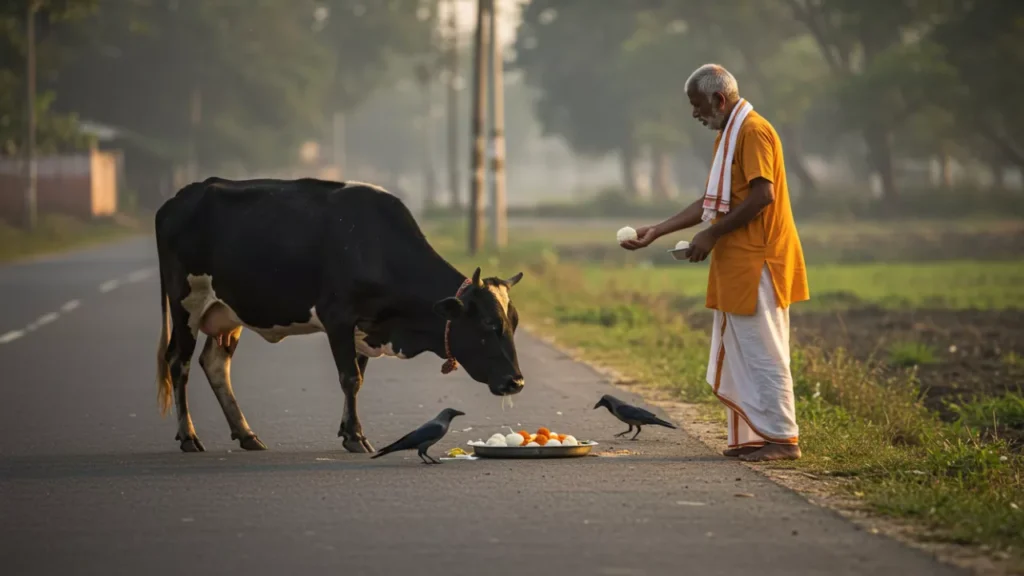
A man offers food to a cow and crows, a ritual part of Pitru Paksha to honor ancestors- Pitrupaksha Dos and Donts
Pitrupaksha 9 min read

The Ultimate Pitrupaksha Dos and Donts Checklist: Navigate the 15 Days Respectfully

The sacred period of Pitrupaksha offers a unique opportunity to connect with and honor our ancestors, but are you navigating these sixteen days with the reverence and understanding they demand? This detailed guide illuminates the essential Pitrupaksha Dos and Donts, ensuring your observances are both heartfelt and scripturally aligned. From the paramount duty of performing Shradh on specific Tithis, especially the all-important Mahalaya Amavasya, to understanding the significance of Kutapa Muhurta and using prescribed items like Pindas and Kusha grass, what are the core practices that bring solace to your Pitṛs? Beyond the rituals, what about the crucial acts of charity (Dāna), feeding Brahmins, and maintaining personal purity (Śauca and Niyama)? Conversely, are you aware of the strict prohibitions, such as avoiding non-vegetarian food, intoxicating substances, new ventures, or even seemingly minor acts like using tooth-cleaning twigs, that could diminish the sanctity of your efforts? Learn how to properly honor cows and offer Kāka Bali to crows. This isn't just a checklist; it's a pathway to ensuring your sincerity (Shraddha) and devotion (bhāva) reach your ancestors, bringing peace to them and blessings to your family. Are you ready to embrace your duties with complete clarity and devotion?

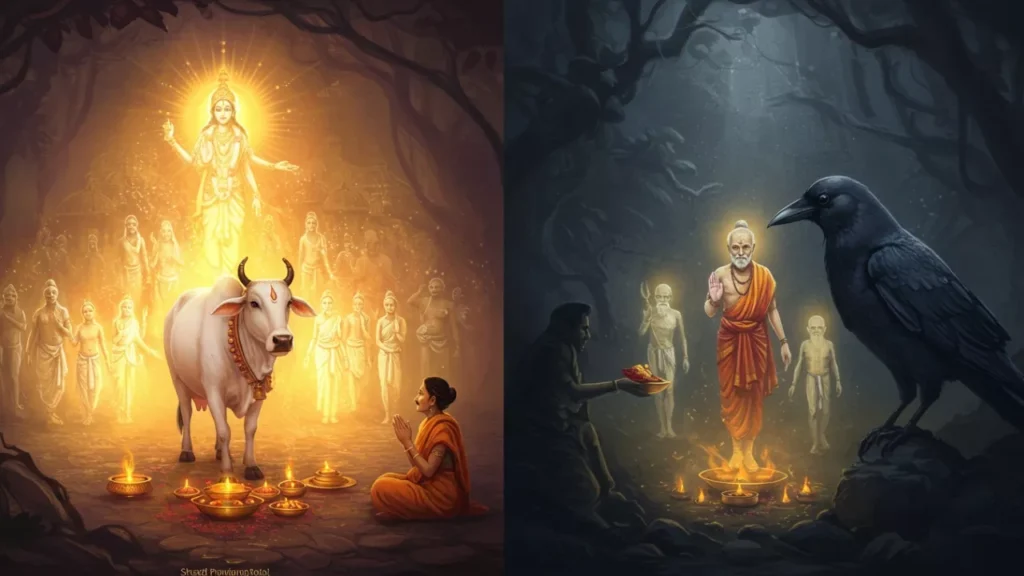
This image divided into two parts: Left side: A woman in prayer sits before a sacred white cow and a radiant deity, surrounded by many glowing figures (likely ancestors). Diyas (lamps) and offerings are present. This depicts devotion and reverence for ancestors and the divine. Right side: In a dark forest, a sage with glowing ancestral spirits offers food. A large crow, significant in Shraddh as a messenger to ancestors, looks on. Lit diyas are part of the ritual- Crows and Cows Pitrupaksha Mythology
Pind daan 9 min read

Crows and Cows Pitrupaksha Mythology: Sacred Messengers and Divine Symbols

Why do cows and crows hold such unique and seemingly contrasting roles in the sacred rituals of Pitrupaksha? Delving into the Crows and Cows Pitrupaksha mythology, as illuminated by our ancient Puranas, reveals a profound symbolism. The revered Gau Mata (Mother Cow) embodies divinity itself, considered a walking temple and the ultimate purifier. How does her presence, the gifting of cows (Go-dāna), or the use of her sacred products like ghee in Shradh rites contribute to the ancestors' salvation and bring immense merit? Conversely, what is the significance of Kaka Bali, the offering of food to crows? The Puranas link crows to the realm of Yama (God of Death) and the consequences of karma. Could feeding them be an act of compassion for souls in lower realms, a symbolic appeasement, or do they act as messengers to Pitṛloka? Discover how these two creatures, one representing supreme purity and the other a connection to the afterlife's complexities, together illustrate the comprehensive nature of Shradh – aspiring for the highest liberation for ancestors while also acknowledging and providing for those facing difficulties.

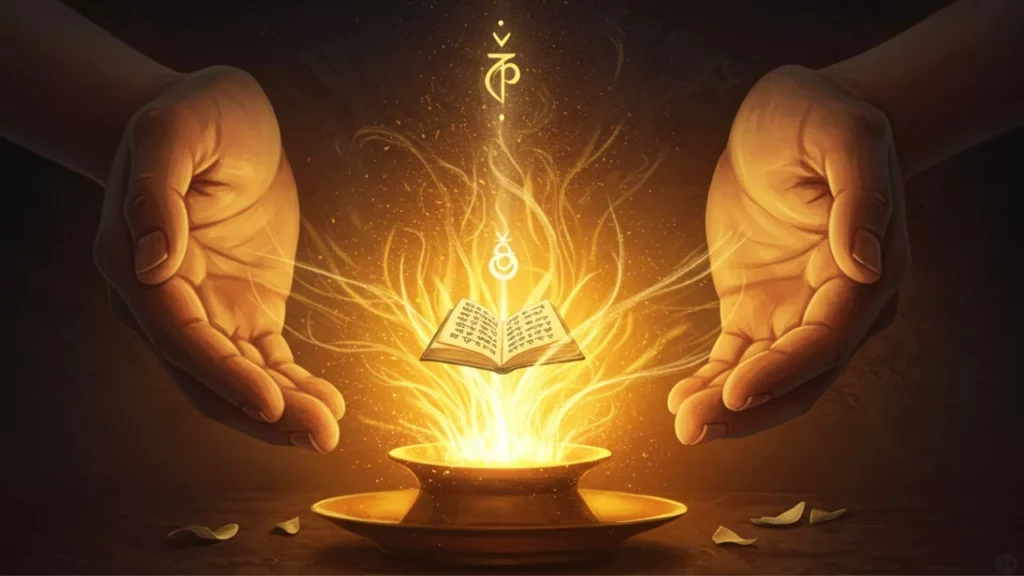
Image of Hands cradle a flaming offering bowl from which a glowing sacred book emerges, with mystical symbols above. Represents sacred knowledge and offerings- Lessons from Pitrupaksha legends
Core Concepts 11 min read

7 Key Life Lessons from Pitrupaksha Legends: Timeless Wisdom for Today

Beyond the rituals of Shradh and Tarpan, what profound life lessons from Pitrupaksha legends and Puranic scriptures can guide us in today's world? These ancient narratives, far from being mere fables, are rich repositories of timeless wisdom. Could the emphasis on fulfilling our 'Dharma' towards ancestors illuminate our path of duty in all aspects of life? And how does understanding our place in the 'unbroken chain' of lineage instill a deeper sense of responsibility and interconnectedness? The Puranas, through compelling stories, teach us about 'Karma's echo' – the consequences of our actions impacting even the afterlife – yet always offer the 'ray of hope' through redemptive rites. Do these legends also steer us towards the ultimate pursuit of 'Moksha' (liberation) for both our ancestors and ourselves? Uncover seven key principles, from the purifying power of sincere action and wisdom to embracing our role in the vast 'cosmic tapestry.' Explore how these ancient teachings, rooted in ancestral reverence, provide a blueprint for a meaningful, ethical, and spiritually enriched life today.

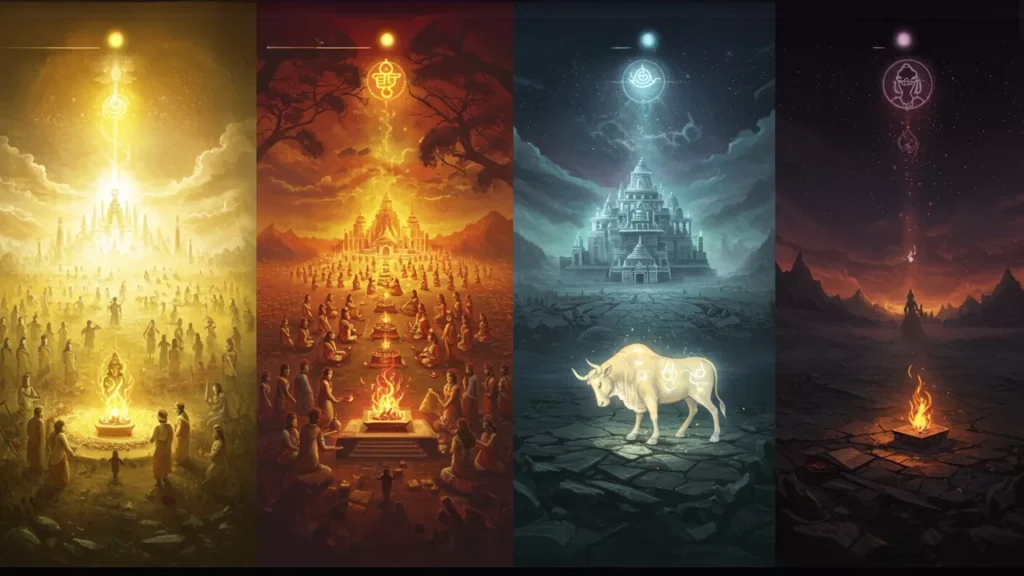
Image of Four panels depicting stages/aspects of Hindu rituals: Heavenly realm, mass fire ritual (yajna), divine ascent. Large community fire rituals before a temple. Divine bull before celestial palace, offerings reaching heavens. Solitary fire ritual in desolate land, soul's journey- Ancestor Worship in Different Yugas
Pind daan 15 min read

Ancestor Worship in Different Yugas: How Sacred Rites Evolved Through Time

How did the sacred duty of ancestor worship in different Yugas adapt to the shifting cosmic energies and levels of Dharma? While the core reasons for honoring our Pitṛs—fulfilling Pitṛ Ṛṇa (ancestral debt), expressing gratitude, and aiding their afterlife journey—remain timeless, the methods of performing rites like Shradh and Tarpan likely evolved significantly. In the pristine Satya Yuga, an age of direct divine communion, could mental offerings and natural reverence have sufficed? As Dharma waned in Treta Yuga, did the rise of Yajña (fire sacrifice) integrate ancestral rites more formally, with Agni as the messenger? The Puranas suggest that in Dvapara Yuga, these rituals became more codified and elaborate, emphasizing the importance of Tirthas (holy places) and deity worship. Now, in Kali Yuga, an age of diminished spiritual capacity, how does the emphasis shift towards faith (Shradh), sincere intention (Bhāva), and accessible alternatives like Tarpan and Dāna (charity)? Journey through the epochs to understand this fascinating evolution and how, despite changing practices, the profound connection to our ancestors endures.

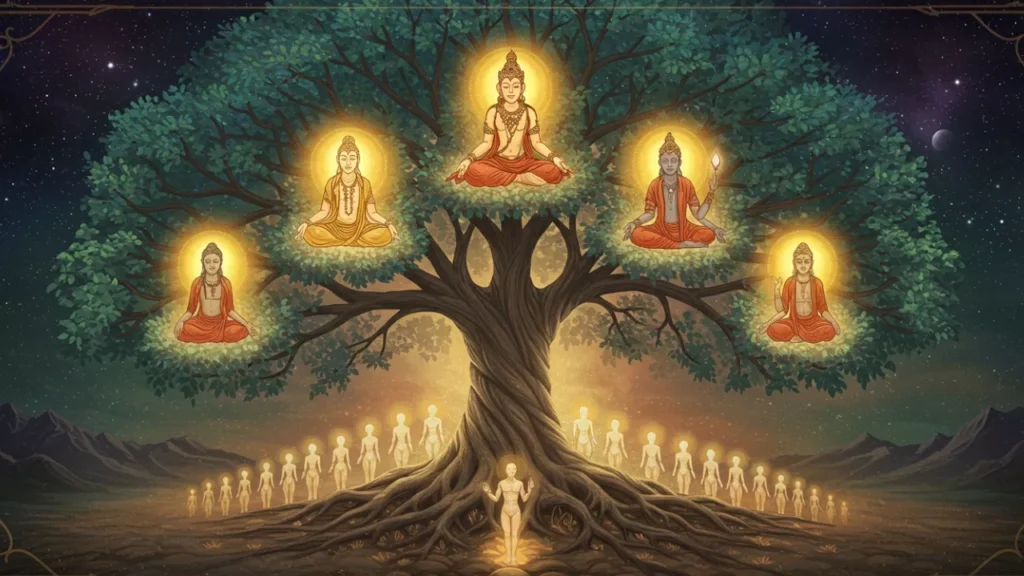
Image of A sacred tree with meditating enlightened beings on its branches. Spirit figures (pitrus/ancestors) emerge from its roots, connecting generations- Deva Pitrus Concept
Pind daan 11 min read

The Deva Pitrus Concept: Unveiling Your Connection to Divine Ancestors

When we honor our ancestors, are we only connecting with our recently departed family, or does our lineage stretch into divine, cosmic realms? The Deva Pitrus concept, as unveiled in Hindu Puranas, introduces us to celestial ancestors, beings who originated at the dawn of creation from the likes of Lord Brahma and Lord Vishnu. But how do these "manes-gods," like the Agníṣvāttas and Barhíṣadas, relate to our human forefathers and the Shradh rites we perform? The scriptures reveal a profound interconnection, where our immediate ancestors (father, grandfather, great-grandfather) symbolically embody divine principles like the Vasus, Rudras, and Adityas during these rituals. This transforms Shradh from a mere family remembrance into a vital cosmic act. Could our offerings be nourishing not just our direct Pitṛs but also these divine progenitors, thus upholding universal balance? Delve into the Puranic wisdom to understand this expansive view of ancestry, how it deepens the significance of our sacred duties, and why the Deva Pitrus are fundamental to the very fabric of our existence. Are you ready to explore your connection to these divine roots?

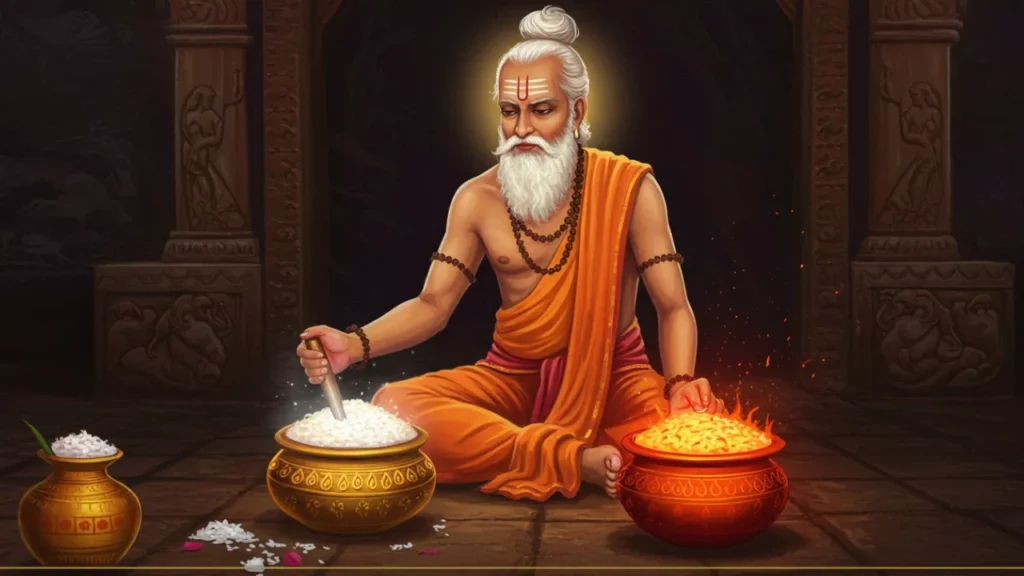
Image of a Richika rishi mix up some thing- Richika Satyavati Ancestor Mix-Up
Pind daan 11 min read

The Richika Satyavati Ancestor Mix-Up: How Swapped Offerings Forged Legendary Lineages

What happens when sacred offerings, meticulously prepared by a powerful sage to bless his lineage with specific qualities, are accidentally swapped? The captivating Richika Satyavati ancestor mix-up, a gem from Hindu Puranic lore, explores this very scenario. Sage Richika, desiring a wise Brahmin son from his Kshatriya wife Satyavati, and a valiant Kshatriya son for Satyavati's royal mother, prepared two distinct consecrated portions of food (Carus). But how did a fateful exchange between mother and daughter lead to an astonishing deviation from the sage's intent? Could this single mistake birth a peaceful Brahmin sage, Jamadagni, from the lineage meant to produce a warrior, while his son, the fierce Parashurama, embodied the Kshatriya energy Satyavati consumed? And what of Satyavati's mother? Did consuming the Brahminical Caru lead her Kshatriya son, Vishvamitra, on an arduous path to becoming one of the most revered Brahmarishis? Delve into this extraordinary tale of unintended consequences, divine foresight, and how a simple mix-up forged legendary figures and reshaped entire lineages, proving that destiny often flows in the most unexpected channels.

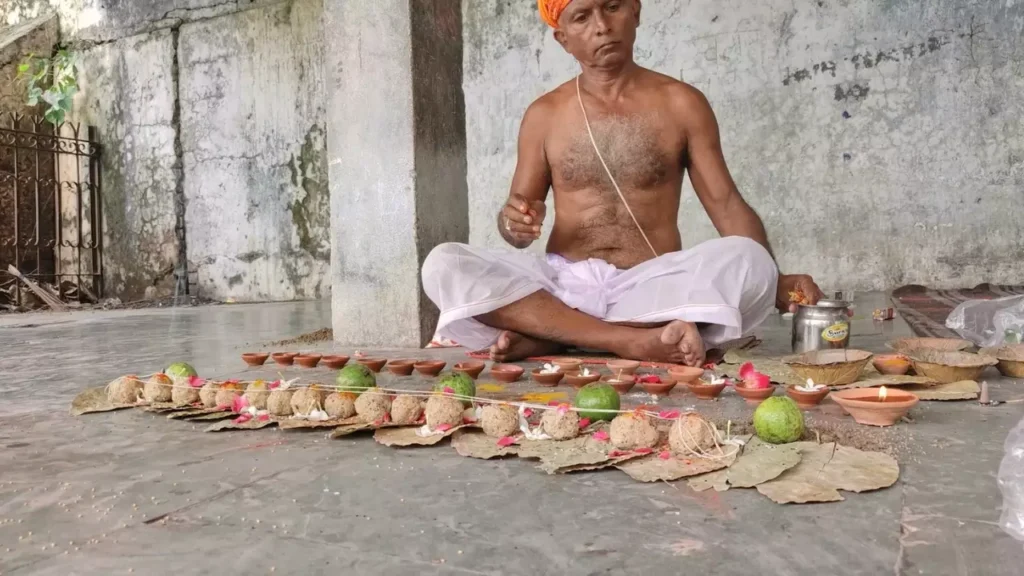
Image of a person doing pind daan -Pitru Shaap Stories Legends
Pitru Loka 11 min read

Pitru Shaap Stories Legends: Hindu Lore’s Dire Warnings on Ancestral Neglect

What dire warnings do the ancient Pitru Shaap stories legends embedded in Hindu Puranas hold about neglecting our ancestors? Is "Pitru Shaap" an active curse, or the unfolding of severe karmic consequences when descendants fail in their sacred duties? These cautionary tales reveal a profound connection between the living and the Pitṛs, our departed forefathers, whose well-being often depends on our remembrance and rites like Shradh and Tarpana. Could the neglect of these duties lead to ancestors languishing in states like 'Preta Yoni' (ghosthood) or even falling into 'Naraka' (hell)? The scriptures speak of alarming repercussions for the living too: unexplained misfortunes, loss of wealth, and most feared, the disruption of lineage or 'Santan Badha' (difficulties with progeny). How do these ancient narratives illustrate the invisible threads binding generations and the importance of Dharma? Journey into these Puranic accounts to understand not just the potential pitfalls, but how fulfilling our ancestral responsibilities can bring peace to the departed and profound blessings to our own lives. Are you prepared to heed these timeless lessons?

Image of a man doing pind daan- Mahalaya Amavasya Story
Core Concepts 10 min read

Mahalaya Amavasya Story: Unveiling the Puranic Truths That Honor Every Ancestor

What is the profound Mahalaya Amavasya story, and why is this specific new moon day considered the pinnacle of Pitrupaksha, the fortnight dedicated to ancestors? While not a single narrative legend, the Puranas, especially the Skanda Purana, weave a compelling "story" of cosmic significance and ancestral expectation. Could this day truly offer 'Akshaya Phala' – everlasting benefit – to our departed forefathers, reaching even those in the most dire straits or in lower births? Mahalaya Amavasya marks the culmination of the sacred window to the ancestral realm, a time when all Pitṛs are believed to be most receptive to our offerings. But what makes this day so universally powerful that it's known as 'Sarva Pitṛ Amavasya,' the day to honor every ancestor, known or unknown, regardless of their past or how they died? The scriptures warn of dire consequences for neglecting this crucial day, impacting not just the ancestors but the very lineage of the descendant. What immense blessings, however, are promised for those who perform their duties with faith? Delve into the Puranic truths that reveal why Mahalaya Amavasya is a day of ultimate remembrance and profound spiritual opportunity.

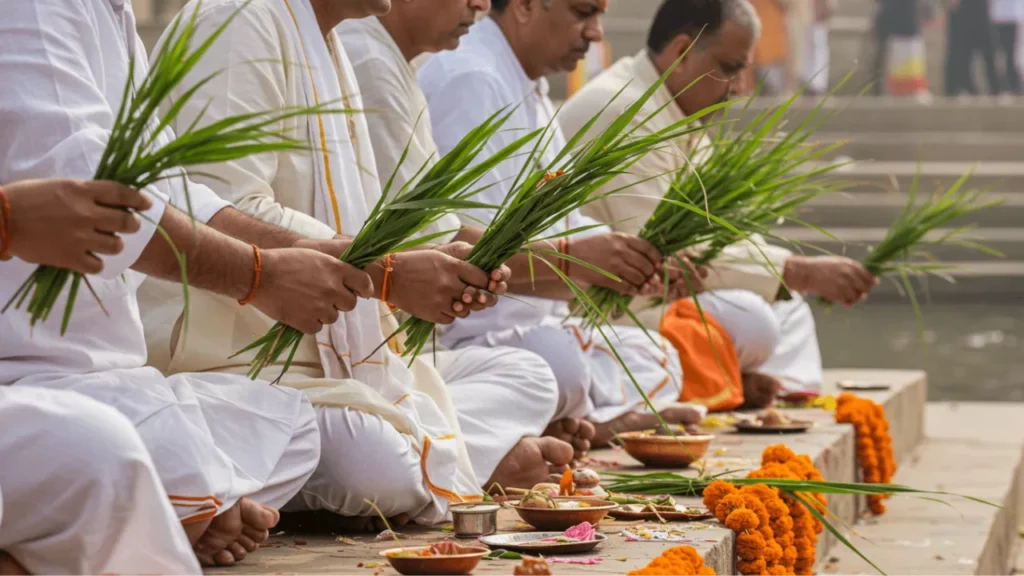
Image of Men in white attire sit by a ghat, holding kusha grass, preparing for Tarpan or Shraddh rituals- Kusha Grass Significance
Pind daan 10 min read

Kusha Grass Significance: Divine Origins, Purifying Power & Sacred Legends

What makes humble blades of Kusha grass so indispensable and revered in Hindu rituals, from grand Yajnas to intimate Shradh ceremonies? Is there a deeper Kusha grass significance beyond its simple appearance? The ancient Puranas unveil astonishing truths, tracing its origins to the very beings of the Creator, Lord Brahma, or the Preserver, Lord Vishnu. Could it be that these divine connections imbue Kusha with unparalleled sanctity? Imagine a single blade of grass holding the essence of the entire Hindu Trinity – Brahma at its root, Vishnu in its middle, and Shiva at its tip. How does this extraordinary indwelling presence contribute to its famed 'Pāvaka Shakti,' its unmatched power to purify sacred spaces, offerings, and even the performers of rituals? And why is it deemed crucial for ancestral rites, serving as a pure seat for Pindas and a conduit for our heartfelt offerings to reach the Pitṛs? Journey through divine legends, including its contact with Amrita (nectar of immortality) and its transformation into a divine weapon, to fully grasp why this unassuming grass is a cornerstone of Sanatana Dharma.

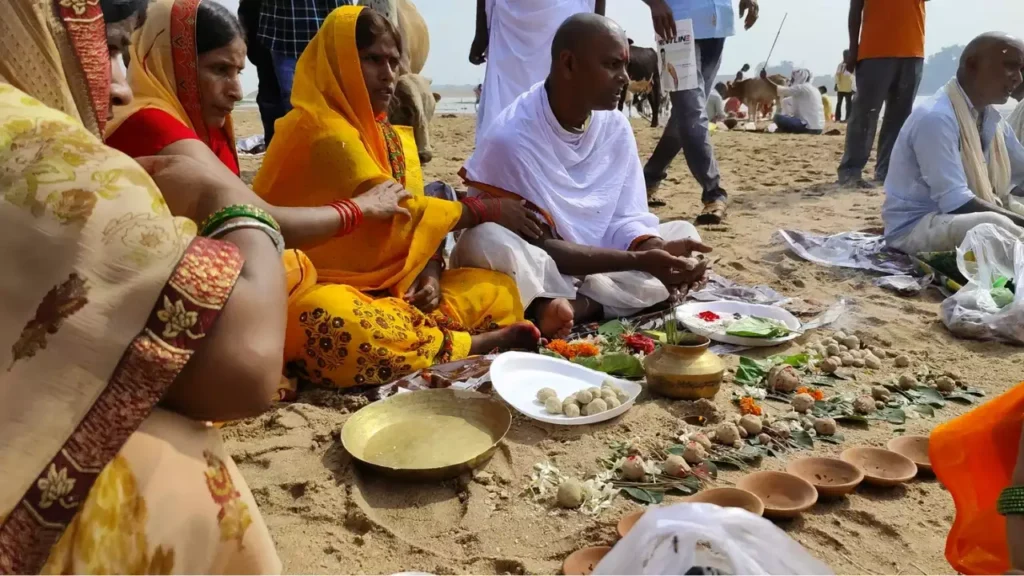
Image of People, including women in sarees, perform Pind Daan on a sandy riverbank with pindas and offeringe- Gaya Shradh Legends
Pind daan 14 min read

Gaya Shradh Legends: Why This Holy City is Unmatched for Ancestor Salvation

Why is Gaya, a city in modern Bihar, universally hailed in Hindu scriptures as the ultimate destination for Pinda Daan and ensuring ancestor salvation? The profound Gaya Shradh legends offer compelling answers, revealing a sanctity woven into the very fabric of the land. Could the extraordinary piety of an Asura named Gayasura, whose body itself became a supremely holy site, be the origin of this unmatched power? Dive into ancient Puranic accounts that speak of Lord Vishnu's direct intervention, manifesting as Gadadhara to stabilize Gayasura's form and decreeing this spot eternally sacred for ancestral rites. What makes offerings at specific sites like the Vishnupad temple, with its divine footprint, the banks of the Phalgu River, and beneath the immortal Akshayavat tree so potent that they can liberate ancestors from even hellish realms and grievous sins? The Puranas promise 'Akshaya Phala' – imperishable merit – for rites performed here. Are you ready to uncover why Gaya is not just a pilgrimage site, but a divine portal where the veil between worlds is thinnest, offering unparalleled peace to your forefathers?

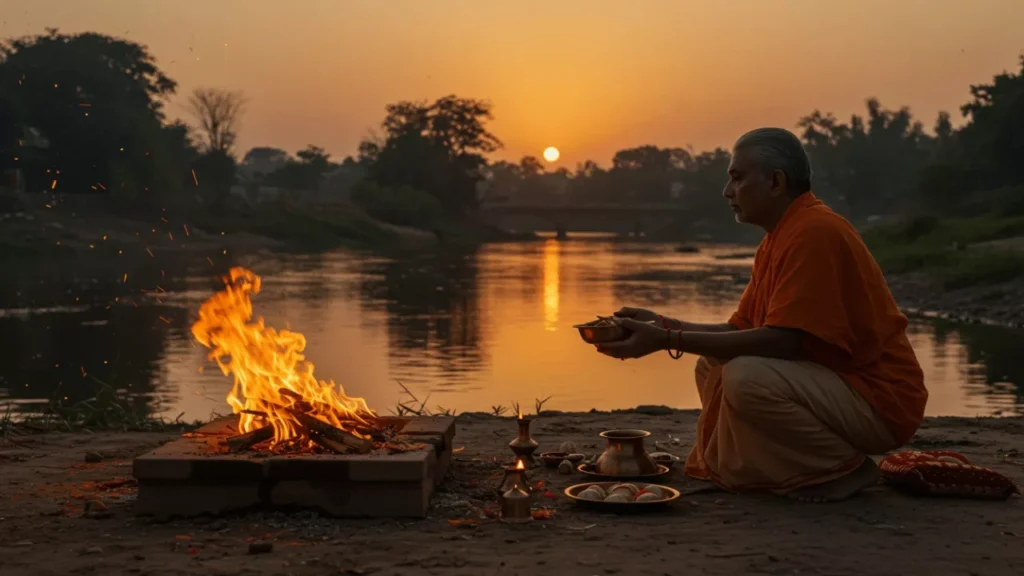
Image of A man performs a fire ritual (homa/agnihotra) by a river at sunset during Shraddh, with offerings- Agni role ancestor offerings
Pind daan 11 min read

Agni Role in Ancestor Offerings: The Puranic Truth Behind the “Myth”

When we make offerings to our ancestors during Shradh, how do these tangible items truly reach the subtle realm of the Pitrs? The answer, deeply embedded in our Puranas, reveals the profound and indispensable Agni role ancestor offerings. Is the sacred fire merely a symbolic presence, or does Agni Deva, the radiant Fire God, actively serve as a divine conduit, a messenger between worlds? Our ancient scriptures, from the Agni Purana to the Garuda Purana, describe Agni not just as a physical flame but as 'Deva Mukha' (mouth of the Gods) and the designated carrier of 'Kavya' (ancestral oblations). But how does Agni transform our physical offerings into sustenance suitable for those in Pitriloka? And what of his purifying nature as 'Pāvaka' – does it ensure our contributions are perfectly sanctified for our beloved ancestors? Could it be that without Agni's multifaceted role, as meticulously detailed in these sacred texts, the very efficacy of our ancestral rites would be compromised? Journey into the Puranic truth to understand why the Fire God is the vital, unwavering link ensuring our devotion and sustenance bridge the gap to those who came before us.

A monthly reading

One essay, one scripture reference, one calendar note for the month ahead. Nothing else. Never promotional.

REQUEST VIA COORDINATOR DESK · 12 ISSUES A YEAR · NO SPAM