Blog · Guidance on ancestry, scripture and practice
ग्रन्थालय

Pitrupaksha Blog

Explore the existing Pitrupaksha.org article library, including guidance on important dates, traditions, sacred sites and ancestral rites.

217
articles
Showing 12 of 217
Sorted by Most recent
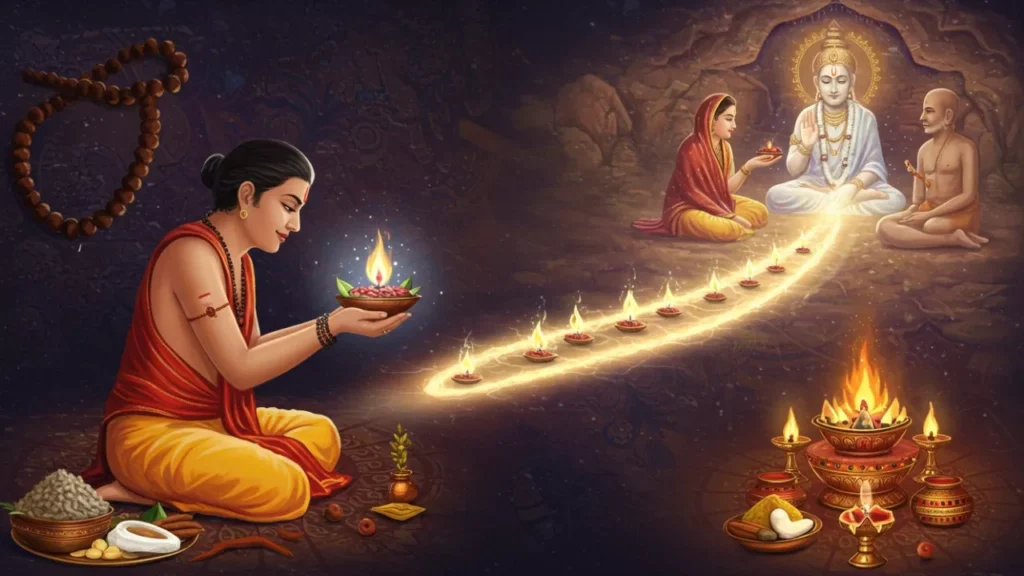
Image of A devotee performs Shradh, offering a lit diya to ancestors, with Pind Daan and sacred fire (Havan) visible.- Respecting elders during Pitrupaksha
Pitrupaksha 14 min read

Beyond Ancestors: The Importance of Respecting elders during Pitrupaksha

During Pitrupaksha, our focus rightly turns to honoring departed ancestors. But have you ever considered the profound, almost inseparable link between these rites and the act of Respecting elders during Pitrupaksha – our living parents, grandparents, and other senior family members? Could the reverence we show to these visible embodiments of our lineage directly impact the efficacy of our offerings to the unseen Pitṛs? This insightful exploration delves deep into Puranic wisdom, revealing how our living elders are not just family but sacred conduits of ancestral blessings. How does their contentment, born from our respect and care, create a harmonious spiritual atmosphere crucial for Shraddha and Tarpan? What do texts like the Skanda and Linga Puranas teach us about the exalted status of parents and the power of their Aashirwad? Furthermore, how do our elders serve as invaluable keepers of family traditions (Kulachara) and guide us in performing rituals correctly? If our ancestors desire a virtuous and thriving lineage, wouldn't the sight of their descendants honoring their own elders bring them the deepest satisfaction? This article doesn't just state the importance; it provides tangible ways to express this reverence, from attentive listening (Shravanam) to selfless service (Seva). Are you ready to understand how nurturing the "visible roots" of your family tree can lead to a more meaningful and spiritually potent Pitrupaksha, ensuring the blessings flow seamlessly from both the departed and the living?
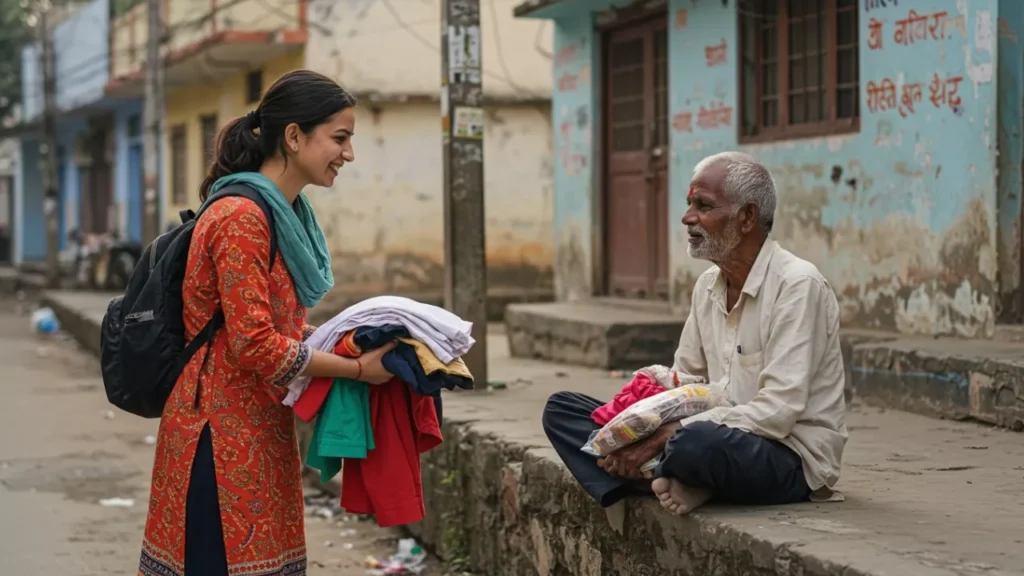
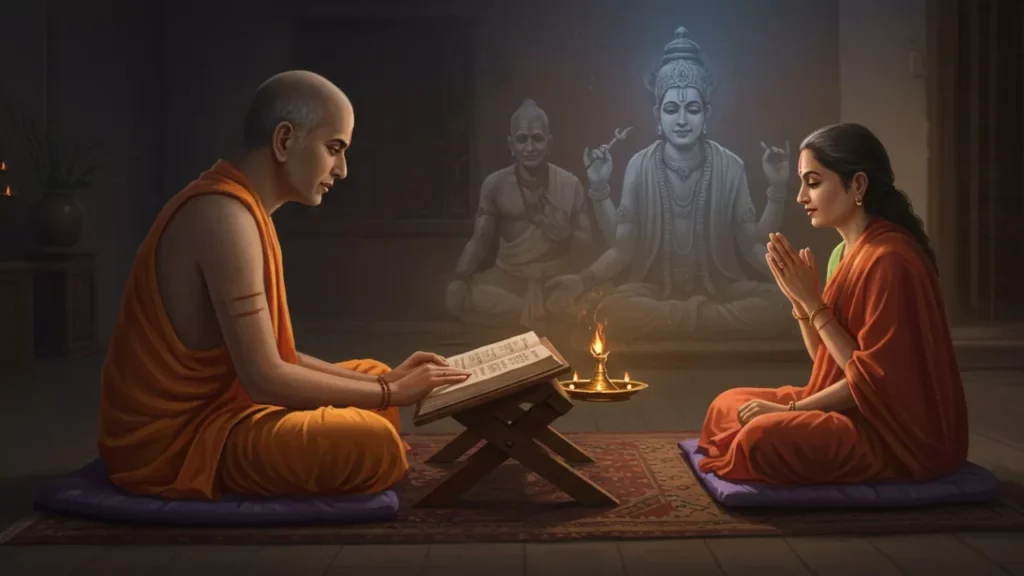
Image of A young woman offers clothes to an elderly man sitting on a roadside curb, who is holding some items- Charity Daan in Pitrupaksha
Pitrupaksha 12 min read

The Power of Charity Daan in Pitrupaksha: Amplifying Blessings for Your Ancestors

During the sacred fortnight of Pitrupaksha, while rituals like Shradh and Pind Daan form the core of ancestral reverence, there's another profoundly impactful practice: Charity Daan in Pitrupaksha. Why does selfless giving during this specific period hold such exceptional power to amplify blessings for both your ancestors and yourself? This insightful guide explores the deep spiritual dynamics at play. Learn how Daan, performed with pure intention (bhaav) and faith (Shraddha), is believed to reach your Pitṛs directly as they draw closer to the earthly realm, alleviating their subtle sufferings and aiding their peaceful journey. What do our sacred Puranas like the Garuda and Skanda Puranas say about the multiplied merit (Akshaya Punya) of charity during this consecrated time? Discover the most recommended forms of Daan – from Anna Daan (food) and Vastra Daan (clothes) to Tila Daan (sesame seeds) and Go Daan (cow-related charity) – and understand the significance behind each. More importantly, how can you ensure your charity is performed correctly, with the right Sankalpa (pious resolve) and to deserving recipients (Deshe, Kale, Patre), maximizing its spiritual efficacy? Uncover how these acts of compassion not only bring peace to your ancestors but also purify you, the giver, fostering a virtuous cycle of blessings that echoes through your lineage. Are you ready to transform your heartfelt gratitude into tangible acts of merit?

Image of A woman prays as a priest reads scriptures during a Shradh ceremony, with ancestral spirits in the background- Making Pitrupaksha meaningful
Pitrupaksha 12 min read

Making Pitrupaksha meaningful: Recommended Activities for Prayer & Reflection

Beyond the essential rituals of Shradh, Pindadana, and Tarpaṇa, how can you truly elevate your Pitrupaksha observance, Making Pitrupaksha meaningful and transforming it into a period of profound spiritual growth and connection? This insightful guide explores a wealth of recommended activities designed to sanctify these fifteen days, benefiting both your ancestors and your own spiritual journey. Have you considered the immense power of focused prayer (Prarthana) and sacred chanting (Japa), such as the Pitru Gayatri Mantra or "Om Namo Bhagavate Vasudevaya," to create a divine atmosphere? What about the serenity found in meditation (Dhyana), fostering inner peace and a deeper intuitive link with your lineage? The scriptures laud the boundless merit of charity (Dana) – from Anna Daan to Tila Daan – during this time; how can these acts alleviate ancestral suffering and bring blessings? Furthermore, discover the purifying effects of holy baths (Tirtha Snana), the strength derived from observing vows (Vrata) and restraints (Niyama), the grace of pilgrimage (Tirtha Yatra), and the joy of deity worship (Deva Puja). By engaging in these practices with sincere devotion (bhaav), you build upon the foundational Pitru Karma, creating a truly resonant and transformative experience. Are you ready to unlock the deeper spiritual potential of Pitrupaksha?

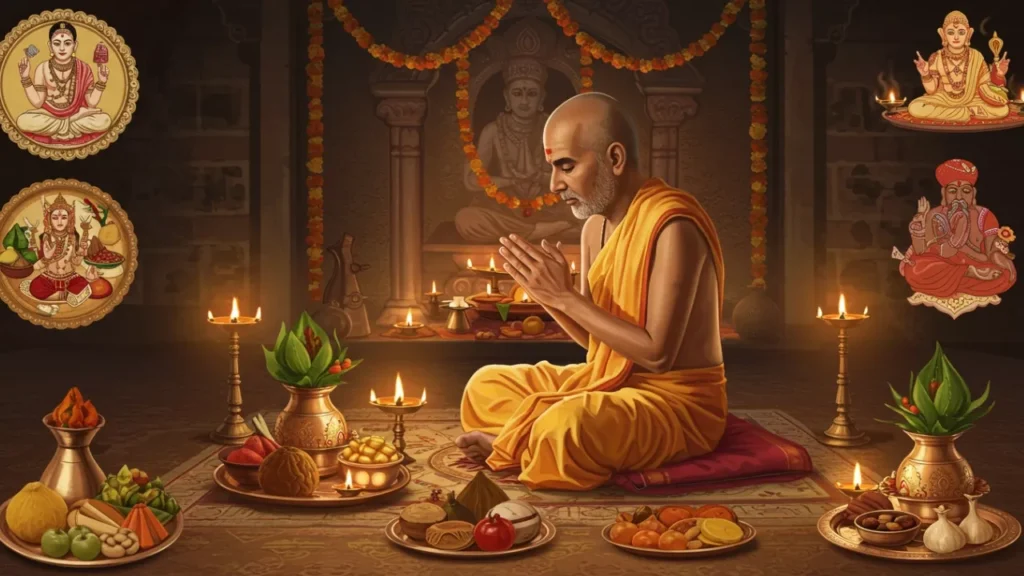
A priest performs Shradh rituals, praying amidst offerings, diyas, and images of deities or ancestors- Brahmacharya Pitrupaksha rules
Pitrupaksha 11 min read

Brahmacharya Pitrupaksha rules: Unpacking the Puranic Rules of Abstinence & Respect

During the sacred fortnight of Pitrupaksha, a period demanding utmost purity and spiritual focus, what are the guidelines regarding Brahmacharya, or self-restraint, especially concerning physical intimacy? This profound exploration delves into the Brahmacharya Pitrupaksha rules, moving beyond the common understanding of celibacy to its deeper meaning: "conduct that leads to Divine Consciousness." Why is the Karta – the primary performer of Shradh rites – traditionally advised to observe stricter celibacy during this period? How does conserving vital energy (Ojas) and maintaining heightened physical and mental purity (Shaucham) enhance the efficacy of the rituals and the mantras chanted for ancestral peace? While Puranic texts like the Linga and Skanda Puranas offer guidance on celibacy for householders on specific lunar days, this article explains how tradition extends these principles for the Karta during Pitrupaksha. What about other family members? How can everyone practice a broader Brahmacharya of the mind and senses to maintain the sanctity of this solemn time, fostering a Sattvic environment conducive to ancestral blessings? Discover the spiritual reasoning behind these observances, transforming them from mere restrictions into acts of profound devotion and respect. Are you ready to understand how this discipline helps you connect more deeply with your Pitṛs and harness spiritual energy for their upliftment and your own?

Image of a family going on the road trip on the time of the pitrukasha- Travel during Pitrupaksha
Pitrupaksha 10 min read

Travel during Pitrupaksha: Is It Advisable? What the Guidelines Say

The sacred fortnight of Pitrupaksha calls for deep reverence and focused attention on ancestral rites like Shradh and Tarpan. But in our modern, mobile lives, a crucial question often arises: what about Travel during Pitrupaksha? Is it advisable, and what do our ancient scriptures and traditions suggest? While Puranic texts like the Padma, Skanda, and Vayu Puranas don't explicitly forbid all travel, the profound emphasis they place on the meticulous and timely performance of these ancestral duties provides strong implicit guidance. For the Karta (the primary performer of the rites), non-essential travel is generally discouraged. Why? Because maintaining ritual purity (Shaucham), adhering to specific vows and rules (Niyamas), ensuring focused concentration (Ekagrata), and being present for the tithi-based ceremonies can be severely compromised when away from home or a dedicated Tirtha Sthala. This article delves into the different types of travel – from highly meritorious pilgrimages to places like Gaya for performing Shradh, to unavoidable essential journeys (Apat Dharma), and discretionary leisure trips. What are the key considerations for the Karta versus other family members? And what if you're already traveling when Pitrupaksha begins? Discover the wisdom behind prioritizing your ancestral connection and how making informed decisions about travel ensures your duties are fulfilled with the utmost sincerity and efficacy. Could your journeying impact the peace of your Pitṛs?

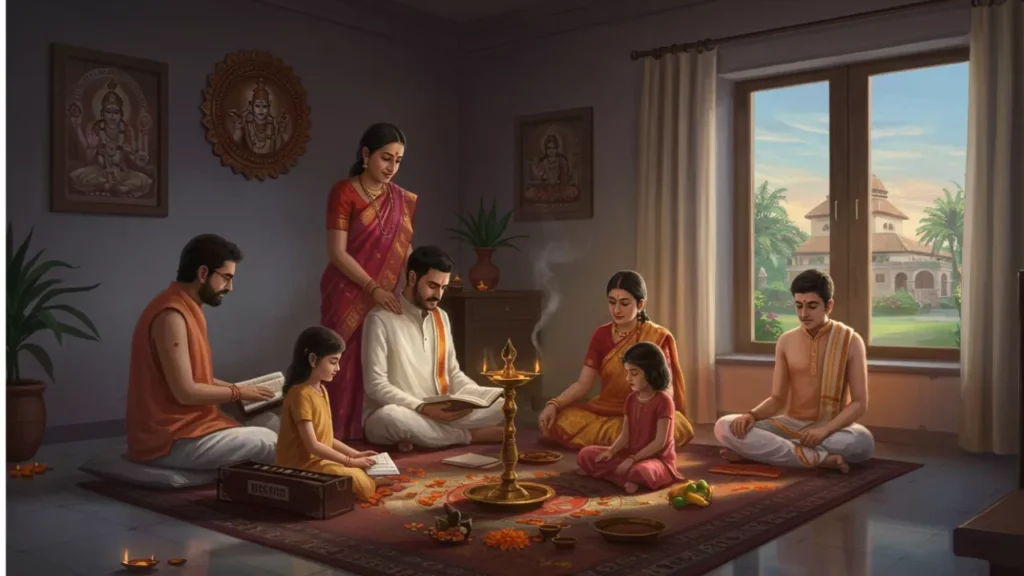
A family performs a Shradh ceremony at home, reading scriptures and offering prayers with a lit diya.
Pitrupaksha 11 min read

Behavior During Pitrupaksha: A Puranic Guide to Respect, Sobriety & Ancestral Honor

During the sacred fortnight of Pitrupaksha, when the veil between our world and the ancestral realm thins, our every thought, word, and action carries profound significance. How should our Behavior during Pitrupaksha reflect the deep reverence we hold for our departed Pitṛs? This comprehensive Puranic guide illuminates the path to honoring our forefathers with true respect and sobriety, ensuring our homes and hearts become fitting sanctuaries for their subtle presence. Beyond the rituals of Shradh and Tarpan, what are the crucial aspects of Vaachikam (speech), Kaayikam (actions), and Maanasikam (thoughts) that align with the solemn spirit of this period? Discover why truthful, gentle speech and avoiding worldly wranglings are paramount. Learn how practicing Ahimsa (extending to a strict vegetarian diet), Brahmacharya, and selfless charity (Daana) pleases the ancestors immensely. Furthermore, what internal disciplines, such as cultivating faith (Shraddha), forgiveness (Kshama), and contentment (Santosha), create the most conducive atmosphere for ancestral blessings? From maintaining peace at home to observing dietary purity (avoiding even onion and garlic), and refraining from new ventures or loud celebrations, this guide offers practical tips for navigating daily life with the respect this sacred time demands. Are you ready to transform your conduct into a powerful expression of ancestral honor and invite profound peace and prosperity into your lineage?

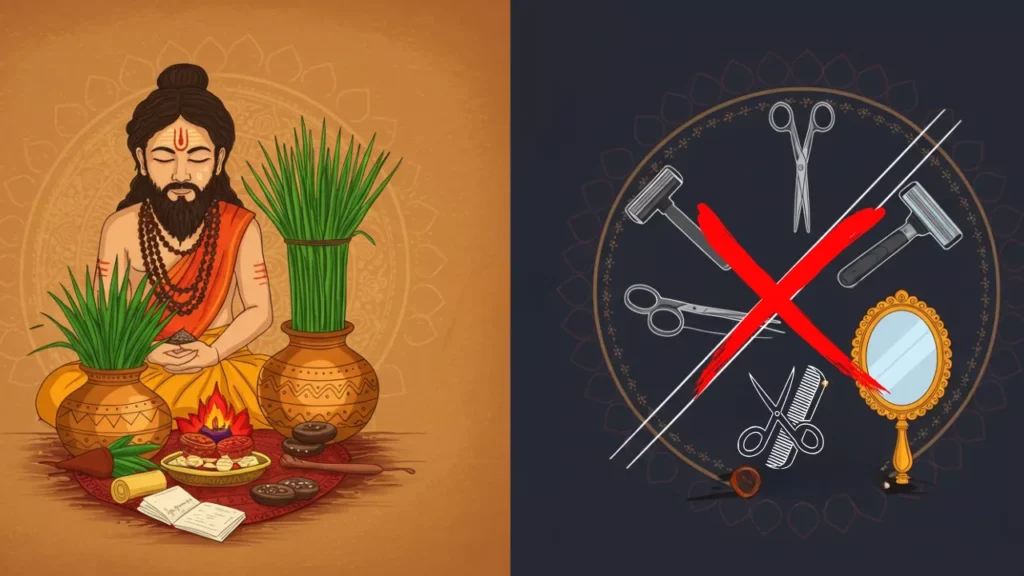
Image of a pandit who doing shradh and otherside the groming product which is crossed because on the time of pitrupaksha not use this things- Haircut and Shaving Pitrupaksha rules
Pitrupaksha 12 min read

Haircut and Shaving Pitrupaksha rules: Understanding the Sacred Rules for Grooming

During the solemn fortnight of Pitrupaksha, have you ever wondered about the specific guidelines for personal grooming, such as the Haircut and Shaving Pitrupaksha rules? It's not just about appearances; it's deeply connected to the sacredness and purity (Shaucham) required for ancestral rites. Why is the Karta – the primary performer of Shradh – traditionally expected to refrain from cutting hair, shaving, and even trimming nails from the Purnima marking the period's start until their ancestral rites are complete? This comprehensive guide delves into the profound reasons, explaining how these practices align with being in a state of Deeksha (sacred vow), showing respect and solemnity akin to mourning, minimizing worldly distractions, and maintaining ritual purity. While Puranic texts might not offer a single, explicit "no grooming" chapter, the collective wisdom of Shastras, Smritis, and Kulachara (family traditions) provides clear direction. What about other family members, both men and women? How can they maintain an atmosphere of simplicity and reverence? And are there exceptions in modern life based on Apat Dharma for unavoidable professional or health reasons? Discover the 'why' behind these customs, transforming them from mere restrictions into meaningful acts of devotion that enhance your connection with your ancestors and invite their invaluable blessings. Are you ready to embrace these sacred rules with understanding?

Cover · Pitrupaksha
Pitrupaksha 18 min read

Shopping During Pitrupaksha: What Do the Rules Say About Clothes, Cars and Homes?

The sacred fortnight of Pitrupaksha calls for solemn remembrance and honoring our ancestors. But in today's world, practical questions arise: what about Shopping During Pitrupaksha? Can you buy that new car, invest in a home, or even purchase new clothes? While ancient scriptures like the Puranas meticulously detail the profound significance of Shraddha, Tarpan, and Pind Daan, they don't explicitly list "items not to be shopped for." So, where does the traditional hesitation stem from? Is it mere superstition, or is there deeper wisdom guiding this caution? This article delves into the bhaav – the underlying spirit – of Pitrupaksha, exploring why engaging in major new purchases, especially those linked with celebration or worldly indulgence, might feel incongruous with the period's solemn, introspective, and sacred atmosphere. Could your focus on new acquisitions inadvertently distract from the primary Dharma of ancestral rites, potentially diminishing their efficacy? We'll differentiate between truly essential purchases and those that can be gracefully postponed, considering the principles of austerity, auspicious timing (Muhurta), and the overall energetic environment of this unique time. Instead of just acquiring, what if this period is better utilized for acts of Daana (charity) in your ancestors' names? If you're seeking clarity on how to navigate worldly needs while upholding the sanctity of Pitrupaksha, this insightful exploration offers practical guidance rooted in timeless traditions. What does wisdom advise for balancing reverence with necessity?

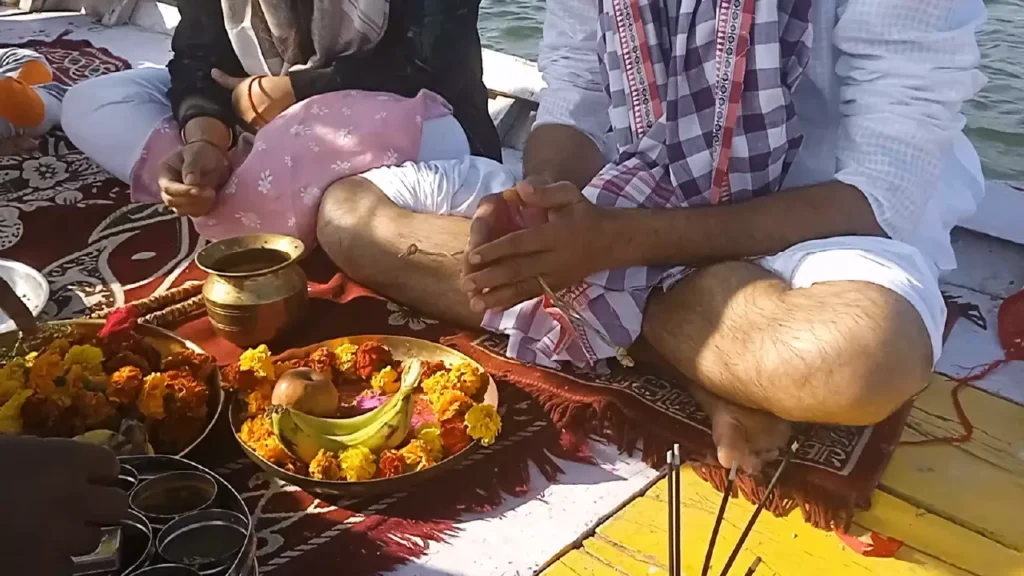
People on a boat are performing a Shradh ceremony with offerings of fruits, flowers, and incense- New Beginnings in Pitrupaksha
Pitrupaksha 11 min read

New Beginnings in Pitrupaksha: Why Puranic Wisdom Advises a Pause on Plans

Ever felt a pull to launch that exciting new project or celebrate a significant life event, only to realize it coincides with the sacred fortnight of Pitrupaksha? This period is deeply revered for honoring our ancestors, but does that mean all New beginnings in Pitrupaksha should be put on hold, and if so, why? Our ancient Puranas emphasize that during these fifteen days, our primary duty, our Pitṛyajña, is towards our forefathers, who are believed to draw near, seeking sustenance and remembrance. But what profound Puranic warnings lie behind this traditional pause, and how might diverting your focus impact your ancestral blessings and, consequently, your worldly success? Could the very energetic atmosphere of this solemn period, dedicated to purity, introspection, and remembrance, clash with the vibrant, often rajasic, energies required for new ventures to thrive? Furthermore, how does the science of auspicious timing, Muhurta Shastra, view this period for activities beyond ancestral rites? This isn't about an absolute ban on all actions, but a wise discouragement of major worldly or celebratory initiations. Why is ensuring ancestral satisfaction through dedicated Shraddha and Tarpan considered foundational before seeking prosperity in new endeavors? Delve into this exploration to understand the deep-seated wisdom behind prioritizing our Pitṛs, ensuring their blessings create a stable and harmonious ground for all your future aspirations. Could this sacred pause be the key to more enduring success?

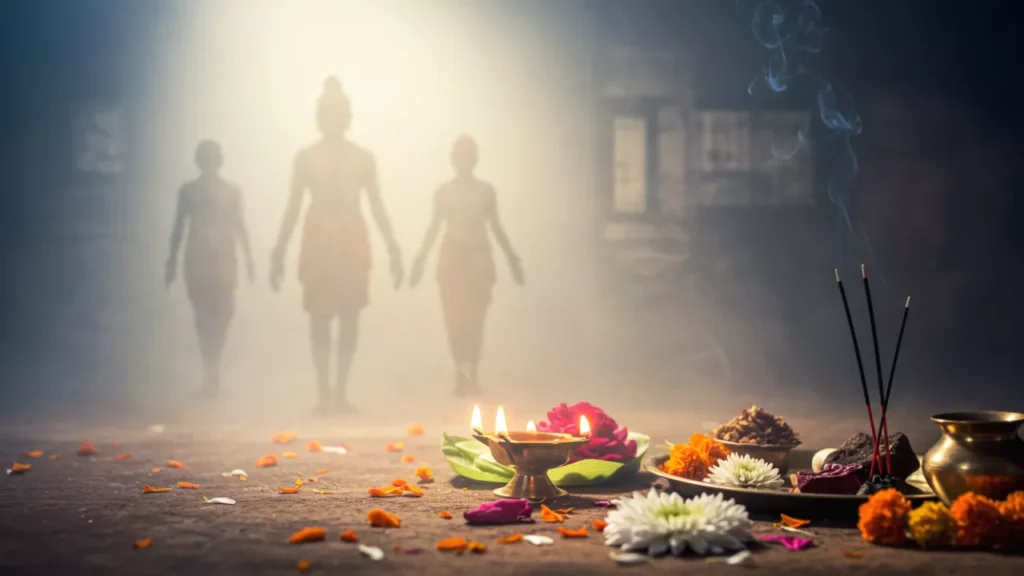
Shradh offerings of flowers, diya, and incense are laid out, with ancestral spirits appearing in the background- Avoid onion garlic in Pitrupaksha
Pitrupaksha 7 min read

Avoid onion garlic in Pitrupaksha? The Spiritual Reason There are Excluded from Shradh Food

During the sacred fortnight of Pitrupaksha, have you ever paused to consider why certain everyday ingredients like onion and garlic are strictly avoided in offerings and personal diet? It's more than just tradition; it's a deeply spiritual practice rooted in ancient wisdom. Why do revered texts like the Skanda, Siva, Agni, and Garuda Puranas consistently advise against their use during this period of ancestral homage? This insightful article unveils the profound reasons to Avoid onion garlic in Pitrupaksha, going beyond simple rules. How does the Ayurvedic and Yogic concept of the three Guṇas – Sattva, Rajas, and Tamas – classify these pungent bulbs, and what impact do their inherent Rajasic and Tamasic qualities have on the subtle energies required for Shradh? Could consuming or offering them actually hinder the very purpose of these rites, affecting the peace (tṛpti) and onward journey (sadgati) of your beloved Pitṛs? Discover the scriptural basis that links them to impurity (requiring prāyaścitta or atonement) and describes them as "essenceless" (nisāra) for spiritual nourishment. If you seek to create the purest possible connection with your ancestors and ensure your offerings carry the most positive spiritual vibrations, understanding these crucial distinctions is paramount. Are you ready to explore the compelling scriptural and philosophical arguments that advocate for their exclusion, ensuring your Pitrupaksha observances are truly effective and imbued with sanctity?

image of two sides one is sattvic food and second is non satvik food- Why Non-Veg and Alcohol Are Avoided in Pitrupaksha
Pitrupaksha 7 min read

The Reason Behind the Ban: Why Non-Veg and Alcohol Are Avoided in Pitrupaksha

Ever wondered about the strict dietary rules during Pitrupaksha, particularly Why Non-Veg and Alcohol Are Avoided in Pitrupaksha? This sacred fortnight, dedicated to honoring our ancestors, demands utmost purity for the rituals to be effective. When it comes to non-vegetarian food, our scriptures like the Skanda Purana point to its inherent connection with violence (Hiṃsā), a stark contradiction when seeking peace for departed souls. Furthermore, meat is considered Tamasic, promoting dullness rather than the spiritual clarity needed. But what specific scriptural injunctions from the Puranas guide this avoidance, and how does choosing vegetarian offerings amplify the merit for your Pitṛs? The prohibition against alcohol (Surā) is even more emphatic. Why do texts like the Brahma Vaivarta Purana list its consumption as a grave sin, leading to dire consequences? How does alcohol's nature fundamentally pollute the sacred space and the consciousness required for connecting with ancestral spirits? The answer lies in the profound Dharmic principle of cultivating a Sattvic state. This article delves deep into how these substances, being Rajasic and Tamasic, hinder the sacred connection, while a Sattvic lifestyle elevates it. By understanding these Puranic insights, you're not just following rules, but actively participating in a tradition designed for profound spiritual benefit. Are you ready to uncover the deeper layers of wisdom that ensure your offerings truly reach your ancestors and bring their cherished blessings?

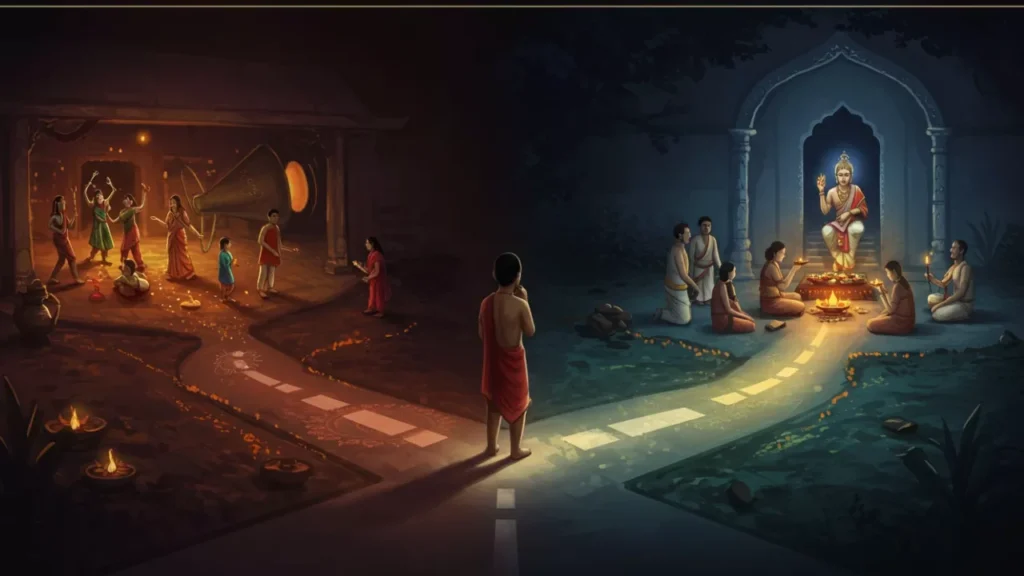
A person at a crossroads: worldly life versus performing Shradh with offerings to a deity for ancestors and the otherside people doing party- Celebrations During Pitrupaksha
Pitrupaksha 11 min read

Celebrations During Pitrupaksha: A Puranic Guide to Honoring Ancestors and Navigating Festivities

The sacred fortnight of Pitrupaksha calls for deep reverence towards our ancestors, but what does this mean for our social lives and potential celebrations? Can you attend or host parties, birthdays, or other joyous events during this solemn period? While our Puranas meticulously detail the paramount importance of performing ancestral rites like Shradh and Tarpan, they don't always explicitly forbid all forms of festivity. So, why does a strong cultural understanding advise caution against overt Celebrations During Pitrupaksha? This exploration delves into the heart of this dilemma, moving beyond literal interpretations to understand the spirit of these sacred days. Is the inherent solemnity and introspective energy of Pitrupaksha, focused on remembrance and spiritual duty, fundamentally at odds with the jubilant atmosphere of most celebrations? How does maintaining spiritual focus (Ekagrata) for ancestral rites align with the distractions of partying? This guide navigates the nuances, offering insights into why deferring major, ostentatious events is traditionally advised. More importantly, it provides practical wisdom for handling unavoidable social obligations with sobriety and respect, even suggesting ways to transform them into spiritually meritorious acts. Discover what kinds of gatherings are harmonious with Pitrupaksha and how observing this period thoughtfully helps cultivate a deeper connection with your lineage. Are you ready to learn how to balance modern social realities with the profound spiritual significance of honoring your Pitṛs?

A monthly reading

One essay, one scripture reference, one calendar note for the month ahead. Nothing else. Never promotional.

REQUEST VIA COORDINATOR DESK · 12 ISSUES A YEAR · NO SPAM