Blog · Guidance on ancestry, scripture and practice
ग्रन्थालय

Pitrupaksha Blog

Explore the existing Pitrupaksha.org article library, including guidance on important dates, traditions, sacred sites and ancestral rites.

217
articles
Showing 12 of 217
Sorted by Most recent
Image of Silhouette of Bhagirath leads Maa Ganga, whose form flows like a river, under a starry sky- Bhagiratha Ganga Ancestor Salvation Story
Core Concepts 13 min read

Bhagiratha Ganga Ancestor Salvation Story: A King’s Epic Penance, A River’s Divine Descent

How could the actions of one king rewrite the destiny of sixty thousand cursed ancestors, bringing a celestial river down from the heavens to achieve their salvation? The Bhagiratha Ganga ancestor salvation story is an awe-inspiring saga of unparalleled determination and profound filial piety. What terrible fate befell the sixty thousand sons of King Sagara, leaving their souls trapped and yearning for release? And why was the divine river Ganga, flowing in celestial realms, their only hope? Witness the monumental challenge passed down through generations, culminating in the extraordinary vow of King Bhagiratha. What kind of incredible penance did he undertake to first appease Lord Brahma, and then the mighty Lord Shiva, the only one capable of bearing Ganga's thunderous descent? How did his unwavering devotion convince the divine powers to facilitate this cosmic event? Journey through this epic narrative of a king's relentless effort, a river's majestic journey following his lead, and the ultimate, purifying touch that liberated countless souls. Are you ready to explore the depths of this legendary tale and its timeless lessons on duty, devotion, and the power of perseverance?
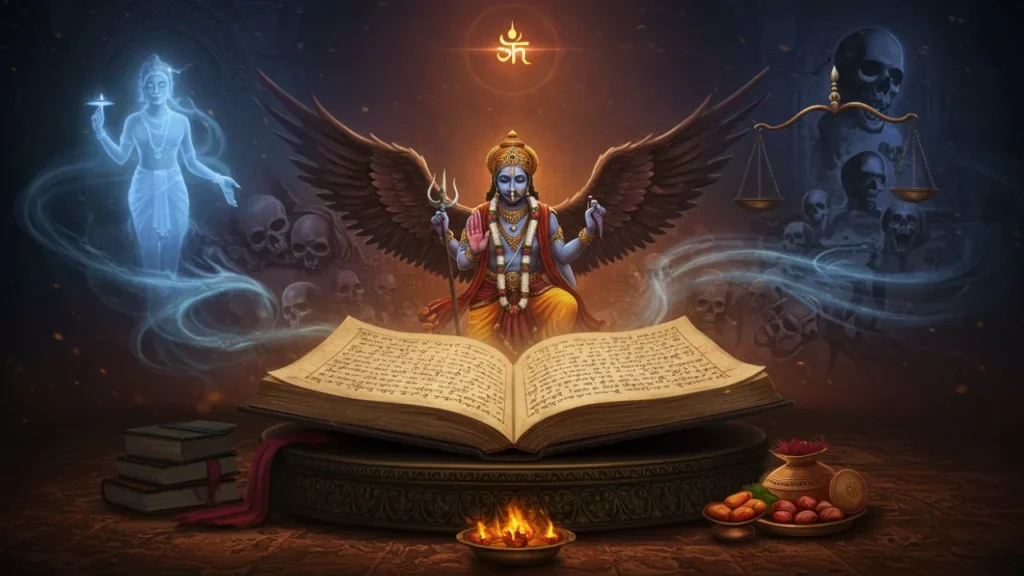
Winged deity (Yama) with garuda puran or book, judging souls. Spirit, skulls, scales depict afterlife- Garuda Purana Shradh afterlife
Pind daan 13 min read

Garuda Purana Afterlife Secrets: Why Shradh is Vital for Your Ancestors

What truly awaits us beyond the veil of life? The sacred Garuda Purana, a divine dialogue between Lord Vishnu and Garuda, unveils profound and often startling secrets about the Garuda Purana Shradh afterlife connection. It speaks of the soul's potentially arduous journey, the challenging 'Preta' state where spirits can linger in distress, and the meticulous judgment by Dharmaraja based on one's earthly Karma. Amidst these revelations of potential suffering, does this ancient text offer a pathway for descendants to actively intervene and aid their departed loved ones? Why is the performance of Shradh rites not just a tradition, but described as a crucial lifeline within these scriptures? How do offerings like Pindas actually nourish souls in their transitional subtle bodies, and what profound power does a ceremony like Sapindikarana hold in elevating a restless 'Preta' to a revered 'Pitr'? Furthermore, why do sacred sites like Gaya significantly amplify the merit of these rituals? Uncover the vital importance of fulfilling this sacred duty, learning how it impacts not only your ancestors' peace and liberation but also the well-being and spiritual merit of you, the living. Are you prepared to delve into these ancient mysteries and understand your role?

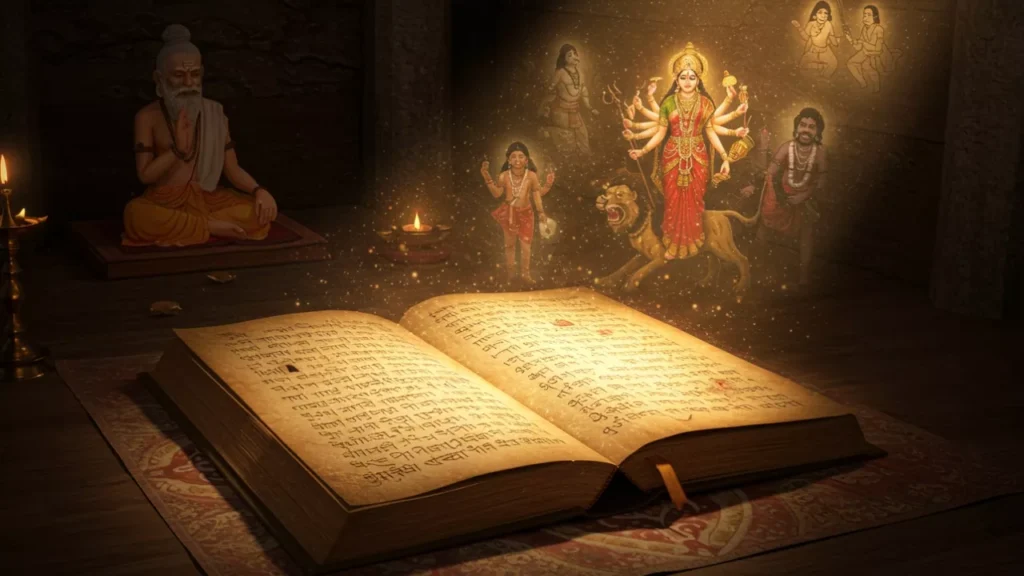
Image ofMarkandeya Purana open, divine figures and Goddess Durga emerging. Sage meditates nearby- Markandeya Purana ancestral blessings
Core Concepts 12 min read

Markandeya Purana ancestral blessings: Unlock Ancient Wisdom & Sacred Benefits

How can an ancient text, one of the eighteen revered Mahapuranas, hold the key not only to profound personal transformation but also to the peace and upliftment of our ancestors? The Markandeya Purana, narrated by the divinely blessed Sage Markandeya, is far more than a collection of tales; it's a vibrant stream of sacred wisdom that has flowed through millennia. But what specific Markandeya Purana ancestral blessings can one truly unlock by engaging with its narratives, particularly the famed Devi Mahatmyam, the glorious account of the Divine Mother? Could the very act of reading or hearing these sacred stories, imbued with cosmic truths and divine exploits, provide tangible spiritual nourishment to our Pitṛs, guiding them towards heavenly realms and contentment? Beyond the profound benefits for those who have passed, what remarkable boons—from worldly success and inner peace to the promise of becoming "not to be lamented," signifying liberation from deep sorrow—await those who immerse themselves in its teachings? And is it possible that even the act of gifting this sacred Purana can yield merit comparable to grand Vedic sacrifices, further enriching one's lineage? Delve into the profound secrets of this revered scripture and discover how its ancient light can illuminate your path and deeply honor your ancestral heritage.

Yama receives a scroll (karma) as a spirit awaits judgment in a divine court- Why Ancestors Visit During Pitrupaksha
Pind daan 7 min read

Why Ancestors Visit During Pitrupaksha: Unpacking the Ancient Myth & Sacred Truths

Have you ever wondered why ancestors visit Pitrupaksha, this specific fifteen-day period? Is it merely an age-old belief, or do profound truths lie within our sacred scriptures? The ancient Puranas offer compelling explanations, painting a picture far richer than simple myth. Could it be that the very state of souls immediately after death, especially those lingering as 'Pretas' due to improper rites or unfulfilled desires, draws them back, yearning for sustenance and release? The Garuda Purana details the plight of these restless spirits, afflicted by hunger and thirst. But is there more to their return than just their individual needs? What if cosmic cycles, like the dark fortnight being the "night of the Pitrs," make this the most opportune time for connection? And most profoundly, could Lord Yama, the ruler of Pitriloka, actually grant a compassionate leave to souls, even those in suffering, allowing them to journey towards their descendants specifically to receive Shradh offerings? Uncover the intricate tapestry of spiritual needs, divine ordinance, and celestial timing that explains why our ancestors draw near during Mahalaya Paksha, transforming this period from one of potential apprehension into a sacred opportunity for profound connection and mutual liberation

Cover · Core Concepts
Core Concepts 7 min read

Bhishma Shradh Deathbed Story: Unwavering Devotion on a Bed of Arrows

Amidst the unimaginable agony of the Shara Shayya, the bed of arrows, could the mighty Bhishma Pitamaha, a paragon of Dharma, still fulfill his sacred duties to his ancestors? The compelling Bhishma Shradh deathbed story explores this extraordinary act of devotion. As he awaited his chosen moment of departure, how could a man pierced by countless arrows, incapable of physical movement, perform the intricate rituals of Shradh? This narrative delves into the profound spiritual strength of Bhishma, revealing how his unwavering commitment to Dharma transcended his physical limitations. What were the unique methods, sanctioned by Apaddharma (duty in calamity), that allowed him to honor his lineage? Could focused mental offerings and the sacred waters of the Ganga, miraculously provided, truly satisfy the Pitrus? The story of Bhishma performing Manasik Shradh from his deathbed is not just a tale of adherence to ritual, but a powerful testament to the supremacy of intention and the unbreakable bond with one's ancestors. Are you ready to uncover the depths of this incredible display of spiritual power and discover what it teaches us about our own responsibilities?

Image of Sage meditating peacefully in a forest, with mountains in the background. Serene spiritual scene- Jaratkaru Ancestors Progeny Legend
Pind daan 6 min read

Jaratkaru Ancestors Progeny Legend: Why Lineage Matters for Shradh

Why is continuing a lineage and performing Shradh rites so deeply emphasized in Hindu tradition, especially during Pitrupaksha? The compelling Jaratkaru ancestors progeny legend offers a vivid and dramatic answer. Imagine a renowned ascetic, Sage Jaratkaru, deeply committed to his own liberation through severe austerity, who encounters a shocking vision: his own ancestors hanging precariously over an abyss, their only lifeline a single, fragile thread being gnawed away by Time. What could this fragile thread represent, and why were these virtuous ancestors facing such peril? Their desperate plea reveals a truth that shakes the sage to his core: his path of renunciation, while noble, leaves them without the vital sustenance of Shradh offerings from a descendant. His personal spiritual merit couldn't save them from oblivion. How does this confrontation between personal moksha and inescapable ancestral duty unfold? What drastic choice must Jaratkaru make, and how does the birth of his son, Astika, become the ultimate salvation for his forefathers? Uncover the profound lessons this ancient story holds about our sacred responsibility to those who came before us and the true power of remembrance.

Image of Shraddh ritual in progress with pindas, flowers, and lit lamps. People performing rites- Pitrupaksha Origin Story
Ancestors 6 min read

Pitrupaksha Origin Story: From Vedic Hymns to a Sacred 15-Day Ritual

Ever wondered about the true Pitrupaksha origin story? How did this profound 15-day ritual, so vital for honoring our ancestors, actually come into being? It's a journey through millennia, far beyond a single event. Could the concept of Shradh, as Puranas like Varaha and Skanda suggest, predate even the heavens and the Devas, making it a fundamental cosmic necessity from the dawn of creation? From these primordial beginnings, trace the earliest whispers of ancestral reverence in the ancient Rigveda, with its hymns to the Pitrs and the emerging idea of a distinct 'Path of the Ancestors.' But how did these foundational beliefs transform into the detailed rituals, specific Pinda offerings, and the dedicated fortnight we now call Pitrupaksha? What was the crucial role played by the Sutras and Smritis, like the authoritative Manu Smriti, in systematizing these practices and establishing them as an essential duty? And how did the powerful narratives within the Epics like the Mahabharata and Ramayana, along with the vivid descriptions in the Puranas, particularly the Garuda Purana, help cement this specific period as the universally recognized Mahalaya Paksha? Delve into this evolutionary tapestry to understand the incredible journey of Pitrupaksha. Are you ready to uncover how ancient wisdom shaped this sacred and timeless tradition?

Image of Yama and Chitragupta judging a soul, with attendants reading karmic records. This depicts the afterlife- Yama Pitriloka Legends
Core Concepts 8 min read

Yama Pitriloka Legends: Journeying with the Lord of Ancestors in Hindu Lore

What truly unfolds when our earthly existence concludes? The ancient Yama Pitriloka legends within Hindu lore offer a fascinating glimpse into the soul's journey beyond, a transition to Pitriloka, the realm of ancestors, presided over by the stern yet just Lord Yama, the Dharmaraja. But is Yama merely a figure of dread, or does his role embody a profound cosmic justice? The Puranas paint vivid pictures of the soul's path: a terrifying ordeal for those burdened by sin, yet a serene passage for the virtuous. What determines which path a soul undertakes? And what awaits when it stands before Lord Yama and his meticulous record-keeper, Citragupta, where every deed is laid bare? Could it be that these ancient narratives also hold secrets to mitigating this judgment? Do devotion, sacred rites like Shradh, or divine intervention truly influence the soul's destiny in Yama's domain? Explore these captivating legends to uncover not just the mysteries of the afterlife, but how our actions in this life and our reverence for ancestors can shape that ultimate journey. Will you discover the key to a peaceful transition?

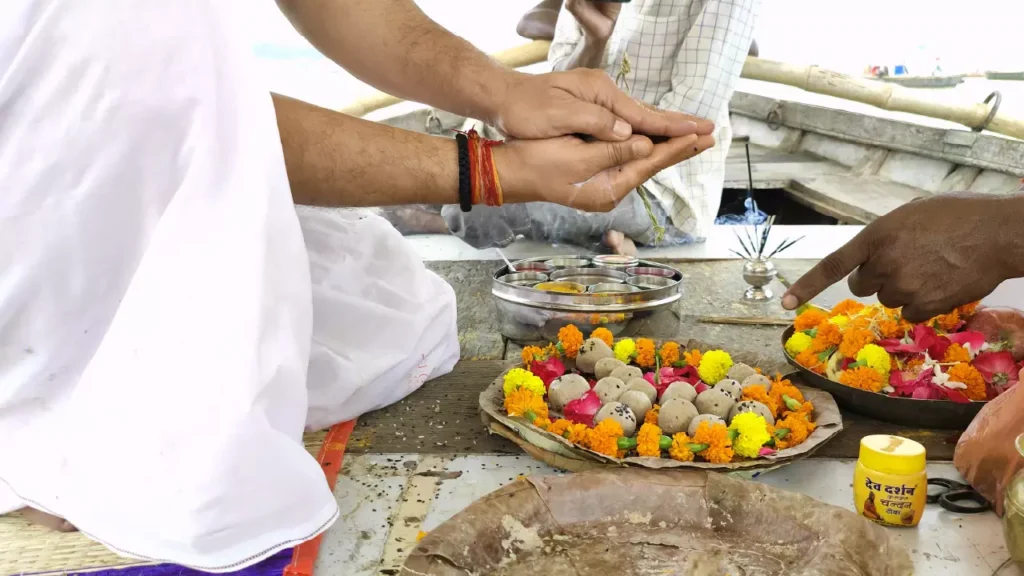
Image of performing Tarpan or offering during Shraddh with pindas, flowers, and ritual items- Karna 15 days boon Pitrupaksha
Core Concepts 6 min read

Karna 15 days boon Pitrupaksha: Understanding the Sacred Fortnight

Why is Pitrupaksha, the sacred fortnight for ancestors, precisely fifteen days long? The popular narrative of the Karna 15 days boon Pitrupaksha offers a compelling explanation. It tells of the generous warrior Karna, who, despite donating immense gold, faced hunger in the afterlife for neglecting food (Anna Dana) and water (Jala Dana) offerings. Granted a 15-day return to Earth to perform Shradh, this period supposedly became Pitrupaksha. While this story vividly underscores the critical need for ancestral sustenance, what do the Puranas say about this specific duration and timing? Discover how the Puranas affirm the necessity of food and water for Pitrs and highlight the Krishna Paksha (dark fortnight) of Bhadrapada, when the Sun is in Kanya, as the most potent time for these rites. This period naturally spans fifteen lunar days (tithis). Learn how the popular Karna narrative and scriptural injunctions complement each other, emphasizing the profound importance of offering food during this divinely ordained fifteen-day window to ensure ancestral satisfaction (Pitru Tripti) and receive their blessings. Read the full article to connect the dots between the powerful story and the sacred calendrical science behind this vital fortnight.

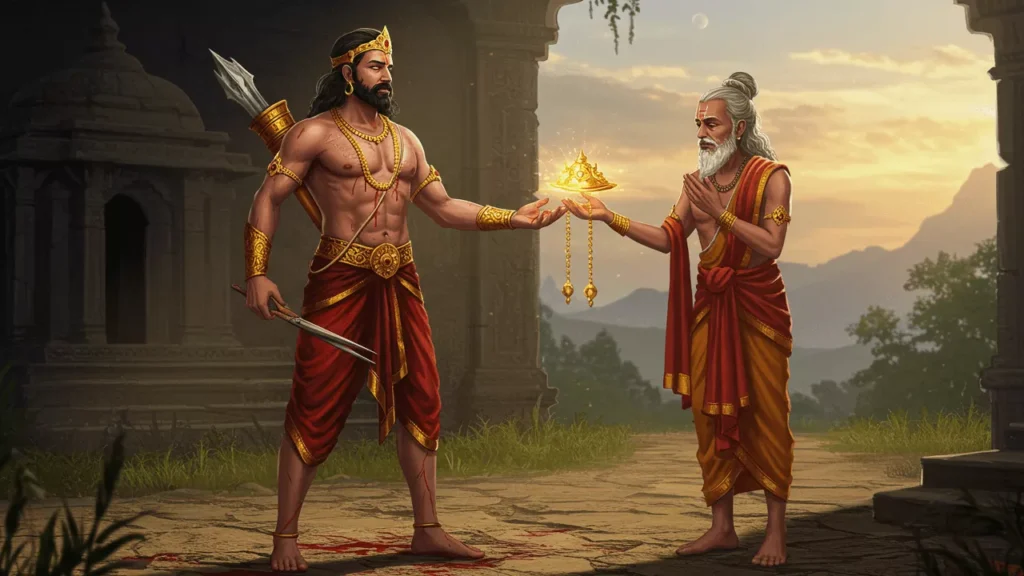
Warrior king karns offers a golden crown to a sage, a symbolic act of reverence and offering- The Karna Pitrupaksha Food Story
Pitrupaksha 9 min read

The Karna Pitrupaksha Food Story: Understanding the Power of Ancestral Food Offerings

The famous Karna Pitrupaksha food story tells of the great warrior Karna, who, despite immense charity in gold, faced hunger in the afterlife for neglecting to donate food (Anna Dana). But is this just folklore, or does it reflect deeper Puranic truths? This exploration reveals how the essence of Karna's lesson – the supreme importance of food offerings – is echoed in detailed accounts of virtuous kings like Sveta and Satyasena in scriptures such as the Padma, Varaha, and Skanda Puranas. These kings, too, learned that neglecting Anna Dana led to profound suffering, even amidst heavenly riches. Why do scriptures declare "Nāsti anna samo dānam" (there is no gift superior to food)? Understand how food sustains life itself and is considered divine, making its offering crucial for ancestral satisfaction (Pitru Tripti) during Shradh and Pitrupaksha. What if you cannot perform elaborate Pind Daan? Discover meaningful Pind Daan alternatives focusing on the core principle of Anna Dana, like feeding the needy or simplifying offerings, to ensure your ancestors are honored and nourished. Read the full article to grasp the profound message behind these narratives and its practical application.

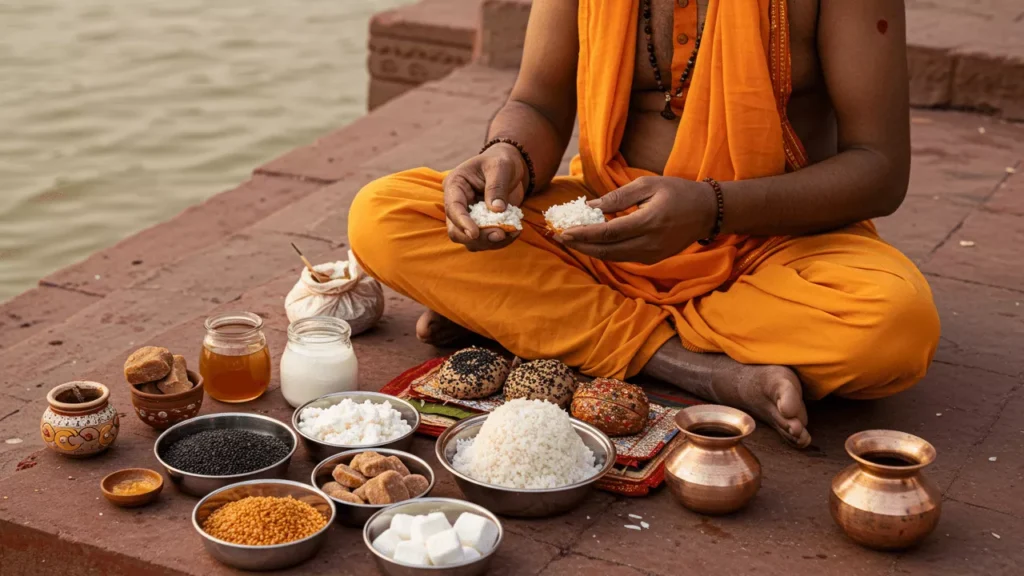
Man in orange robes performs Pind Daan, holding a pinda with sesame seeds, offerings around- Pind Daan alternatives
Pind daan 9 min read

Can not Perform Full Pind Daan? Meaningful Alternatives to Honor Ancestors

What if performing a full, elaborate Pind Daan ceremony isn't feasible due to circumstances? Does this mean your ancestors cannot be honored or receive necessary sustenance? Our compassionate scriptures offer a range of meaningful Pind Daan alternatives, emphasizing sincere faith (Shradh) and acting according to one's capacity (Yathashakti). Can simpler food offerings, like roasted grain flour or even just jaggery, still hold value? How effective is feeding worthy Brahmins in the name of your Pitrs, and can this act as a substitute? Discover the immense power of performing even basic rites at sacred Tirthas like Gaya or Prayag, and how these can amplify your efforts. Is heartfelt prayer alone ever sufficient? Learn about the significance of charitable acts (Dana), such as Go Daan (cow gifting), performed in memory of ancestors. Can you request a qualified relative or priest to perform the rites on your behalf? Explore specific rituals like Narayana Bali for souls who met an unnatural end, and the importance of observing auspicious timings like Pitrupaksha. Delve into the full article to find practical, scripturally-backed ways to ensure your ancestors are remembered and satisfied, regardless of your limitations.

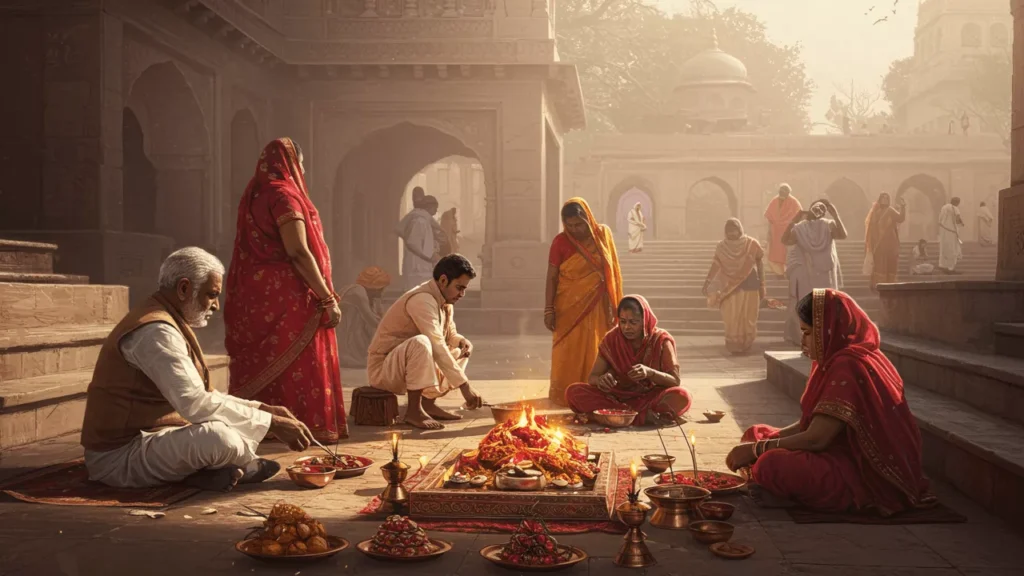
Family performs Shraddh with a fire ritual (homa) and offerings in a temple courtyard- Pind Daan Pitru Dosha
Pitrupaksha 10 min read

Suffering from Pitru Dosha? How Pind Daan Can Offer Relief and Solutions

Are persistent family problems, unexplained obstacles, or a sense of unease casting a shadow over your life? Could these be signs of Pitru Dosha, the subtle imbalance caused by ancestral dissatisfaction? This exploration delves into the connection between Pind Daan Pitru Dosha, revealing how the sacred act of Pind Daan within the Shradh ceremony offers a profound pathway to relief. But how exactly does offering a simple Pinda (rice ball) address these deep-seated issues rooted in lineage? Discover the Puranic wisdom explaining how Pind Daan provides crucial satisfaction (Tripti) to restless ancestors, alleviating their suffering and transforming their energy from distress to blessings. Learn its vital role in helping trapped souls (Pretas) transition peacefully, effectively removing a source of potential disturbance. How does this ritual help dissolve the karmic burden of ancestral debt (Pitru Rin)? Find out why performing Pind Daan, especially at potent Tirthas like Gaya, is considered a powerful remedy, capable of invoking blessings and dispelling negativity. If you're seeking solutions and solace, understanding the principles behind Pind Daan is key. Dive into the full article to uncover the scriptural basis and practical steps for this healing ritual.

A monthly reading

One essay, one scripture reference, one calendar note for the month ahead. Nothing else. Never promotional.

REQUEST VIA COORDINATOR DESK · 12 ISSUES A YEAR · NO SPAM